


SaaS has converted the way cutting edge groups function. From startups to international firms, groups are an increasing number of adopting SaaS solutions to streamline operations, reduce infrastructure fees and boost up digital transformation.
In this designated guide, we explore the most powerful blessings of SaaS, why it’s far essential for scalable growth and the way corporations can leverage SaaS systems efficiently.
Contents
- 1 What is SaaS?
- 2 How SaaS Works
- 3 15 Powerful Benefits of SaaS
- 3.0.0.0.1 Cost Efficiency
- 3.0.0.0.2 Rapid Deployment
- 3.0.0.0.3 Automatic Updates
- 3.0.0.0.4 Scalability
- 3.0.0.0.5 Remote Accessibility
- 3.0.0.0.6 Enhanced Collaboration
- 3.0.0.0.7 Improved Security
- 3.0.0.0.8 Reduced IT Burden
- 3.0.0.0.9 Flexible Subscription Models
- 3.0.0.0.10 Integration Capabilities
- 3.0.0.0.11 Data Analytics and Reporting
- 3.0.0.0.12 Global Accessibility
- 3.0.0.0.13 Business Continuity
- 3.0.0.0.14 Customization Options
- 3.0.0.0.15 Faster Innovation
- 4 SaaS vs Traditional Software
- 5 SaaS Security and Compliance
- 6 SaaS Scalability for Growing Businesses
- 7 SaaS in Different Industries
- 8 Choosing the Right SaaS Platform
- 9 Internal SaaS Integration Strategy
- 10 Future of SaaS
- 11 Conclusion
What is SaaS?
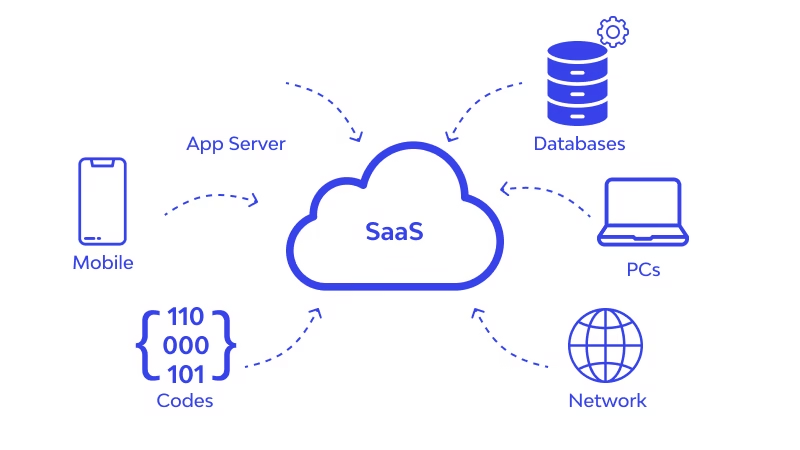
SaaS (Software as a Service) is a cloud based totally software program delivery version in which programs are hosted through a provider provider and made available to customers over the internet.
Instead of putting in software program locally, customers get entry to SaaS systems thru a web browser. The company manages infrastructure, protection, updates, and safety.
Popular examples of SaaS systems encompass:
- Salesforce
- Slack
- Zoom
- Dropbox
How SaaS Works
The SaaS model works via cloud infrastructure:
- The company hosts the software program on cloud servers.
- Users enroll in get entry to the software program.
- The software runs in a browser or light weight app.
- Updates are automated and centralized.
This cloud based SaaS delivery eliminates hardware dependency and simplifies IT management.
15 Powerful Benefits of SaaS
Cost Efficiency
SaaS reduces upfront investment. Businesses avoid shopping servers, licenses and infrastructure.
With SaaS, you pay best for what you use.
Rapid Deployment
SaaS structures can be deployed quick. There is not any complicated set up procedure.
This makes SaaS ideal for immediate growing corporations.
Automatic Updates
SaaS companies manage software updates. Users continually get entry to the modern model without manual intervention.
Scalability
One of the most important benefits of SaaS is scalability.
As your commercial enterprise grows, you may growth customers, storage or capabilities without problems.
Remote Accessibility
SaaS programs are on hand from anywhere with internet get entry to.
This supports hybrid and far off work models.
Enhanced Collaboration
SaaS platforms permit groups to collaborate in actual-time. Shared dashboards and cloud access improve productiveness.
Improved Security
Leading SaaS carriers invest heavily in data encryption, compliance and monitoring.
Security requirements frequently exceed in residence structures.
Reduced IT Burden
SaaS eliminates the need for in house upkeep groups.
The issuer handles uptime, patches and backups.
Flexible Subscription Models
SaaS structures provide month to month or annual subscriptions.
Businesses can adjust plans based totally on price range and utilization.
Integration Capabilities
SaaS gear integrate without problems with other structures through APIs.
For example:
- HubSpot
- Mailchimp
- Shopify
Integration improves automation and workflow performance.
Data Analytics and Reporting
Most SaaS structures include integrated analytics dashboards.
Businesses can music performance, KPIs and customer insights in actual time.
Global Accessibility
SaaS solutions permit global operations without bodily enlargement.
Users throughout regions access the same centralized platform.
Business Continuity
Cloud based SaaS platforms make sure backup and catastrophe restoration.
This minimizes downtime.
Customization Options
Modern SaaS answers allow customization of dashboards, workflows, and consumer roles.
Faster Innovation
SaaS vendors constantly enhance features.
Businesses gain from innovation without extra price.
SaaS vs Traditional Software
SaaS (Software as a Service) is a cloud based software delivery model where applications are hosted by a provider and accessed through the internet. Users pay a subscription fee and do not need to install or maintain the software locally.
Key Differences Between SaaS and Traditional Software:
| Feature | SaaS | Traditional Software |
|---|---|---|
| Installation | Cloud-based | On-premise |
| Updates | Automatic | Manual |
| Cost | Subscription | High upfront |
| Scalability | Easy | Limited |
| Maintenance | Vendor-managed | In-house |
SaaS clearly offers flexibility and lower operational overhead.
SaaS Security and Compliance
Security is a prime problem in SaaS adoption.
Leading SaaS providers implement:
- End to quit encryption
- Multi issue authentication
- Compliance certifications
- Continuous monitoring
Businesses have to examine SaaS security rules earlier than subscribing.
SaaS Scalability for Growing Businesses
SaaS helps rapid scaling. Whether you upload 10 customers or 10,000 users, the system adapts.
For companies making plans enlargement, SaaS offers unrivaled flexibility. SaaS offers seamless scalability, permitting organizations to increase customer, storage and capabilities without making an investment in new infrastructure. As demand grows, corporation can upgrade their SaaS plan immediately. This flexibility ensures clean expansion without operational disruption. SaaS enables developing groups to scale efficiently and cost correctly.
SaaS in Different Industries
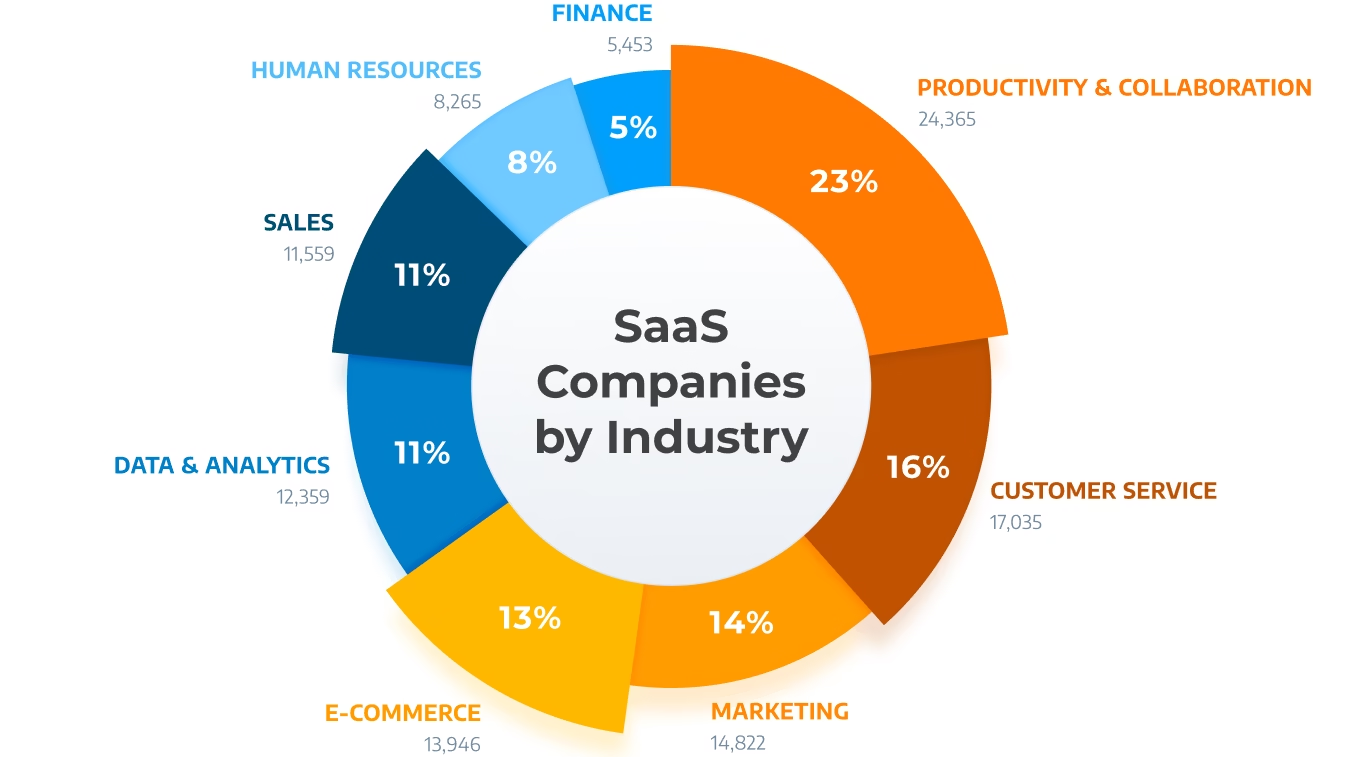
SaaS is used throughout industries:
- Healthcare SaaS structures
- Finance SaaS packages
- Education SaaS gear
- Manufacturing SaaS structures
- Marketing SaaS answers
Each industry leverages SaaS to optimize performance.
Choosing the Right SaaS Platform
When choosing a SaaS solution:
- Define commercial enterprise goals
- Evaluate protection capabilities
- Assess integration alternatives
- Check pricing flexibility
- Review customer support
| Criteria | What to Evaluate | Why It Matters | Questions to Ask | Risk if Ignored | Example |
|---|---|---|---|---|---|
| Business Fit | Features & functionality | Ensures alignment with company goals | Does it solve our core problem? | Wasted investment | Salesforce for CRM needs |
| Scalability | User limits & upgrade options | Supports business growth | Can we easily upgrade plans? | Growth limitations | Shopify scaling plans |
| Security | Data encryption & compliance | Protects sensitive data | Is it GDPR compliant? | Data breaches | Microsoft cloud security standards |
| Integration | API & third-party support | Improves workflow automation | Does it integrate with our tools? | Operational silos | HubSpot integrations |
| Pricing | Subscription flexibility | Controls budget | Are there hidden costs? | Budget overruns | Tiered SaaS pricing model |
| Support | Customer service & SLA | Ensures smooth operations | Is 24/7 support available? | Downtime impact | Zendesk support system |
Choosing the proper SaaS companion guarantees lengthy-term achievement.
Internal SaaS Integration Strategy
Businesses have to:
- Audit existing tools
- Identify workflow gaps
- Plan API integrations
- Train personnel
- Monitor performance metrics
A robust SaaS integration strategy maximizes ROI. An effective inner SaaS integration approach ensures that all SaaS tools paintings seamlessly across departments. Start with the aid of auditing present systems and identifying integration gaps. Use APIs and automation systems to connect CRM, advertising, finance and HR SaaS packages. Finally, reveal performance and educate groups often to maximize ROI and hold operational performance.
Future of SaaS
SaaS maintains to conform with:
- AI driven automation
- Advanced analytics
- Industry specific solutions
- Low code SaaS structures
The SaaS ecosystem will continue increasing as virtual transformation speeds up. The destiny of SaaS may be pushed via AI powered automation, advanced facts analytics, and deeper cloud integration. Businesses will rely greater on industry unique SaaS answers tailored to their precise desires. Enhanced safety, low code customization and seamless integrations will hold to accelerate adoption. SaaS will stay the foundation of scalable and digitally converted corporations.
Conclusion
SaaS has end up a powerful engine for commercial enterprise increase. From price efficiency to scalability and innovation, SaaS affords unmatched flexibility for modern day agencies. Companies that adopt SaaS strategically advantage aggressive gain, operational performance and lengthy term sustainability.
If your business is planning digital transformation, investing in the proper SaaS platform can unlock effective increase possibilities.


