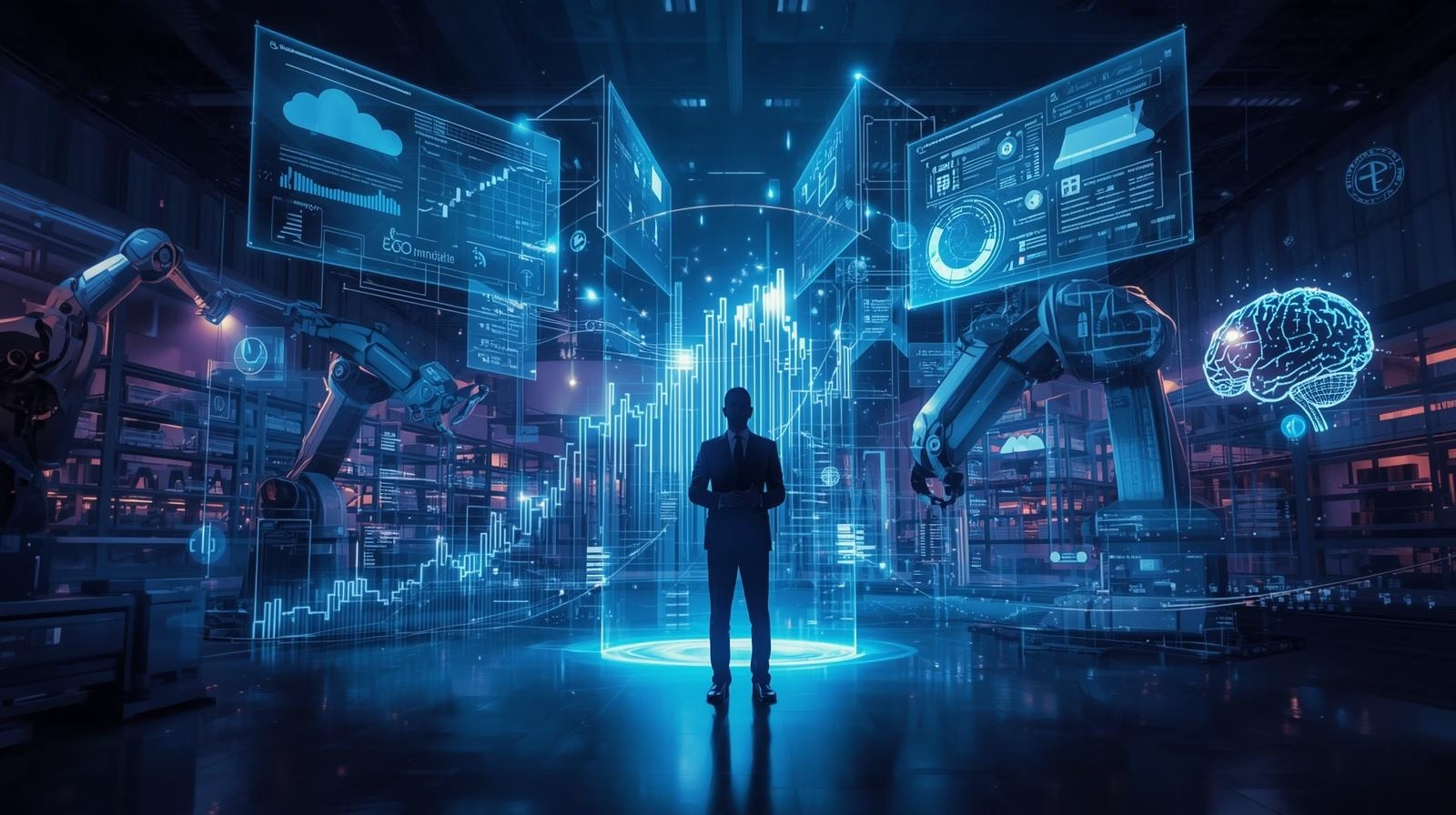

Technology is moving towards automation and intelligence because businesses and industries desire rapid operations, reduced expenses, enhanced decision-making and increased productivity. Automation implies that systems are designed to execute the tasks automatically without the involvement of humans, and intelligent technology implies that the systems apply artificial intelligence, machine learning, data analytics, and cloud computing in analyzing data, learning patterns, and making decisions. Automation can now be applied in manufacturing, as well as in marketing, finance, healthcare, logistics, energy management and customer service. It is a change in the digital transformation and Industry 4.0, where companies abandon manual processes and switch to automated and intelligent systems.
Contents
- 1 Why Technology Is Moving Towards Automation and Intelligence
- 2 Technologies Behind Automation and Intelligent Systems
- 3 Automation vs Intelligent Automation
- 4 How Different Industries Use Automation and Intelligence
- 5 Benefits of Automation and Intelligent Technology
- 6 Future of Automation and Intelligent Technology
Why Technology Is Moving Towards Automation and Intelligence
Efficiency is one of the primary causes of technology transitioning into automation. Automated systems have the ability to operate 24 hours 7 days a week, minimize human error, and accomplish tasks in less time compared to manual operations. Automation is employed by companies to enter data, process payroll, do email marketing, chatbots to support customers, manage inventory, and report. Automation is used to save costs of operations and make companies more productive. With automation tools, businesses are able to do more with less and this enhances profitability and scalability.
Another important reason is data. Nowadays, businesses receive extensive amounts of data on websites, mobile apps, IoT devices, sensors, and customer communications. This data is referred to as big data, and companies can analyze this data and make data-driven decisions with the help of artificial intelligence and machine learning. The artificial intelligence systems have the capability of forecasting customer behavior, fraud detection, streamlining operations, and enhancing marketing performance. This is what is making intelligent automation gain more significance than basic automation.
Cloud computing is also a major factor in automation growth. Previous companies required the use of physical server and IT infrastructure that was costly and hard to maintain. Cloud platforms are now used by companies to store data, operate applications and process automation. Cloud computing enables companies to automate their backup systems, software deployment, analytics, and customer relationship management systems. Due to the cloud computing, now even small businesses have access to automation and artificial intelligence tools.
Automation and intelligent technology is also being driven by the Internet of Things (IoT). IoT devices are used to gather real-time information on machines, vehicles, buildings, and energy systems. Such data is applied in predictive maintenance, remote monitoring, smart energy management, and asset tracking. Smart factories also work with sensors that follow machines and anticipate their breakdowns. Energy monitoring systems are automatic systems that monitor the use of electricity and optimize the use of energy. The combination of IoT, automation, artificial intelligence, and data analytics is producing smart systems and smart industries.
Technologies Behind Automation and Intelligent Systems
Smart technology and automation is not rooted in one and one technology but is a combination of technologies. Artificial intelligence, machine learning, cloud computing, big data analytics, IoT, robotic process automation, and predictive analytics are all significant contributors in the automation and intelligent systems.
| Technology | Role in Automation and Intelligence |
|---|---|
| Artificial Intelligence | Decision making and predictions |
| Machine Learning | Learning from data and improving systems |
| Cloud Computing | Storage, computing power, automation tools |
| Big Data Analytics | Data analysis and insights |
| IoT | Real-time data collection |
| Robotic Process Automation | Automating repetitive tasks |
| Predictive Analytics | Forecasting and optimization |
These technologies together create intelligent automation systems that can automate workflows, analyze data, and improve business operations.
Automation vs Intelligent Automation
Many people think automation and intelligent automation are the same, but they are different. Automation follows predefined rules, while intelligent automation uses artificial intelligence and machine learning to make decisions and improve over time.
| Feature | Automation | Intelligent Automation |
|---|---|---|
| Working Method | Rule-based | Data-driven and AI-based |
| Decision Making | Predefined rules | AI and machine learning |
| Learning Ability | No | Yes |
| Data Handling | Limited | Big data analytics |
| Flexibility | Low | High |
| Example | Data entry automation | AI chatbot, predictive analytics |
This demonstrates that technology is shifting towards intelligent automation in place of simple automation.
How Different Industries Use Automation and Intelligence
Automation and intelligent systems are used in many industries such as manufacturing, healthcare, marketing, finance, logistics, and energy management. All industries make use of automation to enhance efficiency and smartness to enhance decision-making.
| Industry | Automation Use | Intelligence Use |
|---|---|---|
| Manufacturing | Robots, assembly lines | Predictive maintenance |
| Healthcare | Scheduling, billing | Disease prediction |
| Marketing | Email automation | Customer analytics |
| Finance | Automated reporting | Fraud detection |
| Logistics | Automated warehouses | Route optimization |
| Energy | Smart meters | Energy prediction |
| Customer Support | Chatbots | Customer insights |
This indicates that automation and intelligence are changing nearly all industries.
Benefits of Automation and Intelligent Technology
Robotization and smart technology assist companies in minimizing expenditures, enhancing efficiency, augmenting productivity, and making superior choices. The use of automated systems minimizes manual labor, and artificial intelligence systems process information and give insights. Automation and smart systems enable businesses to streamline operations, enhance customer experience, and make more profits. Automation ensures businesses expand, as automated systems are capable of processing a great deal of information and work without requiring more human resources.
Automation is also more accurate since machines and software minimize the number of human errors. Smart systems enhance decision-making since it processes the information and offers ideas. This automation with intelligence is the principal factor why businesses are shifting towards the digital transformation.
Future of Automation and Intelligent Technology
The technology of tomorrow will be grounded on smart systems capable of learning, adapting and making decisions on their own. The use of automation in the manufacturing industry, the healthcare sector, the financial sector, logistics, retail, and energy management will continue to increase. Automation and intelligent technology will be sustained by artificial intelligence, machine learning, cloud computing, IoT, and data analytics. Companies that embrace automation and smart mechanisms soon will be at an advantage since they will work more quickly, lower expenses, and make superior choices.
Technology is shifting to automated systems and intelligent systems, as compared to manual systems. Previously machines were just followers but they can now analyze information, learn and make decisions. It is because the future of technology is automation and intelligence.