

For years, businesses measured SEO success by one primary metric: website clicks. The higher your rankings, the more visitors your website received. However, search behavior has changed dramatically. Today, users often find the answers they need without clicking on any website. Search engines now display AI-generated summaries, featured snippets, knowledge panels, FAQs, local packs, videos, and other rich results directly on the search results page. This shift has introduced a new approach known as Zero-Click Search Optimization, which focuses on making your content visible even when users never visit your website.
For B2B businesses, this change is especially significant. Modern buyers spend more time researching independently before contacting a vendor. They compare solutions, read AI-generated summaries, ask questions in ChatGPT, explore Google AI Overviews, and consult AI-powered search platforms such as Perplexity and Gemini. If your content is not optimized for these experiences, your competitors may become the primary source of information even if your products or services are superior.
The rise of AI-powered search has transformed SEO from simply ranking web pages to building authority across multiple digital touchpoints. Instead of competing only for the first organic position, businesses must now compete for visibility inside AI-generated answers.
This is why Zero-Click Search Optimization has become one of the most important aspects of modern B2B digital marketing.
Instead of asking:
“How do I get more clicks?”
Successful marketers now ask:
“How do I become the answer?”
Businesses that embrace this mindset are more likely to earn trust, strengthen brand recognition, and influence purchasing decisions before prospects even visit their websites.
Whether your audience discovers your business through Google AI Overviews, ChatGPT, Bing Copilot, or another AI-powered platform, visibility during these early research stages can have a lasting impact on lead generation and revenue.
This guide explains everything B2B marketers need to know about Zero-Click Search Optimization, how AI search works, why traditional SEO alone is no longer enough, and how your business can stay visible in an increasingly AI-driven search landscape.

What Is Zero-Click Search Optimization?
Zero-Click Search Optimization is the process of optimizing digital content so that search engines and AI-powered search platforms can display your information directly within search results or AI-generated answers, even when users do not click through to your website.
Unlike traditional SEO, which focuses primarily on increasing organic traffic, Zero-Click Search Optimization emphasizes increasing visibility, authority, and brand recognition across multiple search experiences.
In a zero-click environment, search engines answer users’ questions instantly using information gathered from trusted sources. These answers may appear in several formats, including:
| Zero-Click Result Type | Purpose |
|---|---|
| Google AI Overviews | AI-generated summaries from multiple sources |
| Featured Snippets | Direct answers displayed above organic results |
| Knowledge Panels | Business or entity information |
| People Also Ask | Related questions and answers |
| Local Pack | Nearby business listings |
| Image Results | Visual information |
| Video Results | Educational video content |
| Rich FAQs | Frequently asked questions |
| Definitions | Quick explanations |
| Product Information | Shopping-related summaries |
Rather than encouraging users to click, these search features aim to provide immediate value.
For businesses, this means your content must be structured clearly enough for AI systems to understand, summarize, and cite.
Why Zero-Click Search Is Growing Faster Than Traditional SEO
The search landscape has evolved rapidly over the last few years. Artificial intelligence has become the foundation of modern search experiences. Instead of displaying only a list of blue links, search engines increasingly provide direct answers that combine information from multiple trusted websites. Several factors are driving this transformation.
Users Want Instant Answers
People expect quick solutions. Whether they are searching for software recommendations, cybersecurity best practices, or cloud migration advice, users prefer immediate answers instead of opening several web pages. AI search satisfies this expectation by summarizing information in seconds.
AI Search Saves Time
Executives, marketers, developers, and business leaders often need answers quickly. Instead of comparing ten different articles, they can review a single AI-generated overview before deciding which sources deserve deeper reading.
Better User Experience
Modern search engines aim to reduce unnecessary clicks. By providing comprehensive summaries directly within search results, they create a smoother search experience while still highlighting authoritative sources.
Smarter Search Algorithms
Artificial intelligence now understands:
- User intent
- Search context
- Natural language
- Follow-up questions
- Semantic relationships
- Business entities
As a result, search quality continues improving while traditional keyword stuffing becomes less effective.
AI Search Is Becoming the New Standard
Today’s search ecosystem includes:
- Google AI Overviews
- ChatGPT Search
- Perplexity AI
- Microsoft Copilot
- Gemini
- Claude
- AI-powered enterprise search tools
All these platforms rely on authoritative, well-structured content.
Businesses that adapt early gain a significant competitive advantage.
How AI Search Is Changing the Way B2B Buyers Find Information
B2B purchasing decisions have always involved research, but AI has fundamentally changed how that research happens.
Years ago, buyers typically searched Google, opened multiple websites, downloaded whitepapers, and compared vendors manually.
Today, AI tools summarize this information almost instantly.
Consider a procurement manager looking for:
“Best CRM software for manufacturing companies.”
Instead of reading ten separate articles, they may receive an AI-generated comparison that highlights key features, pricing models, advantages, and potential limitations from multiple trusted sources.
If your business appears in that AI-generated response, you’ve earned valuable visibility before the buyer even visits a website.
This shift creates a new competitive landscape.
Instead of competing only for clicks, businesses compete to become trusted sources that AI platforms reference.
For B2B organizations, this means creating content that demonstrates expertise, authority, trustworthiness, and clear answers to specific customer questions.
Companies that consistently publish well-researched, helpful, and structured content are more likely to appear in AI-generated responses.
As AI search adoption continues to grow, visibility across these platforms will become just as important as traditional search rankings.
Why Zero-Click Search Optimization Matters for B2B Companies
B2B sales cycles are longer than consumer purchases. Buyers often spend weeks or months researching before contacting a vendor.
During this research phase, they ask dozens of questions:
- Which solution is best?
- What are the latest industry trends?
- Which platform offers the most features?
- What are the implementation challenges?
- Which vendors are trusted?
- What are the costs?
- What are the security considerations?
Each question represents an opportunity for your content to appear in AI-generated search results.
When your content consistently provides accurate, comprehensive, and authoritative answers, AI platforms are more likely to reference it, increasing your brand’s credibility and influence before prospects reach out.
This makes Zero-Click Search Optimization not just an SEO tactic, but a strategic approach to building trust and visibility throughout the B2B buyer journey.
How Zero-Click Search Works
To understand why Zero-Click Search Optimization has become a priority, it is important to know how modern search engines and AI platforms process information.
Traditional search engines relied heavily on matching keywords between a user’s query and a webpage. If your content contained the right keywords and had enough backlinks, it had a good chance of ranking.
Today, AI-powered search works differently.
Instead of simply matching keywords, AI systems analyze user intent, understand context, evaluate content quality, and generate complete answers by combining information from multiple trusted sources. Platforms such as Google AI Overviews, ChatGPT Search, Microsoft Copilot, Gemini, and Perplexity use advanced language models to summarize relevant information before presenting it to users.
For example, when someone searches:
“What is the best CRM software for manufacturing companies?”
Instead of listing ten websites, AI may generate a detailed comparison that includes pricing models, features, integrations, benefits, and limitations from multiple authoritative sources.
If your website provides clear, trustworthy, and structured information, AI may reference your content in its generated answer.
That is the primary goal of Zero-Click Search Optimization—to become a trusted source that AI systems rely on when answering user questions.
How AI Search Processes Content
Modern AI search follows several stages before displaying an answer.
| Stage | What Happens |
|---|---|
| User Query | A user asks a question in natural language. |
| Intent Analysis | AI determines what information the user actually wants. |
| Content Discovery | Search engines identify relevant, trustworthy pages. |
| Content Evaluation | AI evaluates expertise, relevance, freshness, and authority. |
| AI Summary | Information from multiple sources is combined into a concise answer. |
| Citation | High-quality sources may be linked or referenced in the response. |
Unlike traditional SEO, where ranking first often guaranteed the most traffic, AI search rewards websites that consistently publish accurate, comprehensive, and well-structured content.
Google AI Overviews vs. Traditional Search Results
One of the biggest changes in search is the introduction of Google AI Overviews.
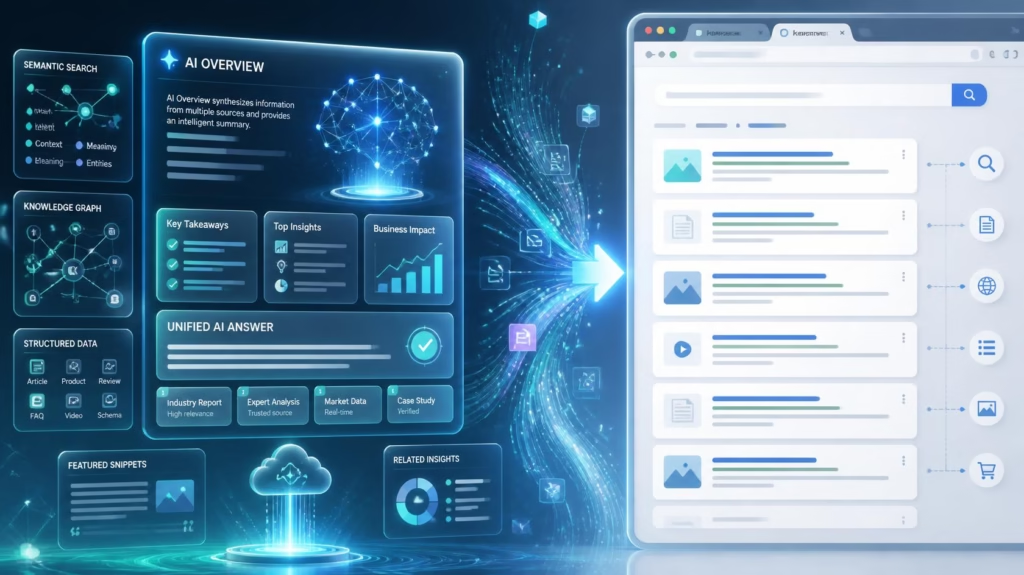
Traditional search displays a list of blue links that users can browse. AI Overviews, on the other hand, provide an instant summary generated from multiple trusted sources before the organic results.
For B2B businesses, this means potential buyers may gain enough information to make purchasing decisions without opening several websites.
Comparison Table
| Traditional SEO | AI Search & Zero-Click Search |
|---|---|
| Focuses on clicks | Focuses on visibility |
| Keyword matching | Intent understanding |
| Blue links | AI-generated summaries |
| Individual webpages | Combined information from multiple sources |
| CTR is the main KPI | Brand exposure and citations matter more |
| Ranking position is critical | Authority and content quality are critical |
| Backlinks dominate | Trust, expertise, and structured content matter more |
This does not mean traditional SEO is no longer useful. Instead, Zero-Click Search Optimization complements traditional SEO by ensuring your content is visible even when users do not click through to your website.
Businesses that combine both approaches are better positioned to capture search demand across multiple channels.
Benefits of Zero-Click Search Optimization for B2B Businesses
Many marketers worry that zero-click searches reduce website traffic. While this can happen for some informational queries, the broader impact is often positive for businesses that adapt their content.
1. Increased Brand Visibility
Every appearance in an AI-generated answer exposes your brand to potential customers.
Even if users do not immediately visit your website, repeated visibility builds familiarity and trust.
For B2B companies with long buying cycles, this brand recognition can influence purchasing decisions later in the journey.
2. Higher Authority
AI systems tend to reference websites that consistently publish reliable, well-researched, and expert-level content.
By investing in Zero-Click Search Optimization, your business strengthens its reputation as an industry authority.
3. Better Lead Quality
People who eventually click through after seeing your brand in AI-generated results are often better informed.
These visitors usually have higher purchase intent because AI has already answered many of their initial questions.
4. Competitive Advantage
Many companies still optimize only for traditional search rankings.
Businesses that also optimize for AI search gain an advantage by appearing where competitors are absent.
5. Greater Trust
Being referenced by Google AI Overviews or other AI search platforms signals credibility.
Users naturally associate cited sources with expertise.
6. Improved Content Performance
Content optimized for AI is usually:
- Easier to read
- Better structured
- More comprehensive
- Easier to understand
- More likely to earn backlinks
- More likely to be shared
These improvements benefit both traditional SEO and AI search.

Common Types of Zero-Click Search Results
Understanding where your content can appear is essential for successful Zero-Click Search Optimization.
Google AI Overviews
AI Overviews provide summarized answers generated from multiple trusted sources.
These summaries often include citations, allowing users to explore the original content if they want more detail.
For many informational B2B queries, AI Overviews now appear before traditional organic results.
Featured Snippets
Featured snippets display a direct answer at the top of Google’s search results.
They often include:
- Definitions
- Lists
- Tables
- Numbered steps
- Comparisons
Well-structured content has a higher chance of earning featured snippets.
People Also Ask
The “People Also Ask” section expands related questions connected to the original search.
Creating FAQ sections that answer these questions clearly improves your chances of appearing here.
Knowledge Panels
Knowledge Panels provide verified information about businesses, organizations, products, or individuals.
Maintaining accurate business information and strong online authority increases the likelihood of appearing in these panels.
Local Pack
For location-based B2B services, Google often displays a map with nearby businesses.
Optimizing your business profile, collecting reviews, and maintaining consistent business information supports local visibility.
Rich Results
Rich results enhance search listings with additional details such as:
- Ratings
- Reviews
- Product information
- FAQs
- Events
- Pricing
- Images
Structured data plays an important role in enabling these enhanced search experiences.
Why Traditional Keyword Optimization Is No Longer Enough
For many years, SEO focused on placing keywords in titles, headings, and body content. While keyword optimization remains important, search engines now evaluate much more than keyword frequency.
Modern AI systems consider:
- Topical depth
- Context
- Semantic relevance
- Expertise
- Authoritativeness
- Trustworthiness
- Freshness
- Content structure
- User satisfaction
- Source credibility
For example, an article that naturally explains a topic with examples, tables, FAQs, and expert insights is far more valuable than a page that simply repeats the same keyword.
Successful Zero-Click Search Optimization therefore requires creating content that answers real questions comprehensively rather than writing solely for search engines.
The Role of Search Intent in Zero-Click Search Optimization
Every search begins with an intention. AI platforms are designed to understand that intention before delivering an answer.
There are four primary types of search intent:
| Search Intent | Example Query | Content Type |
|---|---|---|
| Informational | What is Zero-Click Search Optimization? | Guides, blogs, explainers |
| Navigational | HubSpot AI Search | Brand pages |
| Commercial | Best AI SEO tools | Comparisons, reviews |
| Transactional | Buy SEO software | Product and pricing pages |
Most zero-click results appear for informational and commercial queries.
That is why educational, high-quality content is essential for B2B businesses looking to improve visibility in AI search.
When your content directly answers users’ questions, uses clear headings, includes supporting data, and demonstrates expertise, it becomes far more likely to be surfaced in AI-generated responses.
How to Optimize Your Content for Zero-Click Search Optimization
Creating high-quality content is no longer enough to compete in AI-driven search. Search engines and AI assistants prioritize content that is well-structured, easy to understand, factually accurate, and capable of answering user questions directly.
The goal of Zero-Click Search Optimization is to create content that AI systems can confidently summarize, cite, and recommend. This requires focusing on both technical SEO and content quality.
Start Every Article with a Clear Answer
One of the simplest ways to improve your chances of appearing in AI-generated results is to answer the main question within the first few paragraphs.
For example, if your article targets “What Is Zero-Click Search Optimization?”, begin with a concise definition before expanding into more detailed explanations.
This approach helps search engines understand the primary topic and provides users with immediate value.
Write for Topics, Not Just Keywords
Modern search engines analyze topics rather than individual keywords.
Instead of repeating Zero-Click Search Optimization throughout your article unnaturally, cover related concepts that strengthen topical authority, such as:
- AI Search Optimization
- Google AI Overviews
- Search Intent
- Semantic SEO
- Featured Snippets
- Structured Data
- Knowledge Graph
- E-E-A-T
- Entity SEO
- Generative Engine Optimization (GEO)
Including these related terms naturally helps AI understand the broader context of your content.
Create Comprehensive Content
Thin articles rarely perform well in AI search.
A high-quality B2B article should answer every major question a reader may have about the topic.
For example, instead of only explaining what Zero-Click Search Optimization is, also cover:
- Why it matters
- How it works
- Benefits
- Challenges
- Common mistakes
- Best practices
- Future trends
- Practical examples
- Frequently asked questions
Comprehensive content is more likely to become a trusted reference for AI platforms.
Build Topical Authority
Topical authority is one of the strongest ranking signals in modern SEO.
Rather than publishing a single article on Zero-Click Search Optimization, create an entire content cluster around AI search.
Example content cluster:
| Pillar Topic | Supporting Articles |
|---|---|
| Zero-Click Search Optimization | Google AI Overviews Explained |
| AI Search Optimization | How ChatGPT Search Changes SEO |
| Generative Engine Optimization | GEO vs Traditional SEO |
| B2B AI Search | AI Content Optimization Guide |
| Search Visibility | Featured Snippet Optimization |
| Semantic SEO | Entity-Based SEO Explained |
| AI Marketing | AI Search Ranking Factors |
This cluster demonstrates expertise and helps search engines understand that your website is an authority on AI search and SEO.
Use Clear Heading Structures
AI systems rely heavily on headings to understand page structure.
Every article should include:
- One H1
- Logical H2 sections
- Supporting H3 headings
- Short paragraphs
- Bullet lists where appropriate
- Comparison tables
A clean structure improves readability for both users and search engines.
Example:
H1
Introduction

H2
What Is Zero-Click Search Optimization?

H2
Benefits

H2
Challenges

H2
Best Practices

H2
FAQs
Avoid large blocks of text. Breaking information into smaller sections makes it easier for AI to identify key points.
Improve E-E-A-T Signals
Google evaluates content based on Experience, Expertise, Authoritativeness, and Trustworthiness (E-E-A-T).
Although E-E-A-T is not a direct ranking factor, it strongly influences how search engines assess content quality.
You can improve E-E-A-T by:
- Publishing original research
- Using real examples
- Including statistics from reputable sources
- Writing in-depth guides
- Keeping articles updated
- Displaying author information
- Citing trusted references
- Demonstrating industry expertise
B2B buyers rely on trustworthy information when making purchasing decisions, making E-E-A-T particularly important.
Optimize for Featured Snippets
Featured snippets remain one of the most effective ways to achieve zero-click visibility.
To improve your chances:
- Answer questions directly.
- Keep definitions between 40 and 60 words.
- Use numbered lists.
- Include bullet points.
- Add comparison tables.
- Use descriptive headings.
Example:
What Is Zero-Click Search Optimization?
Zero-Click Search Optimization is the process of optimizing content so search engines and AI platforms can display answers directly in search results without requiring users to visit a webpage.
Simple, direct answers like this are more likely to appear in featured snippets and AI summaries.
Use Structured Data (Schema Markup)
Structured data helps search engines understand your content more effectively.
Although schema does not guarantee higher rankings, it increases eligibility for enhanced search results.
Useful schema types include:
- Article
- FAQ
- Organization
- Breadcrumb
- Product
- Review
- How-To
- Video
- Person
For B2B websites, implementing Article and FAQ schema is especially valuable because it improves content discoverability.
Optimize for Entities Instead of Keywords
Search engines increasingly recognize entities rather than isolated keywords.
An entity can be:
- A company
- A product
- A person
- A technology
- An industry
- A location
Instead of repeatedly mentioning “SEO,” discuss related entities such as Google Search, Google AI Overviews, Microsoft Copilot, ChatGPT, Gemini, Bing, and Perplexity. This enriches context and strengthens topical relevance.
Create Content That AI Can Quote
AI systems favor content that is concise, factual, and easy to summarize.
To make your content more quotable:
- Define important terms clearly.
- Use short explanatory paragraphs.
- Present statistics in tables.
- Include numbered processes.
- Answer common questions directly.
- Avoid unnecessary jargon.
The easier your content is to interpret, the more likely it is to appear in AI-generated answers.
Common Mistakes That Hurt Zero-Click Search Optimization
Many businesses struggle because they continue using outdated SEO practices.
Keyword Stuffing
Repeating the same keyword unnaturally makes content difficult to read and provides little value to users.
Instead, use your focus keyword naturally alongside related terms.
Publishing Thin Content
Short articles that barely explain a topic are unlikely to earn AI citations.
Invest in detailed, well-researched content that fully addresses user intent.
Ignoring Search Intent
Ranking for a keyword means little if the content does not answer what users are actually looking for.
Always align your article with informational, commercial, or transactional intent.
Poor Content Structure
Large paragraphs without headings, lists, or tables reduce readability.
Organized content performs better for both users and AI systems.
Outdated Information
AI platforms prioritize current and accurate information.
Regularly update statistics, examples, screenshots, and recommendations to maintain relevance.
Measuring the Success of Zero-Click Search Optimization
Traditional SEO often focuses on rankings and organic traffic, but Zero-Click Search Optimization requires a broader set of performance indicators.
Key metrics to monitor include:
| Metric | Why It Matters |
|---|---|
| AI Search Mentions | Indicates visibility in AI-generated responses. |
| Branded Search Volume | Measures growing brand awareness. |
| Featured Snippet Wins | Reflects zero-click visibility. |
| Organic Impressions | Shows how often your content appears in search results. |
| Engagement Time | Indicates content quality and relevance. |
| Returning Visitors | Demonstrates trust and ongoing interest. |
| Qualified Leads | Measures business impact rather than just traffic. |
| Conversion Rate | Shows how effectively visibility turns into customers. |
Instead of focusing only on clicks, evaluate how your content contributes to brand recognition, authority, and high-intent lead generation.
Real-World Example
Imagine two cybersecurity companies publish an article about cloud security.
Company A creates a 700-word blog filled with keywords but offers little depth.
Company B publishes a comprehensive guide with clear definitions, practical examples, comparison tables, FAQs, updated statistics, and structured headings.
When AI platforms generate an answer about cloud security, they are far more likely to reference Company B because its content is authoritative, complete, and easy to summarize.
This illustrates the long-term value of investing in Zero-Click Search Optimization rather than relying solely on traditional keyword-focused SEO.
The Future of Zero-Click Search Optimization
Search is evolving faster than ever. Over the past decade, businesses focused on ranking websites higher in search results to generate more traffic. Today, artificial intelligence is changing that approach. Search engines are becoming answer engines, delivering complete responses instead of simply providing a list of links.
This transformation means Zero-Click Search Optimization is no longer a trend—it is becoming a core part of every successful B2B SEO strategy.
As AI-powered search continues to improve, businesses that create authoritative, helpful, and well-structured content will gain greater visibility, while those relying on outdated SEO tactics may struggle to stay competitive.
AI Search Will Continue to Expand
Google AI Overviews, ChatGPT Search, Gemini, Microsoft Copilot, and Perplexity represent only the beginning of AI-driven search experiences.
Future AI search platforms will become even better at:
- Understanding complex questions
- Recognizing user intent
- Personalizing responses
- Comparing products and services
- Recommending trusted brands
- Summarizing technical information
- Supporting conversational follow-up questions
For B2B companies, this means your content must be designed not only for search engines but also for AI assistants that generate answers based on authority and relevance.
Brand Authority Will Matter More Than Rankings
For years, marketers competed to rank first on Google. In AI search, being a trusted source is becoming more important than simply holding the top organic position.
Businesses that consistently publish expert content, original research, case studies, and industry insights are more likely to be referenced by AI systems.
Building brand authority requires long-term investment in quality content, technical SEO, and a strong digital reputation.
Content Quality Will Outperform Content Quantity
Publishing dozens of low-value articles is unlikely to improve visibility in AI search.
Instead, businesses should focus on creating comprehensive resources that answer user questions thoroughly.
High-performing content should include:
- Accurate information
- Original insights
- Expert opinions
- Clear explanations
- Logical structure
- Practical examples
- Updated statistics
- Actionable recommendations
A single authoritative guide often delivers more value than multiple short articles covering similar topics.
Conversational Search Will Continue to Grow
More users are searching with natural language instead of short keyword phrases.
Instead of typing:
“B2B SEO”
Users now ask:
- How can B2B companies improve visibility in AI search?
- What is Zero-Click Search Optimization?
- How does Google AI Overviews affect SEO?
- Why are AI search engines changing digital marketing?
Creating content that answers these conversational questions naturally increases the likelihood of appearing in AI-generated responses.
Businesses Must Think Beyond Traffic
Traffic remains important, but it is no longer the only measure of SEO success.
Modern B2B marketers should also focus on:
- Brand awareness
- AI search mentions
- Search impressions
- Featured snippets
- Knowledge panels
- Qualified leads
- Customer trust
- Conversion rates
These metrics provide a more complete picture of how search contributes to business growth.
Zero-Click Search Optimization Checklist
Before publishing your next article, review this checklist to ensure it is optimized for AI search.
| Checklist Item | Status |
|---|---|
| Focus keyword included in the title | ✔ |
| Clear introduction answering the main question | ✔ |
| Logical heading structure (H2 and H3) | ✔ |
| Short, readable paragraphs | ✔ |
| Comprehensive topic coverage | ✔ |
| Related keywords included naturally | ✔ |
| Comparison tables added | ✔ |
| FAQ section included | ✔ |
| Internal links added | ✔ |
| External authoritative sources referenced | ✔ |
| Schema markup implemented | ✔ |
| Content updated regularly | ✔ |
Following these practices improves your chances of earning visibility across both traditional and AI-powered search platforms.
Conclusion
The way people search for information is changing rapidly. Instead of relying solely on traditional search results, users increasingly turn to AI-powered platforms that provide direct, conversational answers.
For B2B businesses, this shift creates both challenges and opportunities.
Organizations that continue relying only on traditional SEO may see reduced visibility as AI-generated answers become more common. However, businesses that embrace Zero-Click Search Optimization can strengthen their brand authority, improve search visibility, and influence buying decisions much earlier in the customer journey.
Success in AI search requires more than keyword optimization. It demands high-quality content, topical expertise, structured information, technical SEO, and a commitment to delivering genuine value to users.
Rather than asking, “How can we generate more clicks?” forward-thinking marketers should ask, “How can our content become the answer AI platforms trust?”
By focusing on helpful, accurate, and authoritative content, B2B organizations can position themselves for long-term success in both traditional search and the rapidly growing world of AI-powered search.
As search technology continues to evolve, Zero-Click Search Optimization will become an essential component of every modern SEO strategy. Businesses that invest today will be better prepared to capture visibility, build credibility, and generate sustainable growth in the years ahead.
Frequently Asked Questions
What is Zero-Click Search Optimization?
Zero-Click Search Optimization is the process of creating and structuring content so search engines and AI platforms can display your information directly in search results or AI-generated answers, even when users do not visit your website.
Why is Zero-Click Search Optimization important?
It helps businesses increase visibility, establish authority, and reach potential customers through AI-powered search experiences such as Google AI Overviews, ChatGPT Search, Gemini, and Microsoft Copilot.
Does Zero-Click Search reduce website traffic?
Some informational searches may result in fewer clicks because users receive answers directly in search results. However, businesses that optimize effectively often benefit from stronger brand recognition, higher-quality traffic, and increased trust among potential customers.
Is traditional SEO still important?
Yes. Traditional SEO remains essential for indexing, crawling, rankings, and organic visibility. Zero-Click Search Optimization complements traditional SEO by helping your content appear in AI-generated summaries and rich search features.
How can B2B businesses improve Zero-Click Search Optimization?
B2B companies should create comprehensive content, answer user questions clearly, use structured headings, implement schema markup, build topical authority, and publish original insights that demonstrate expertise.
Which industries benefit the most?
Almost every industry can benefit, but it is particularly valuable for:
- SaaS
- Cybersecurity
- Cloud Computing
- Artificial Intelligence
- Digital Marketing
- Financial Technology
- Healthcare Technology
- Manufacturing
- Enterprise Software
- IT Services
Which content formats work best?
The most effective formats include:
- Ultimate guides
- Industry reports
- Comparison articles
- FAQs
- Tutorials
- Case studies
- Research papers
- Checklists
- How-to articles