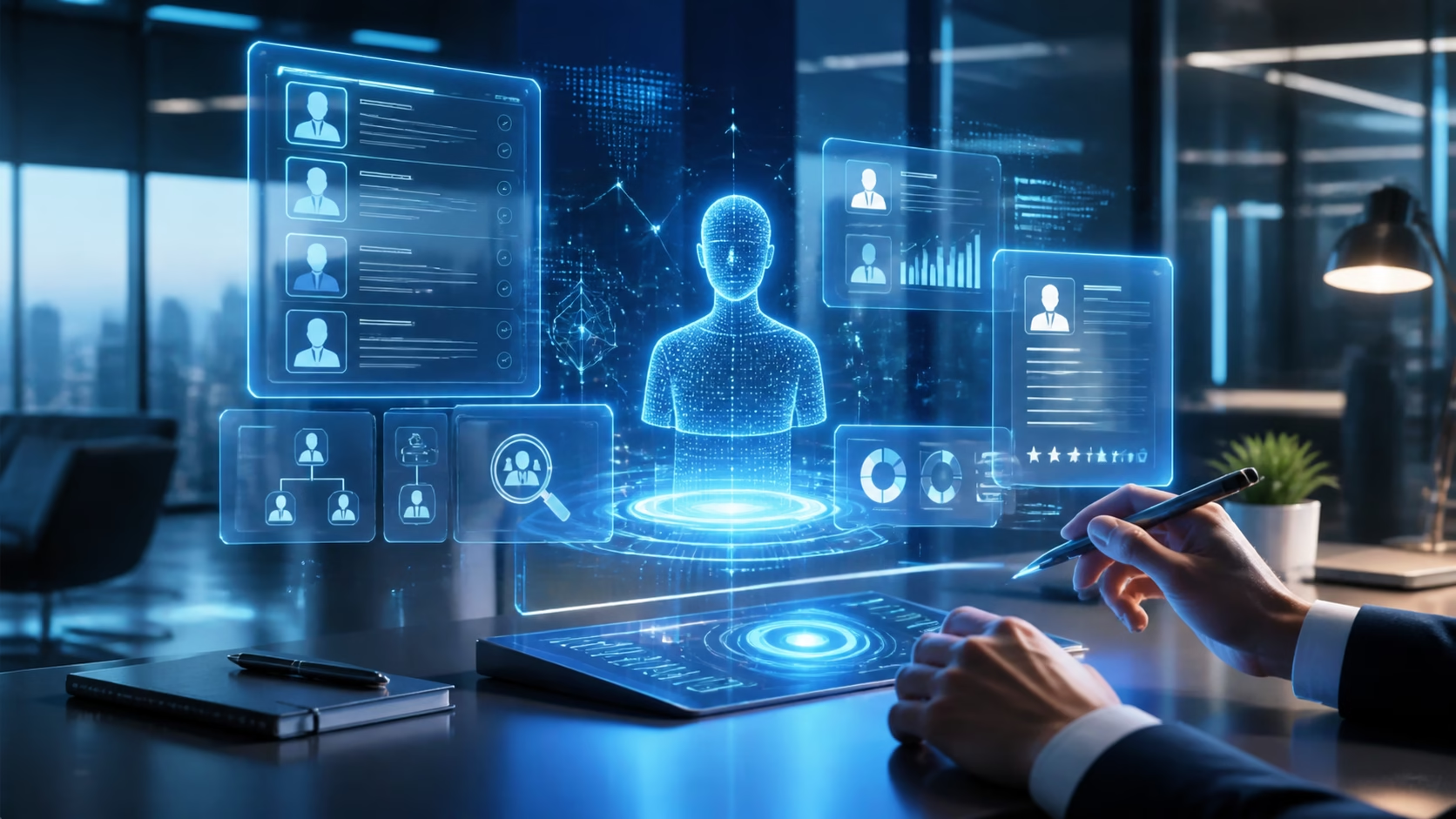

The Human Resource (HR) department has always been an essential part of any organization, from recruitment to employee engagement.
However, in recent times, a revolution has taken place in the HR sector. Generative AI and applications such as ChatGPT are disrupting the entire domain.
Processes that would typically take hours to complete, such as crafting job descriptions and resume reviews and responding to employee queries, can be completed in a matter of seconds using AI-powered tools.
This change not only makes processes more efficient but also opens up new possibilities within the HR sector.
In this article, we will discuss how generative AI and ChatGPT have disrupted the HR industry, how they are ushering in the age of AI HR assistants, their advantages and disadvantages, and the future of HR.
What is Generative AI in Human Resources?
When we talk about generative AI in HR, it implies artificial intelligence systems that have the ability to generate content, insights, or reactions from the training dataset. It implies that the system will:
- Generate job descriptions
- Provide interviewing questions
- Resume analysis
- Answer employees’ queries
- Help with onboarding
- Forecast hiring requirements
It goes beyond automation to make intelligent outputs for HR activities.
Simplified Definition: Using generative AI in human resources involves applying AI technologies, including ChatGPT, to automate and enhance various processes within the domain of HR.
What Are AI HR Assistants?
AI HR assistants are intelligent systems or chatbots powered by AI (like ChatGPT) that help HR teams manage daily operations.
They act like virtual HR employees who never sleep, never get tired, and can handle thousands of queries at once.
Key Functions of AI HR Assistants:
- Answer employee FAQs (leave policy, payroll, benefits)
- Assist in recruitment and screening
- Schedule interviews automatically
- Help new employees during onboarding
- Provide performance insights
- Support HR compliance tasks
How ChatGPT is Transforming HR Operations

ChatGPT and similar generative AI tools are not just supporting HR they are transforming the entire workflow.
- Automated Hiring
The application of AI in the recruitment process has led to an effective and efficient pre-screening of candidates through the automation of the selection of the most competent individuals for each particular position. The software enables companies to scan through thousands of CVs and shortlist the most eligible candidates who meet the requirements of the job offer. - Automated Job Description Writing
AI-based applications, such as ChatGPT, enable HR managers to write job offers automatically in a few minutes. In turn, the use of generative AI will make the creation of a description of the vacancy simpler, faster, and more accurate, saving time for HR experts. - Internal Communication
Another critical area of application of AI technology in human resources management is the field of employee communication. With the help of chatbots, HR managers can provide answers to any questions regarding benefits, salary, and work conditions instantly. - Candidate Evaluation
Interviewers can use AI-based applications to generate interview questions and evaluate the performance of candidates during their interviews with the help of AI tools.
Traditional HR vs AI-Powered HR
| Feature | Traditional HR | AI-Powered HR (ChatGPT & Generative AI) |
|---|---|---|
| Resume Screening | Manual and slow | Instant AI-based filtering |
| Job Descriptions | Written manually | AI-generated in seconds |
| Employee Queries | HR staff handles individually | AI chatbot responds instantly |
| Hiring Speed | Days to weeks | Hours to days |
| Data Analysis | Limited reporting | Predictive analytics & insights |
| Cost Efficiency | High operational cost | Reduced HR workload cost |
Key Benefits of Generative AI in HR
1. Faster Hiring Process
Generative AI accelerates the recruitment process by automating the time-intensive stages of the recruitment process, such as resume screening, shortlisting candidates, and scheduling interviews. This enables the HR departments to fill the vacancies much quicker without sacrificing on quality. Consequently, the hiring process is shortened and streamlined.
2. Better Candidate Experience
AI enhances communication to the candidates by giving real-time updates, automated replies, and timely feedback during the hiring process. This saves on time of waiting and ensures that candidates know the next step. It improves the process of recruitment to be smoother and more professional.
3. Reduced HR Workload
Managing routine administrative processes, AI can greatly decrease the volume of work of HR professionals. Automated tasks include answering FAQs, document management, and scheduling interviews. This enables HR teams to be more strategic in their work such as talent development and employee engagement.
4. Improved Decision Making
Generative AI is a method that evaluates high amounts of recruitment and employee information to extract patterns and insights. This assists the HR team to make a better decision with regard to candidate selection or performance appraisal. It minimizes human prejudice and enhances the precision of hiring decisions.
5. Cost Efficiency
The AI decreases the amount of manual labor that needs to be spent in the HR processes, which results in the decrease of operational costs. By automating recruitment, onboarding and support functions, companies save money on these activities. In the long run, this will lead to a more cost-effective and scalable HR system.
Challenges of AI in HR
While there are many benefits associated with the implementation of AI in HR, there are several drawbacks to consider as well. One of the primary issues is the lack of data privacy since HR systems store a considerable amount of sensitive information about employees. It should also be mentioned that AI systems may be biased due to being trained on an inadequate set of information. Finally, artificial intelligence cannot be attributed with the ability to empathize, which is important when dealing with humans.
- Data privacy risks due to sensitive employee information
- Possibility of bias in AI-driven decisions
- Lack of emotional intelligence in complex HR situations
- Employee resistance to adopting AI tools
The Future of AI in HR
It is expected that the future of HR will feature a collaboration between human intellect and AI systems. Artificial intelligence will be responsible for completing mundane tasks, whereas HR specialists will be focused more on creating strategies and fostering organizational culture. It is possible that within a few years, organizations will have fully automated recruitment processes, as well as systems for predicting employee behaviors and providing them with personalized experiences with the help of AI HR assistants.
- Blend of human intelligence and AI systems
- Automation of repetitive HR tasks
- HR focus shifting to strategy and culture building
- Predictive analytics for employee behavior
Advanced Use Cases of Generative AI in HR
| Use Case | How AI Helps |
|---|---|
| Workforce Planning | Predicts future hiring needs based on trends |
| HR Chatbots | Handles employee queries instantly |
| Policy Creation | Generates HR policies and documentation |
| Exit Interviews | Analyzes feedback and identifies patterns |
| Employee Surveys | Creates and evaluates engagement surveys |
Generative AI is no longer limited to recruitment or onboarding. It is now actively supporting strategic HR operations such as planning, policy development, and employee lifecycle analysis.
Key Technologies Powering AI in HR
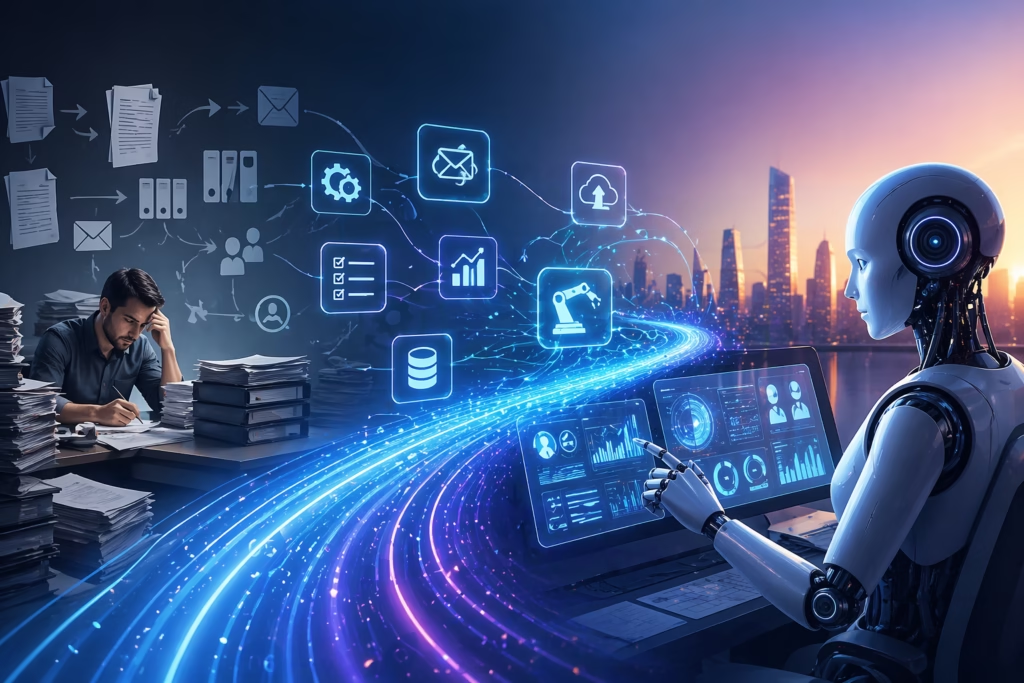
Some of the cutting-edge technology that contributes to powering AI-enabled HR platforms include Natural Language Processing (NLP), which aids in AI’s ability to comprehend and answer questions posed by employees in human language.
Machine Learning allows for consistent improvements in the precision of hiring through continuous learning from past experiences. Predictive Analytics is employed to predict future trends within the workforce and subsequent hiring requirements.
Chatbots offer instantaneous interaction and assistance for employees who have questions regarding their HR department. Data Analytics is instrumental in creating valuable insights and reporting.
AI vs Traditional HR Processes
| Aspect | Traditional HR | AI-Powered HR |
|---|---|---|
| Hiring Speed | Slow and manual | Fast and automated |
| Decision Making | Experience-based | Data-driven insights |
| Employee Support | Limited working hours | 24/7 instant responses |
| Cost Efficiency | High operational cost | Reduced HR expenses |
| Scalability | Difficult to scale | Easily scalable |
This comparison clearly shows how AI is transforming HR from a manual system into a smart, automated ecosystem.
Stages of AI Adoption in HR
The process of adoption of AI in HR usually progresses in stages. For instance, during the first stage, companies deploy basic automation in activities such as emails and scheduling.
In the second stage, chatbots are employed for the purposes of dealing with employees’ support services and questions.
During the third stage, AI-powered recruiting tools are utilized for recruitment purposes. The fourth stage is marked by predictive HR analytics, while the final stage features an AI-powered ecosystem for HR functions.
Most firms operate at the level of Stage 2 and 3 while advanced firms have progressed to Stage 4 and beyond.
Conclusion
ChatGPT and generative AI are reshaping the HR function by turning traditional, manual processes into faster, more intelligent, and more employee-centric systems. From recruitment and onboarding to employee engagement and performance management, AI HR assistants are helping HR teams reduce workload, improve accuracy, and deliver quicker responses to employee needs.
While human judgment remains essential, AI acts as a powerful support system that enhances decision-making and efficiency. As organizations continue to adopt these technologies, HR is evolving from an administrative function into a strategic, data-driven partner in business growth.
Frequently Asked Questions (FAQs)
1. What is an AI HR assistant?
An AI HR assistant is a tool powered by artificial intelligence that helps automate HR tasks such as answering employee queries, scheduling interviews, supporting onboarding, and managing HR operations efficiently.
2. How is ChatGPT used in HR?
ChatGPT is used in HR for drafting job descriptions, handling employee queries, supporting recruitment processes, assisting onboarding, and improving internal communication.
3. What are the benefits of generative AI in HR?
Generative AI improves efficiency, reduces manual workload, enhances employee experience, speeds up hiring processes, and provides better data-driven insights for decision-making.
4. Can AI replace HR professionals?
No, AI cannot fully replace HR professionals. It supports them by automating repetitive tasks, while humans remain essential for decision-making, empathy, and complex employee relations.
5. Is AI in HR safe to use?
Yes, AI in HR is safe when used with proper data privacy policies, ethical guidelines, and human oversight to ensure fairness, transparency, and security.
6. Which HR tasks can be automated using AI?
AI can automate tasks like resume screening, interview scheduling, employee support queries, payroll processing, onboarding documentation, and performance tracking.