
Big data refer to extremely large data sets that cannot be managed, processed or analyzed using traditional data processing software. It’s not just about size it’s about speed, variety and value. Organization use big data to make better decision, improve efficiency and predict trend.
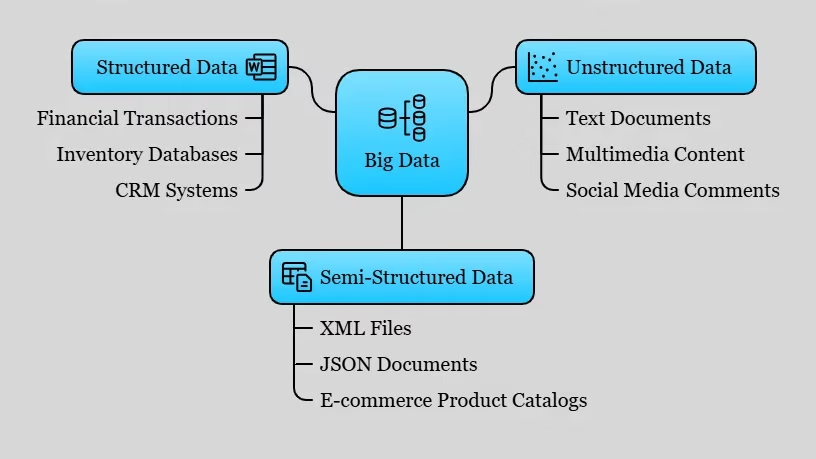
- Structured information: Databases and spreadsheets.
- Unstructured information: Emails, movies, social media, sensor statistics.
- Semi based information: JSON, XML documents.
Example: Netflix makes use of big records to investigate viewing conduct to advise indicates to customers.
Contents
- 1 Importance of Big Data in Today’s World
- 2 Key Characteristics of Big Data
- 3 Big Data Analytics: An Overview
- 4 Tools and Technologies for Big Data
- 5 Big Data Platform (Hadoop, Spark)
- 6 Data Mining and Big Data
- 7 Machine Learning and Big Data
- 8 Big Data in Business Intelligence
- 9 Big Data Applications in Healthcare
- 10 Big Data in Finance
- 11 Big Data in E-commerce
- 12 Big Data in Social Media Analytics
- 13 Big Data in Government & Smart Cities
- 14 Big Data Security and Privacy
- 15 Challenges in Big Data Management
- 16 Future Trend in Big Data
- 17 Careers and Skills in Big Data
- 18 Conclusion
Importance of Big Data in Today’s World
Big records is essential in each area: commercial enterprise, healthcare, finance, schooling, government, and generation.
Its significance consists of:
- Enhanced selection making: Companies can expect patron conduct and optimize strategies.
- Cost reduction: Automated information processing saves assets.
- Revenue boom: Insights assist pick out new opportunities and markets.
- Competitive gain: Organizations the use of large facts outperform competitors in innovation and method.
Key Characteristics of Big Data
- Volume: Big statistics involves terabytes to petabytes of statistic.
- Velocity: Real time facts processing, e.g. streaming analytics on social media.
- Variety: Includes textual content, image, film, audio, log, and sensor data.
- Veracity: Ensuring accuracy and consistency of statistic.
- Value: Extracting meaningful insight from massive dataset.
- Example: Twitter generate
Types of Big Data
Structured Data
Data this is organized in a hard and fast format, usually stored in rows and columns within databases. It’s clean to input, query, and examine using conventional tools like SQL.
Examples:
- Customer statistics in CRM systems
- Bank transaction statistics
- Inventory databases
Characteristics:
- Easy to save and retrieve
- Highly prepared
- Suitable for conventional statistics analytics
Use Cases:
- Retail agencies reading income tendencies
- Banks tracking transaction history
- Hospitals monitoring affected person records
Unstructured Data
Data that does not comply with a predefined format. It is extra hard to shop and examine with traditional database, often requiring specialized tools like Hadoop, Spark, or NoSQL database.
Examples:
- Social media post (Facebook,Twitter)
- Emails
- Audio, video, pix
- Sensor and IoT records
Characteristics:
- Unorganized or semi organized
- Large in length (text, video, audio)
- Requires superior analytics gear
Use Cases:
- Sentiment evaluation on social media
- Video surveillance in clever towns
- Voice popularity for digital assistant like Siri or Alexa
SEMI-Structured Data
Data that does not are living in a traditional database, but carries tag or marker that make it in part organized. It sits between structured and unstructured data.
Examples:
- JSON and XML documents
- Log files from servers
- Emails with metadata
- Sensor output with predefined fields
Characteristics:
- Flexible shape
- Requires parsing equipment for evaluation
- Supports each established and unstructured queries
Use Cases:
- Web server log analysis for traffic styles
- IoT devices sending semi structured sensor readings
- APIs that provide statistics in JSON/XML formats
Big Data Analytics: An Overview
Big records analytics is the procedure of examining huge datasets to discover hidden patterns, correlations and insights.
Types of analytic encompass:
- Descriptive Analytic: Understand what occurred.
- Diagnostic Analytic: Identify why some thing happened.
- Predictive Analytic: Forecast future occasions.
- Prescriptive Analytic: Suggest actions to optimize effects.
Tools and Technologies for Big Data
Key gear encompass:
- Hadoop: Distributed data garage and processing.
- Apache Spark: Fast in memory analytic.
- NoSQL Database: MongoDB, Cassandra for unstructured record.
- Data Visualization: Tableau, Power BI.
Big Data Platform (Hadoop, Spark)
- Hadoop: Reliable for batch processing and garage.
- Spark: Real time analytics, device getting to know, and streaming.
Google Big Query, AWS Redshift, Azure Data Lake Cloud answers for scalable, secure large records management.
Data Mining and Big Data
Data mining uncovers hidden styles and tendencies in massive datasets.
Techniques include:
- Clustering
- Classification
- Regression evaluation
- Association rule mining
Machine Learning and Big Data
Machine learning leverages massive data to:
- Predict consumer behavior
- Detect fraud in banking
- Optimize production approaches
- Power advice engines in ecommerce
Big Data in Business Intelligence
Big statistics allows corporations to:
- Visualize tendencies
- Combine a couple of data resources
- Make knowledgeable decisions quickly
- Predict marketplace modifications
Big Data Applications in Healthcare
- Predictive diagnostics for early disease detection
- Personalized treatment plans
- Hospital operational performance
- Pandemic outbreak tracking
Big Data in Finance
- Fraud detection
- Credit danger evaluation
- Algorithmic trading
- Customer conduct analysis
Big Data in E-commerce
- Product recommendation systems
- Inventory optimization
- Sales forecasting
- Marketing marketing campaign evaluation
Big Data in Social Media Analytics
- Sentiment evaluation
- Influencer monitoring
- Campaign performance monitoring
- Trend detection
Big Data in Government & Smart Cities
- Traffic and infrastructure monitoring
- Crime prediction
- Energy consumption management
- Public service optimization
Big Data Security and Privacy
- Protecting sensitive data
- Ensuring compliance (GDPR, HIPAA)
- Securing cloud storage
- Data anonymization
Challenges in Big Data Management
- High storage costs
- Data integration difficulties
- Ensuring data quality and veracity
- Shortage of skilled professional
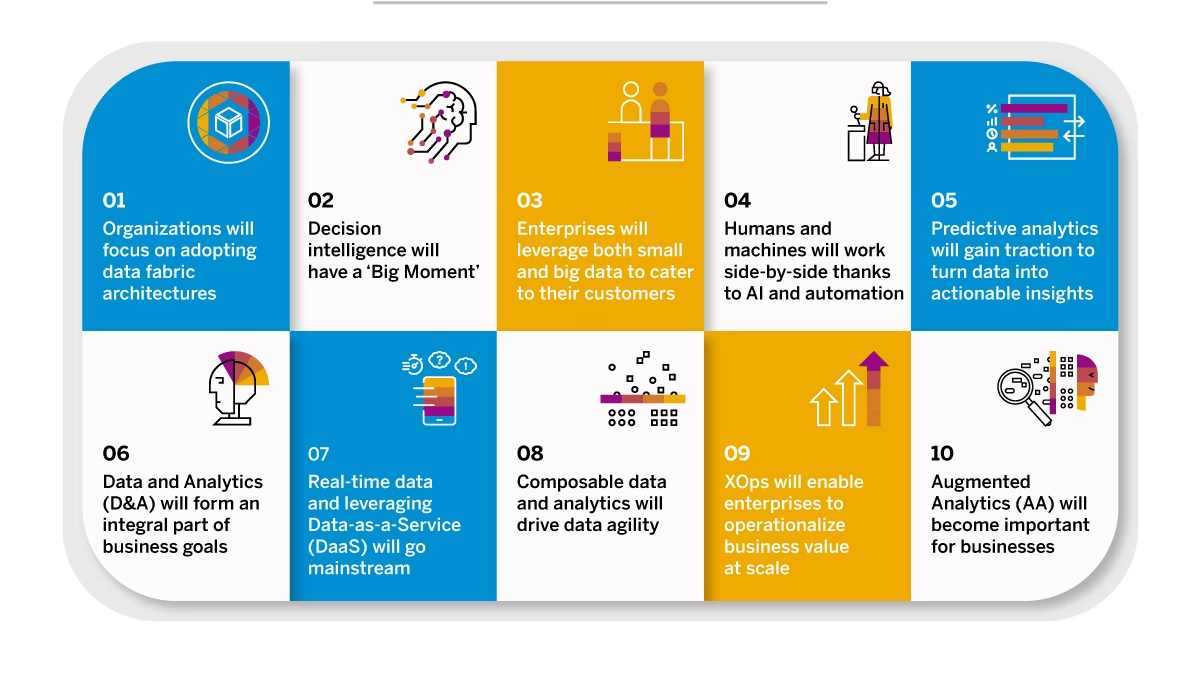
Future Trend in Big Data
- Real time analytics
- AI pushed insights
- Edge computing for IoT devices
- Cloud based totally big records solutions
- Predictive and prescriptive analytics
Careers and Skills in Big Data
High call for roles consist of:
- Data analyst
- Data engineer
- Data scientist
- Machine studying engineer
- Big statistics architect
Skill required: Python, R, SQL, Hadoop, Spark, Tableau and cloud platform.
Conclusion
Big Data is transforming the way groups, governments and industries perform by using offering valuable insights, predicting tendencies and optimizing decision making. Understanding its sorts dependent, unstructured and semi dependent and leveraging the proper equipment and analytics techniques is fundamental to unlocking its full ability. By mastering huge records technologies and applying them correctly, you could power innovation, improve efficiency and stay ahead in a records pushed global.