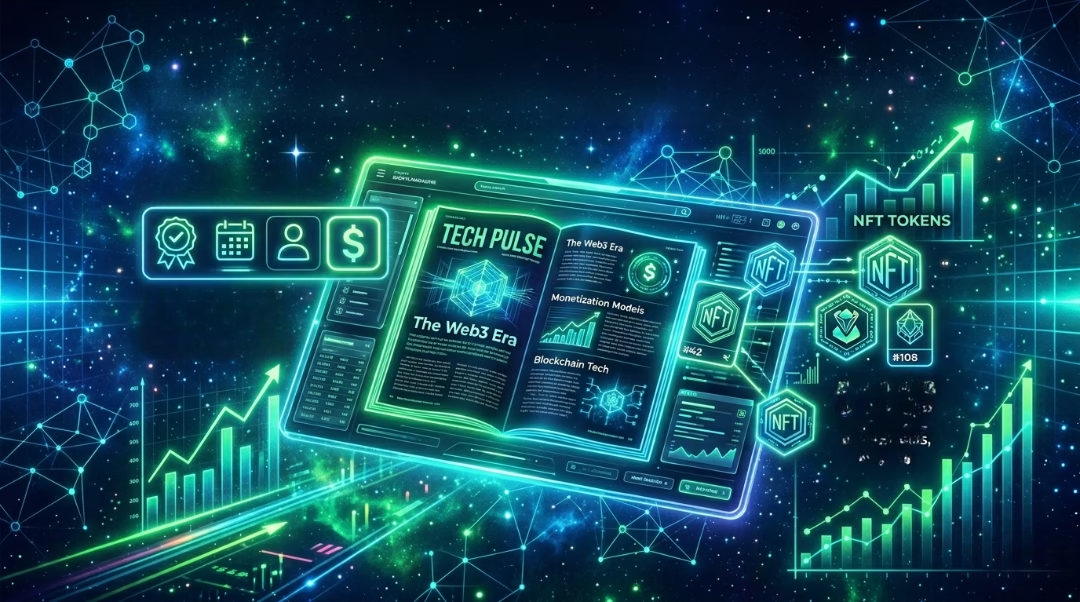

The transition towards a digitalized media industry is not only changing our consumption habits but is transforming the entire structure of the market. In the last decade, due to the transition from the print media industry to its digital version, companies, authors, and businesses have managed to find innovative ways of reaching audiences across the globe. However, there is an important issue associated with the transformation of the digitalized format: how can companies monetize it in order to provide readers with a convenient and valuable product?
Nowadays, the concept of the digital magazines has become completely different from its print predecessor. The modern version implies a rich multimedia format, personalization, and interactivity. Against the backdrop of increasingly fierce competition and the unpredictable nature of advertising earnings, many companies started to experiment with alternative methods of generating profit. Among those options, subscription-based strategies and the application of NFT technology have emerged as promising options.
The Evolution of Digital Magazines
Digital Magazines began as simple scans of physical magazines in PDF format. With advancing technology, these PDF scans soon transformed into dynamic spaces where there are videos, interactive content, and feeds that are specifically optimized for your preferences.
Notable phases within Digital Magazines include:
- Static digital copies: These early iterations were nothing but exact copies in a digital format, without any interactive features whatsoever.
- Interactive editions: Multimedia such as videos, animations, and hyperlinks were introduced as a means of spicing up the content.
- Mobile-first design: As mobile phones replaced desktops as the main device used by consumers, these platforms were optimized for mobile.
- Personalized using AI: Recommendations began to be based on individual preferences, enhancing engagement with the product.
- Blockchain and NFTs: The latest phase includes integrating Blockchain and NFTs as part of a business model.
Why Monetization is a Challenge for Digital Magazines
Monetizing digital magazines is not as easy as it was for traditional print magazines. The cost reduction provided by digital distribution is accompanied by several challenges including competition, changes in consumer expectations, and increased difficulty in making consumers buy digital media.
The main challenge associated with monetizing digital magazines is the increasing expectation among readers of getting content at no charge, forcing publishers to justify paying for content. Additionally, advertisers have increasingly become unreliable since the advent of ads blockers and unstable algorithms.
Challenges associated with monetization
- Declining ad revenue
- Extreme competition by free access websites
- Consumers’ exhaustion with subscriptions
- Sustaining audience engagement
Notwithstanding all these challenges, digital magazines continue to explore innovative ways of generating revenue.
Subscription Models: The Backbone of Digital Magazine Revenue
One of the most reliable forms of monetization for digital magazines is subscription-based models. They provide stable streams of income and contribute to forming an audience base. Gradually, these methods have been getting more adaptive and user-oriented.
Instead of forcing users to participate in strict systems of payments, digital magazines offer tiered subscriptions. This allows readers to choose plans suitable for them. Usually, such changes lead to improved conversion rates and reduced churn rates.
Popular Types of Subscription Models
- Freemium model: there are both free and premium sections which are blocked by a paywall
- Paid subscriptions on monthly or annual basis
- Plans with tiers and additional bonuses
- Multi-platform subscriptions packages
Advantages of Subscription Monetization Models
- Stable and regular income stream
- Better relations between a publication and its readers
- Ability to gather user data
Disadvantages
- Increasing subscription fatigue among users
- High dependence on quality content production
- Lack of feeling of owning content
Introduction to NFT Technology in Digital Magazines
There is a new dimension that NFT technology is bringing to Digital Magazines in terms of income generation. Unlike normal digital content, NFT enables readership to have ownership of part of that particular content, whether a magazine issue, an article, or a limited edition.
The concept of ownership will completely change the face of Digital Magazines since value will be derived not from access but actual ownership of the digital material.
The NFT concept also offers a means of creating scarcity through limiting the number of issues that are available at any one time.
How NFTs Are Transforming Digital Magazine Monetization
Harnessing the power of NFTs within Digital Magazines is relatively new, but there have been several exciting developments thus far. Various innovative methods involving creative content creation and alternative revenue streams have been tested by publishers.
Major Monetization Strategies for NFTs
- Issue limited-edition magazine editions as NFTs
- Create premium subscription services using NFTs
- Tokenize each article
- Develop NFT-based membership programs
Moreover, NFTs enable creators to earn from royalty payments from every subsequent sale, generating an infinite stream of income.
Subscription vs NFT Monetization
Understanding the difference between subscription and NFT models is essential for publishers of Digital Magazines.
| Aspect | Subscription Model | NFT Model |
|---|---|---|
| Revenue Type | Recurring income | One-time + royalties |
| Ownership | Platform-controlled | User-owned |
| Accessibility | Easy for all users | Requires basic crypto knowledge |
| Engagement | Content-focused | Community + ownership driven |
| Growth Potential | Stable | High but evolving |
While subscriptions provide stability, NFTs offer innovation and long-term value.
The Rise of Hybrid Monetization Models
From the perspective of the future, combining subscription-based schemes with NFT-based projects may become the defining feature of digital magazines. The hybrid monetization approach can assist publishers in attracting a wider audience, while offering diverse monetization options.
For example, a digital magazine might provide its users with the option to either subscribe to its content for free or pay to gain access to additional benefits such as exclusive NFT-editions.
Advantages of hybrid approaches
- Multiple monetization options
- Diversification
- Greater reach
- Engagement
- Brand positioning
In other words, a digital magazine wouldn’t be tied to a single monetization channel anymore.
Emerging Trends in Digital Magazine Monetization
The dynamics of digital magazine revenue generation continue to evolve, driven by advances in technology and the behavior of its audience. Publishers retain more power, while consumers look for alternative ways to enjoy their favorite titles without subscribing.
One of the most prominent trends involves decentralizing the publishing process, providing creators with better control over their content and compensation. Meanwhile, microtransactions are becoming increasingly popular, allowing readers to purchase single articles instead of subscribing to a whole package.
Important Trends to Consider
- Web3 and decentralized platforms for publishing
- Article-by-article payment systems
- Personalized content developed with the help of artificial intelligence
- Immersive and interactive narrative formats
When considered as a whole, these trends indicate the emergence of a more flexible and user-centric digital magazine market.
Best Practices for Monetizing Digital Magazines
Generating stable revenue from digital magazines is made possible by a careful blend of excellent content, intelligent technology, and genuine reader interest.
The actions that publishers must take
- Provide high-quality content that readers are happy to pay for, but also consider novel ways of making money.
- Adopt approaches that align with the market segment and provide genuine value.
Some tested techniques
- Focus on niches that are lucrative and unique.
- Develop a community of loyal readers.
- Experiment with new technologies like NFTs.
- Apply data analysis to personalize the experience.
Monetization Strategy Comparison Table
| Strategy | Revenue Stability | Scalability | Risk Level |
|---|---|---|---|
| Subscriptions | High | High | Medium |
| Advertising | Medium | High | High |
| NFTs | High potential | Medium | High |
| Affiliate Marketing | Medium | Medium | Low |
This comparison highlights why Digital Magazines are moving toward diversified
The Role of Community in Digital Magazines
As a way for the Digital Magazines to flourish, community building is becoming even more important. Readers today require more than just content; they want to be part of something and feel exclusive.
NFT communities and subscribers groups provide publishers with an opportunity to foster connections with their readership. This results in better retention as well as improved monetization possibilities.
Future Outlook of Digital Magazines
In order to keep up in the future, Digital Magazines will have to innovate and adapt in terms of using cutting-edge technologies and developing novel business approaches.
Digital magazines will become increasingly interactive, personalized, and decentralized while revenue streams will diversify beyond simple pay-per-use models and be based on value-oriented ecosystems involving the user.
Future Forecasts
- Increased adoption of blockchain solutions
- Emergence of creator-owned platforms
- Implementation of AI-based personalization
- Growth of content ecosystems based on NFTs
Conclusion
The world of digital magazines is undergoing massive changes fueled by the urge to create sustainable monetization methods and enhance the user experience. Subscription models remain reliable; however, the emergence of new technologies such as NFTs brings a completely new angle to the concept of ownership of magazine content.
Those who manage to balance both concepts will reap great benefits by using the reliable foundation of subscription-based revenue generation along with the creative power of NFTs. Focusing on engaging their audience and innovatively integrating technology can help publishers unlock previously unavailable options for expansion.
In conclusion, there is no denying that digital magazines have not only adapted successfully but are set to enter a new age of innovation and limitless opportunities.
FAQs
1. What are digital magazines?
Digital magazines are online versions of traditional print magazines that can be accessed via websites, apps, or downloadable formats. They often include interactive features like videos, links, and animations.
2. How do subscriptions work in digital magazines?
Subscriptions allow users to pay a recurring fee (monthly or yearly) to access premium content. This provides publishers with a steady and predictable revenue stream.
3. Why are subscriptions important for digital magazine monetization?
Subscriptions reduce reliance on ads and create consistent income, helping publishers build long-term relationships with readers while offering exclusive content
4. What are NFTs and how are they used in digital magazines?
NFTs (Non-Fungible Tokens) are unique digital assets stored on blockchain. In digital magazines, they can be used to sell exclusive editions, limited-access content, or collectible issues.
5. How do NFTs help magazine publishers earn revenue?
NFTs enable publishers to sell rare digital content, earn royalties on resales, and create premium experiences for loyal readers.
6. Are NFTs better than subscriptions for monetization?
Not necessarily. Subscriptions provide stable income, while NFTs offer high-value, one-time or resale-based earnings. Many publishers use a hybrid model combining both.
7. What are the benefits of combining subscriptions and NFTs?
Combining both allows publishers to generate steady income from subscriptions and additional revenue from exclusive NFT drops, maximizing overall monetization.
8. Are digital magazines replacing print magazines?
Digital magazines are growing rapidly, but print still has a niche audience. However, digital formats are more scalable, cost-effective, and accessible globall
9. What challenges do digital magazines face with NFTs?
Challenges include market volatility, lack of awareness, environmental concerns, and technical barriers for users unfamiliar with blockchain.
10. What is the future of digital magazine monetization?
The future lies in diversified revenue models—subscriptions, NFTs, memberships, and personalized content—driven by technology and evolving reader preferences.