
The Rise of Intelligent Business Systems
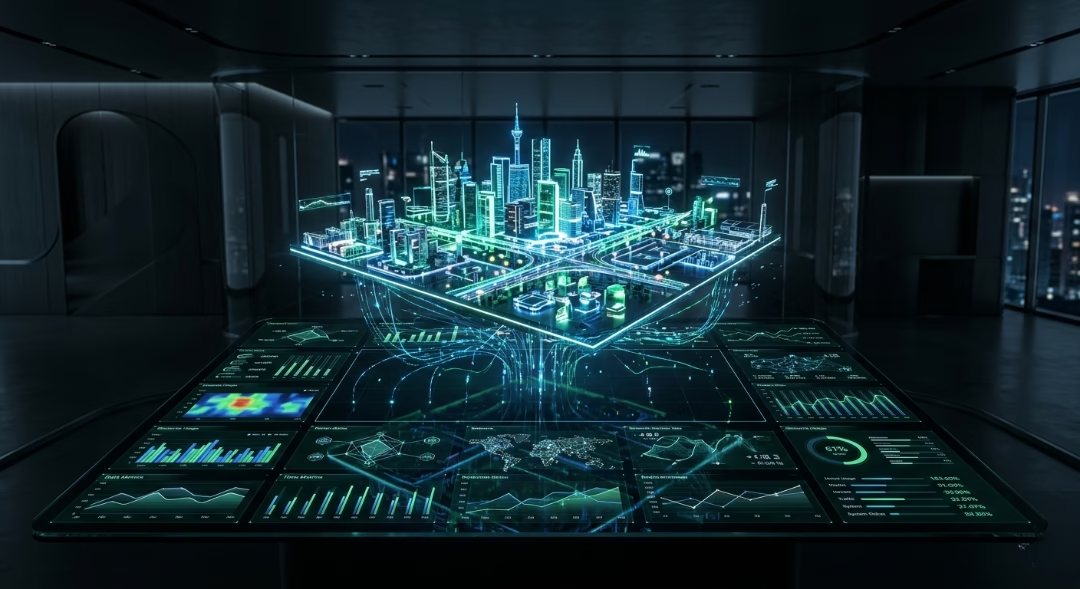
Modern businesses are not governed by decision-making processes based purely on human choice or static reports. Instead, companies are moving towards systems capable of simulating, predicting, and optimizing outcomes in real-time. One of the core factors behind this revolution is the concept of the Digital Twin.
In its most basic form, a Digital Twin is a computerized replica of a physical system, process, or product. In an organizational context, it is not just a simulated version but an ever-evolving living model that continually learns from live data, allowing businesses to test their strategies before executing them.
This technology is revolutionizing industries as companies no longer have to rely on guesses but can predict outcomes. From optimizing logistics and improving the customer experience to reducing operational costs, Digital Twins are becoming a competitive advantage.
As IoT and artificial intelligence keep evolving, Digital Twins are fast becoming essential business tools rather than experiments.
What Is a Digital Twin in Business?
A Digital Twin in business refers to a virtual representation of a company’s processes, systems, or operations that is continuously updated with real-world data.
Simple Breakdown
| Component | Explanation |
|---|---|
| Physical System | Real-world process (factory, website, supply chain) |
| Digital Model | Virtual replica of that system |
| Data Connection | Real-time data flowing between both |
| Insights | Predictions, simulations, optimizations |
How It Works (Step-by-Step)
The digital processes involved in modern digital systems go through an intelligent data flow process, transforming raw data input into actionable business processes. This streamlining allows companies to make decisions based on intelligence, more efficiently, and accurately. Let us examine this process further.
- Collection of real-time data
In order to understand the digital process, one must first recognize the origin of the data itself. Real-time data can be collected from a variety of sources, such as devices, sensors, and integrated systems. These sources collect data from their physical surroundings, their performance indicators, or even user behavior. The efficiency of the data collection phase will determine the success of later stages. - Routing of data into the digital model
Once collected, the next step involves routing the collected data into the digital model. The digital model is a representation of the physical system, which can help businesses observe their operations in a controllable manner. - The model simulates different scenarios
After incorporating all the relevant data in the model, the computer then creates different scenarios in order for businesses to make predictions without having to test out things practically. In essence, this enables businesses to test out how a particular system will perform under different pressures or if certain changes are implemented. - Artificial Intelligence analyzes outcomes for improvements
This is the stage where Artificial Intelligence comes into play. It analyzes the outcomes from various simulated scenarios and gives business owners suggestions on areas that need improvement. The beauty of using AI technology at this point is that everything becomes more efficient and accurate since it does not depend on human intervention. - Implementations based on suggestions
Ultimately, actions based on insights from the simulations will be taken. In simple terms, this means that any modifications suggested based on simulations will be implemented by the company in question. This includes anything that can help avoid system failure and even improve customer experience.
Why Digital Twins Matter for Modern Businesses
The traditional approach to operating a business is characterized by numerous uncertainties, delayed feedback, and crisis management. Digital Twins take all of that and turn it upside down. Instead of dealing with issues after the fact, organizations can detect them beforehand and prevent them from occurring.
Main Advantages of Digital Twins
- Improved Decision-Making
Digital Twins offer businesses an opportunity to test out various scenarios without risking actual implementation. - Increased Efficiency
Efficiencies can be detected and failures prevented, leading to decreased operational expenses. - Live Monitoring
Through real-time data processing, organizations obtain an ongoing and accurate view of their operations. - Predictive Analysis
Thanks to artificial intelligence capabilities, Digital Twins can predict future events and trends.
Real-World Applications of Digital Twins
Digital Twins have ceased being a mere buzzword and have revolutionized the way industries operate throughout the world. Creating virtual replicas of physical systems provides insight into how things work and enables predicting outcomes and optimizing the process. No matter whether it is manufacturing, automotive, or healthcare industries, Digital Twins provide opportunities to mitigate risks and increase efficiency while making smart decisions based on the information received. The power lies in the fusion of two worlds and subsequent innovative development.
The leaders of the global market incorporate Digital Twin technology into their businesses to remain competitive. Let us consider the case of Siemens – one of the most prominent global manufacturers. Siemens uses Digital Twins to create and optimize manufacturing processes. Thus, it is possible to create digital models of entire production chains, test out various scenarios in order to find the optimal solution. As a result, the company increases productivity without spending extra money and accelerating innovation processes.
Industry Use Cases
| Industry | Use Case | Impact |
|---|---|---|
| Manufacturing | Production simulation | Reduced downtime |
| Healthcare | Patient modeling | Better diagnosis |
| Retail | Customer behavior simulation | Increased sales |
| Logistics | Supply chain optimization | Faster delivery |
| Finance | Risk modeling | Improved decision-making |
Digital Twins vs Traditional Business Models
| Aspect | Traditional Approach | Digital Twin Approach |
|---|---|---|
| Decision Making | Reactive | Predictive |
| Data Usage | Historical | Real-time |
| Risk | High | Low |
| Efficiency | Moderate | High |
| Innovation | Slow | Fast |
How Digital Twins Are Transforming Business Operations
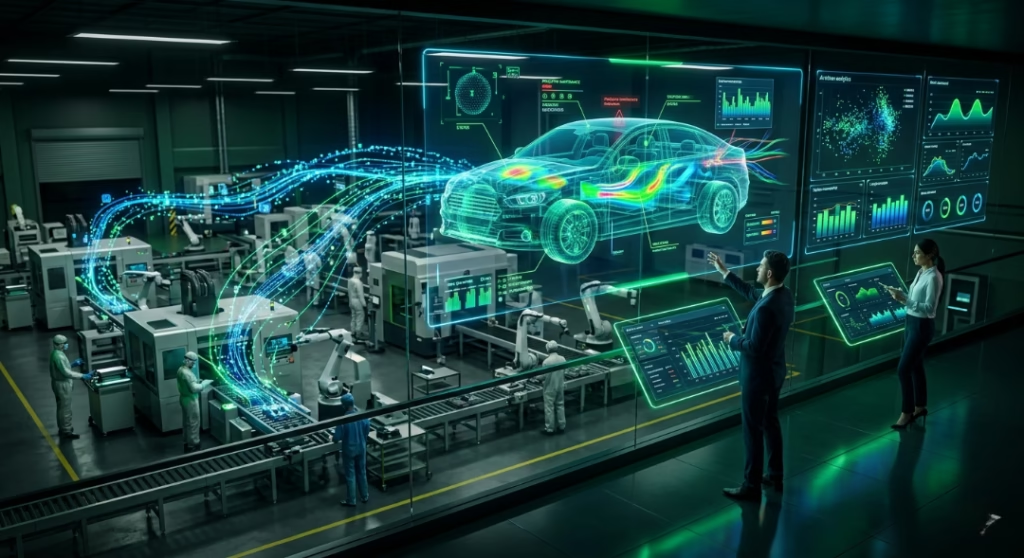
Through Digital Twins, modern organizations are rethinking their operations, transforming decision-making processes from relying on assumptions and trends to a much more precise approach that incorporates both real-time information and simulation-based prediction models. Organizations benefit from becoming more agile, productive, and flexible due to this approach, which helps them react to changing market conditions and make more informed decisions.
Digital Twins facilitate change in four primary areas within different departments:
- Operational Management: They offer the possibility to simulate and optimize workflow processes, minimizing waste and lowering operational costs while increasing efficiency.
- Marketing Management: Through the analysis of customer data, it is possible to predict the behavior of future customers and adapt marketing efforts to increase the return on investment.
- Sales Management: Sales management teams can benefit from Digital Twins through better understanding of the customer journey and purchasing process.
- Customer Experience Management: By learning from the customer experience in real time, digital twins enable hyper-personalization of communication and service delivery.
Key Technologies Behind Digital Twins
Digital twins are made possible by the combination of technologies that work together to generate accurate representations of physical systems in real time. The IoT helps gather information through sensors and other devices to keep the digital twin up-to-date. AI and Machine Learning analyze the data to identify trends, predict future events, and make recommendations for improvement.
Cloud Computing provides the platform to manage the massive amounts of data generated, and Big Data techniques organize all this collected data from multiple sources. Collectively, these technologies make digital twins possible.
Challenges of Implementing Digital Twins
Although the appeal of Digital Twin Technology is high, implementing it comes with its fair share of challenges. For starters, the initial investment required is relatively costly since implementing the technology necessitates purchasing cutting-edge software, hardware, and data analytics solutions. This becomes further complicated by data privacy and security concerns, which arise particularly when ongoing monitoring and analysis involves delicate operations or client data. Also, integrating the technology within the current technological framework may prove challenging since the existing systems were not designed with the objective of facilitating instantaneous data sharing. Lastly, the requirement for employees familiar with AI and data analysis presents another hurdle, considering that there is currently a shortage of such professionals.
Major Challenges
- High initial cost of technology and infrastructure
- Data privacy and security concerns
- System integration difficulties
- Professional scarcity
Future of Digital Twins in Business
The development of Digital Twins is very much dependent on how fast technologies such as AI, automation, and Internet of Things advance. In an environment characterized by the implementation of automated data-powered systems, Digital Twins will be instrumental in defining the decision-making process for businesses. Instead of relying on past information, these platforms will simulate possible results using current information in order to optimize the operations of the organization.
Trends to Watch Out For
- AI-powered autonomous Digital Twins
- Integration with virtual worlds similar to metaverse
- Global business simulation using real-time technology
- Customized customer experience
Who Should Use Digital Twins?
Digital Twins are no longer limited to large enterprises with massive budgets. Today, businesses of all sizes can benefit from this technology, especially those looking to scale efficiently and make smarter decisions. Startups can use Digital Twins to test ideas without heavy risk, while large enterprises can optimize complex operations across multiple systems. Similarly, e-commerce businesses can better understand customer behavior, and SaaS companies can enhance performance by simulating product usage and system performance in real time. This makes Digital Twins a versatile tool across industries and business models.
Ideal Users
- Startups aiming for scalable and efficient systems
- Enterprises managing complex operations
- E-commerce businesses optimizing customer journeys
- SaaS companies improving performance and reliability
Conclusion
In the current era of rapidly evolving technology, Digital Twin is not only an innovative idea; it is a step towards necessity. The creation of dynamic copies based on reliable data allows for replacing guessing with informed decision-making based on predictions rather than reactions. This ability to predict events is one of the main differences between successful innovative enterprises and other businesses.
Of course, there are several challenges related to investments, data security issues, and time needed to integrate the new technology. However, the benefits that Digital Twin will bring after its implementation will outweigh the mentioned barriers. With the increasing importance of the Internet of Things and Artificial Intelligence, Digital Twin will also become more popular and efficient.