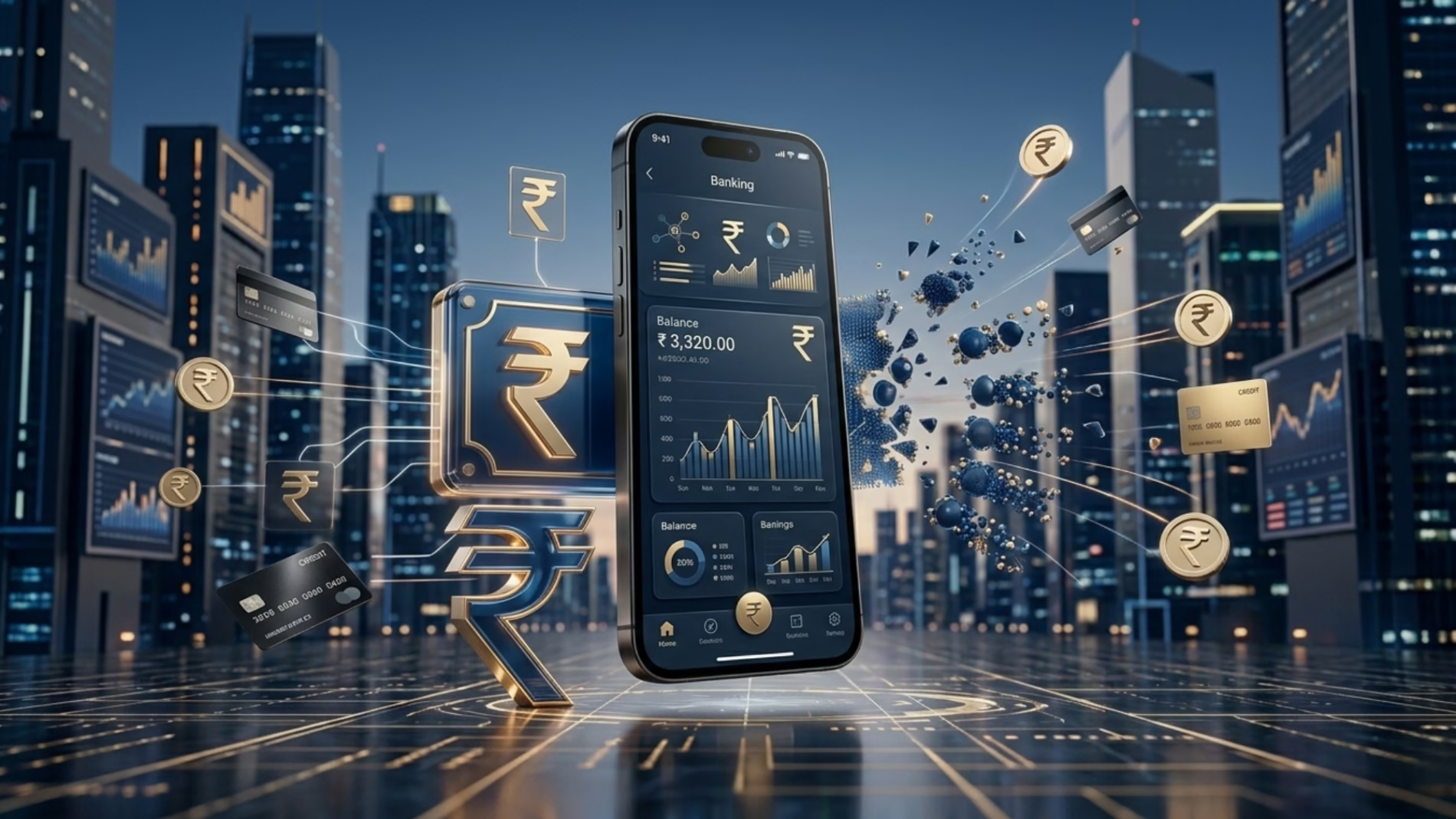

In recent years, consumer spending has undergone more transformation than it has in the past few decades. In the past, to buy a big-ticket item, you had to plan, save for it for a long time, and pay the entire amount upfront. But now that’s quickly changing.
Today, instead of, “How much does this cost?”
They want to know, “How much do I pay a month ?”
This has given birth to the so-called “Pay in Parts Economy”. It is driven by EMI (Equated Monthly Installments), BNPL (Buy Now Pay Later) and digital credit.
Almost anything mobile phones, electronics, clothing, travel, education and even groceries – can be paid in monthly instalments.
What is the “Pay in Parts” Economy??
The Pay in Parts economy refers to a financial ecosystem where consumers divide the cost of goods or services into multiple installments instead of paying upfront.
At its core, it includes:
- EMI (Equated Monthly Installments)
- Buy Now Pay Later (BNPL)
- Digital micro-credit systems
- No-cost installment plans
- Subscription-based ownership models
Rather than focusing on the full price of a product, consumers focus on monthly affordability.
Why the Pay in Parts Economy is Growing Rapidly
The rise of EMI culture is not accidental. It is the result of multiple economic, technological, and behavioral shifts happening at the same time.
1. Rising Cost of Living and Financial Pressure
One of the strongest drivers is inflation.
In many urban economies, costs related to housing, transportation, education, healthcare, and lifestyle are increasing faster than income growth.
This creates a gap between desire and affordability.
EMI bridges this gap by:
- Making expensive purchases accessible
- Reducing upfront financial burden
- Improving cash flow management
Instead of delaying purchases, consumers now spread payments over time.
2. The Fintech Revolution
The biggest transformation has come from fintech companies.
Earlier, credit access was limited and slow. Today, it is instant.
Modern systems offer:
- Instant loan approvals
- Paperless onboarding
- AI-based credit evaluation
- UPI-linked repayments
- App-based EMI approvals
This has removed traditional banking friction completely.
Credit is no longer a formal process—it is a digital feature inside apps.
3. Psychological Shift in Spending Behavior
One of the most important reasons behind EMI growth is behavioral psychology.
Humans do not evaluate payments purely rationally.
Why EMI feels easier:
- Smaller numbers feel less stressful
- Future payments feel less painful than immediate ones
- Attention shifts from total cost to monthly cost
For example:
- ₹60,000 feels expensive
- ₹5,000/month feels manageable
Even though the total cost is the same.
This psychological effect is one of the strongest drivers of modern consumption.
4. E-Commerce Platforms Encouraging EMI Adoption
Online platforms play a major role in this shift.
EMI options are not just available—they are actively promoted.
Common marketing strategies:
- “No Cost EMI Available”
- “Pay ₹999/month only”
- “Buy now, pay later option”
These messages reduce hesitation and increase purchase completion rates.
Business benefits:
| Metric | Impact |
|---|---|
| Conversion rate | Increases significantly |
| Average order value | Higher purchases per user |
| Customer retention | Improved due to affordability |
5. Changing Mindset of Younger Generations
Gen Z and millennials have a very different approach to money compared to previous generations.
Traditional mindset:
- Save first
- Buy later
- Avoid debt
Modern mindset:
- Access now
- Pay gradually
- Optimize cash flow
For younger users, EMI is not seen as debt—it is seen as a financial tool for convenience.
Impact of EMI Culture on Consumer Behavior
The way people spend money has changed a lot because of the Pay in Parts economy.
Shift in Spending Patterns
| Traditional Behavior | Modern Behavior |
|---|---|
| Save before buying | Buy immediately |
| Full payment upfront | Installment-based payments |
| Limited purchases | Higher spending frequency |
| Ownership mindset | Access mindset |
What People Are Buying on EMI
People are buying a lot of things on EMI like smartphones and laptops. They are also buying home appliances, furniture, travel packages, fashion products, online subscriptions and educational courses.
Even small purchases are now being converted into EMI options. This is changing the way people buy things.
Risks and Challenges of the Pay in Parts Economy
The Pay in Parts system is convenient. It also has some financial risks that people often do not think about.
1. Debt Accumulation Risk
One EMI is okay to manage.. When you have many EMIs together it can become a big financial burden. For example lets say you have these obligations:
Phone EMI is ₹3,000
Laptop EMI is ₹4,500
Furniture EMI is ₹2,500
Subscription EMI is ₹1,000
Your total fixed liability is ₹11,000 per month. This reduces your savings capacity significantly.
2. Overspending Behavior
Easy credit makes it easier for people to spend money. This leads to purchases spending more than your income and frequent upgrades that you do not really need.
3. Reduced Savings Culture
In the past people used to save money and then spend. Now people spend money first. Save later. Over time this affects how wealth you can create in the long run.
4. Dependency on Credit
A concern is that people may become too dependent on credit. Consumers may start relying on EMI for needs avoid paying in full and think of debt as a normal part of life.
Benefits vs Risks Summary
| Factor | Benefits | Risks |
|---|---|---|
| Accessibility | Easy access to products | Overuse of credit |
| Cash flow | Better monthly management | Future income pressure |
| Lifestyle | Improved purchasing power | Overspending tendency |
| Convenience | Instant buying | Reduced financial discipline |
Who Gains from the EMI Economy?
The Pay in Parts economy helps stakeholders.
1. Fintech Companies
Fintech companies earn interest and fees. They can lend money and collect consumer data for their AI models.
2. E-Commerce Platforms
E-commerce platforms sell products have bigger cart sizes and engage with customers more.
3. Retailers
Retailers can sell products to customers because they can afford them. They can also sell premium products.
4. Banks and NBFCs
Banks and NBFCs can give out loans and expand their credit ecosystem.
Future of the Pay in Parts Economy
The EMI system is changing fast. Becoming more advanced.
1. AI-Based Lending Systems
In the future credit systems will analyze behavior in time predict if you can repay a loan and adjust credit limits dynamically.
2. Income-Linked EMI Models
Soon EMI repayments may be linked to your salary and adjusted based on how much you earn.
3. Subscription Ownership Economy
of buying products people may rent devices subscribe to vehicles or lease appliances. This means that owning things will become less common.
4. Global Digital Credit Systems
We may see systems that let people buy things from countries, on credit global credit scoring networks and unified digital lending platforms.
How It Works in Real Life
A simple example:
- A smartphone costs ₹60,000
- Instead of paying full amount
- You pay ₹5,000 per month for 12 months
You get immediate access to the product, while the payment is spread over time.
This structure is now integrated into almost every major digital shopping platform and fintech ecosystem.
Conclusion
The Pay in Parts economy is a change in the way people handle money. Before people had to save up and make plans for a time to buy something. Now people can get things away and pay for them a little at a time.
People can use things like EMI Buy Now Pay Later and digital credit to buy things without paying all of the money upfront. This makes it easier for people to get the things they want. It helps the economy because people are buying more things. It also changes the way people think about whether or not they can afford something.
It is very important to be responsible when using the Pay in Parts economy. Paying for things a little at a time can make it easier to manage money in the term. However it can also cause people to borrow much money save less money and have financial problems in the long term if they are not careful.
The Pay in Parts economy is a tool it is not good or bad by itself. What matters is how people use it.
In the future digital credit will be a part of everyday life. The people who will really benefit from the Pay in Parts economy are the ones who can use it in a way by being careful with their money and planning ahead. The Pay, in Parts economy will work well for people who can balance the convenience of paying in parts with the discipline of making a plan and sticking to it.
Frequently Asked Questions (FAQ)
1. What is the Pay in Parts economy?
The Pay in Parts economy refers to a financial system where consumers split payments into smaller installments using EMI, Buy Now Pay Later (BNPL), or digital credit instead of paying the full amount upfront.
2. Why is EMI becoming so popular?
EMI is popular because it makes expensive products more affordable by converting large payments into smaller monthly amounts, improving cash flow and purchase flexibility.
3. Is Buy Now Pay Later the same as EMI?
Not exactly. BNPL is usually short-term and often interest-free for a limited period, while EMI can be longer-term and may include interest depending on the plan.
4. What are the risks of using EMI frequently?
Frequent EMI usage can lead to multiple monthly obligations, reduced savings, overspending habits, and long-term debt pressure if not managed carefully.
5. How does EMI affect consumer spending behavior?
EMI reduces the psychological impact of paying a large amount upfront, which often leads to higher spending and quicker purchase decisions.
6. Who benefits from the Pay in Parts system?
Fintech companies, banks, and e-commerce platforms benefit the most due to increased sales, higher loan distribution, and more user engagement.
7. Is EMI good or bad for personal finance?
EMI is neither good nor bad by itself. It is a financial tool that can be helpful if used wisely but risky if it leads to uncontrolled borrowing.
8. What is the future of EMI and digital credit?
The future includes AI-based credit systems, salary-linked repayments, subscription-based ownership models, and more integrated digital lending ecosystems.