Cybersecurity has grow to be one of the most vital components of contemporary life. From non public smartphones and laptops to organization cloud infrastructures and government databases, virtual systems are deeply embedded in each day operations. As era evolves so do cyber threats. Hackers, cybercriminals and malicious actor constantly develop new strategies to take advantage of vulnerabilities.
Cybersecurity refers back to the practice of protecting structures, networks, program and records from digital attacks. These attacks usually intention to access, exchange or ruin sensitive information, extort cash or disrupt everyday commercial enterprise operations.
Contents
- 1 What Is Cybersecurity?
- 2 Why Cybersecurity Is Important
- 3 Core Pillar of Cybersecurity
- 4 Types of Cybersecurity
- 5 Common Cybersecurity Threat
- 6 How Cyber Attacks Happen
- 7 Cybersecurity Tool and Technologies
- 8 Cybersecurity Best Practice
- 9 Cybersecurity in Different Industry
- 10 Cybersecurity Framework and Standard
- 11 The Role of Artificial Intelligence in Cybersecurity
- 12 Cybersecurity Challenges
- 13 Cybersecurity Career Opportunities
- 14 The Future of Cybersecurity
- 15 Small Business Cybersecurity
- 16 Conclusion
What Is Cybersecurity?
Digital Security is a extensive discipline targeted on defending computer systems, servers, cell gadgets, digital structures, networks and record from malicious assaults.
It involves:
- Preventing unauthorized get right of entry to
- Detecting intrusion
- Responding to incident
- Recovering compromise system
- Ensure business continuity
Digital Security combines era, procedures and those to create a steady virtual environment.
Why Cybersecurity Is Important
Digital transformation has elevated the assault surface for people and corporations. The importance of Digital Security may be understood thru the subsequent factors:
Protection of Sensitive Data
Businesses keep monetary information, purchaser statistics and highbrow belongings. Individuals keep personal pix, banking information and passwords. Digital Security ensures this facts remain private.
Financial Security
Cybercrime prices companies billion globally. Data breach, ransomware assault and fraud can cripple corporation financially.
Reputation Management
A unmarried breach can harm brand believe completely. Customer expect their information to be blanketed.
Regulatory Compliance
Governments implement strict records safety regulations. Organization need to put in force Digital Security measure to conform.
National Security
Critical infrastructure including power grids, transportation and healthcare system rely on stable network.
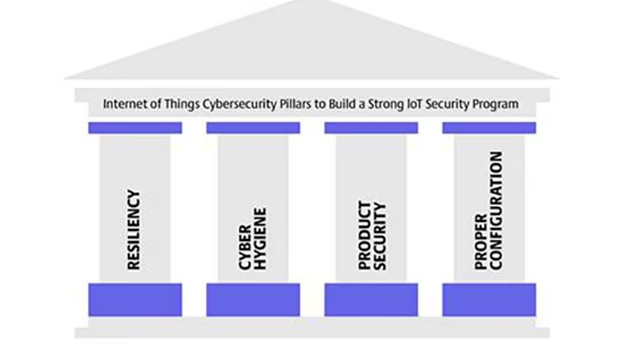
Core Pillar of Cybersecurity
Digital Security is built on three foundational concept known as the CIA Triad:
Confidentiality
Ensures facts is available simplest to legal people.
Integrity
Ensures statistics is correct and guarded from unauthorized change.
Availability
Ensures structures and statistics are available when wished.
These principles guide the layout and implementation of protection structures.
Types of Cybersecurity
Cybersecurity is divided into several domains:
Network Security
Protects internal network from intrusion.
Examples:
- Firewalls
- Intrusion Detection System
- Intrusion Prevention System
Application Security
Secures software packages from vulnerabilities.
Include:
- Secure coding practices
- Code critiques
- Penetration trying out
Information Security
Protects information from unauthorized access or alteration.
Cloud Security
Secures facts stored in cloud platforms.
Includes:
- Encryption
- Identity get entry to management
- Cloud tracking
Endpoint Security
Protects gadgets like laptop, smartphone and desktop.
Operational Security
Focuses on policies and procedures to manipulate and defend data property.
Disaster Recover and Business Continuity
Ensures healing after cyber incident.
Common Cybersecurity Threat
Understanding threat is vital for sturdy Digital Security.
Malware
Malicious software designed to harm system.
Types:
- Viruses
- Worms
- Trojans
- Spyware
- Adware
Ransomware
Encrypts victim’s statistics and demands price.
Phishing
Fraudulent tries to reap touchy facts through e-mail or messages.
Social Engineering
Manipulating people to reveal exclusive statistics.
Man in the Middle Attack
Attackers intercept conversation among event.
Denial of Service
Overloads systems to cause them to unavailable.
Zero Day Exploits
Attacks exploiting unknown vulnerabilities.
How Cyber Attacks Happen
Cyber attacks generally observe those ranges:
- Reconnaissance
- Weaponization
- Delivery
- Exploitation
- Installation
- Command and Control
- Actions on Objectives
This procedure is regularly referred to as the cyber kill chain.
Cybersecurity Tool and Technologies
Effective Digital Security is predicated on superior gear.
Firewall
Monitor and control incoming and outgoing visitor.
Antivirus Software
Detects and gets rid of malware.
Encryption Tool
Convert data into unreadable formats without keys.
Multi-Factor Authentication
Requires a couple of verification strategies.
Security Information and Event Management
Analyzes security alert in real time.
Endpoint Detection and Response
Monitors endpoint activities continuously.
Cybersecurity Best Practice
- Use Strong Password
Combine letters, numbers and symbols.
- Enable Multi Factor Authentication
- Keep Software Updated
- Conduct Regular Security Audit
- Implement Data Backup Strategies
- Train Employees
- Use Encryption
- Secure Wi-Fi Network
Cybersecurity in Different Industry
Healthcare
Protect affected person information.
Finance
Prevents fraud and secures transactions.
E-commerce
Secures client price records.
Government
Protects national infrastructure.
Education
Safeguards student statistics.
Cybersecurity Framework and Standard
Organizations comply with standardized framework:
- NIST Digital Security Framework
- ISO/IEC 27001
- CIS Control
- GDPR compliance measure
These provide based procedures to security control.
The Role of Artificial Intelligence in Cybersecurity
AI complements Digital Security by way of:
- Detecting anomalies
- Predicting threats
- Automating responses
- Analyzing massive information units
Machine gaining knowledge of fashions constantly adapt to new attack styles.
Cybersecurity Challenges
- Evolving Threat Landscape
- Shortage of Skilled Professionals
- Insider Threats
- IoT Vulnerabilities
- Cloud Misconfigurations
Cybersecurity Career Opportunities
Cybersecurity gives lucrative careers:
- Security Analyst
- Ethical Hacker
- Security Engineer
- Chief Information Security Officer
- Penetration Tester
- Incident Responder
- Security Consultant
Skills required:
- Networking information
- Programming
- Risk evaluation
- Analytical wondering
Certifications:
- CEH
- CISSP
- CompTIA Security
- CISM
The Future of Cybersecurity
Cybersecurity maintains evolving.
Emerging trends:
- Zero Trust Architecture
- AI-driven security
- Behavioral biometrics
- Quantum resistant encryption
- Extended Detection and Response
Organizations must adopt proactive protection techniques.
Small Business Cybersecurity
Small corporations are prime targets because of weaker defenses.
Recommendations:
- Install firewalls
- Use antivirus software program
- Implement backups
- Train body of workers
- Use steady price structures
Conclusion
Cybersecurity is no longer non compulsory; it is critical. As digital transformation speeds up, cyber threats develop in complexity and scale. Organizations and people ought to enforce comprehensive security technique to shield statistics, systems and virtual property.
Strong cybersecurity practices reduce dangers, guard reputations, make sure compliance and enable enterprise continuity. The future will call for even greater sophisticated defenses powered through artificial intelligence, automation and zero agree with fashions.