The way people search for information online is changing rapidly. Traditional search engines are no longer the only way users discover websites, products, and services. With the rise of AI-powered platforms like ChatGPT, Google AI Overviews, Gemini, Microsoft Copilot, and Perplexity, users are now asking direct questions and receiving complete answers instead of manually browsing through multiple search results.
This shift has created a new opportunity for businesses and website owners to optimize their online presence beyond traditional SEO. While search engine optimization remains important, websites now need to focus on how artificial intelligence understands, evaluates, and recommends content. This is where GEO for WordPress becomes an important strategy.
GEO, which stands for Generative Engine Optimization, focuses on improving a website’s visibility in AI-generated search results. Instead of only targeting keyword rankings, GEO helps websites create content that AI systems can understand, trust, and potentially reference when answering user queries.
For WordPress website owners, implementing GEO strategies can help improve discoverability across AI search platforms while also strengthening traditional SEO performance. Since WordPress powers millions of websites worldwide, optimizing WordPress websites for AI search can become a major advantage for businesses, bloggers, publishers, and marketers.
In this complete guide, we will explore proven GEO for WordPress strategies that can help optimize your website for AI search, improve content visibility, and prepare your website for the future of search.
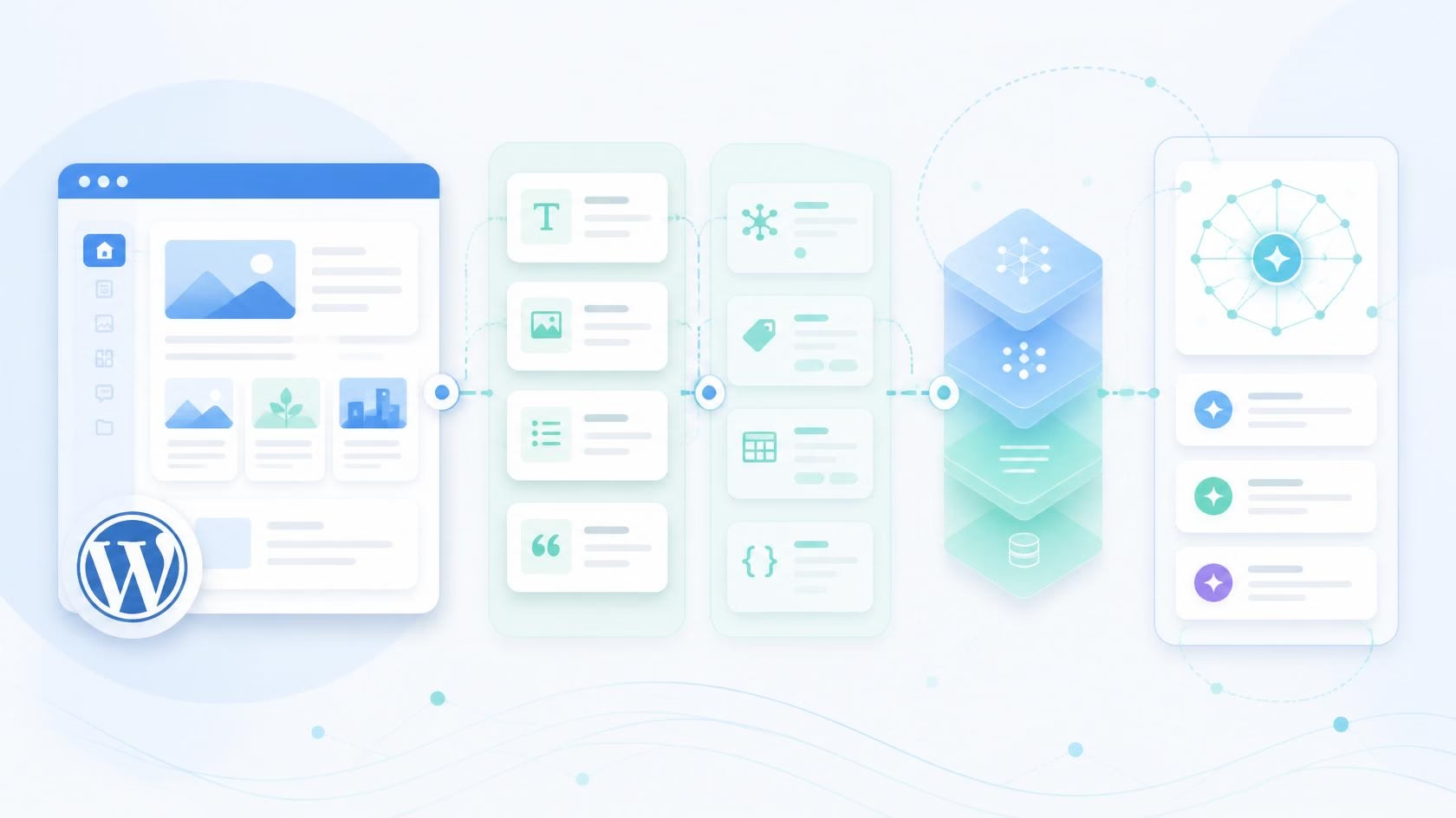
What Is GEO for WordPress?
GEO for WordPress refers to the process of applying Generative Engine Optimization techniques to a WordPress website to improve its ability to appear in AI-powered search responses.
Traditional SEO mainly focuses on improving rankings in search engines by optimizing keywords, backlinks, technical factors, and content structure. GEO takes this approach further by focusing on how AI models interpret information and select sources when generating answers.
When a user asks an AI search engine a question, the system analyzes multiple sources to create a response. Websites with clear, trustworthy, and well-structured information have a higher chance of being recognized as valuable sources.
For example, a user may ask:
“How can I optimize my WordPress website for AI search?”
An AI search engine may analyze hundreds of pages before generating an answer. Websites that clearly explain GEO strategies, provide practical examples, use proper formatting, and demonstrate expertise are more likely to be considered useful.
GEO for WordPress includes several important optimization areas:
- Creating AI-friendly content
- Improving website structure
- Using schema markup
- Strengthening internal linking
- Building topical authority
- Optimizing technical SEO
- Improving user experience
- Creating trustworthy and accurate information
By combining these elements, WordPress websites can become easier for AI systems to understand and recommend.
Why GEO Is Important for WordPress Websites
AI search is changing user behavior. People are moving from short keyword searches toward conversational questions. Instead of searching:
“Best WordPress SEO plugins”
Users may now ask:
“What are the best WordPress plugins to improve my website visibility in AI search?”
This change means websites need to answer complete questions rather than simply target individual keywords.
For years, businesses focused on ranking on Google’s first page. However, AI search introduces another important goal: becoming a trusted source that AI systems reference in generated answers.
A website that ignores GEO may lose visibility as more users depend on AI assistants for information discovery.
For WordPress websites, this creates several benefits:
Improved AI Search Visibility
GEO helps search engines and AI models better understand your website content. When your content clearly answers user questions, AI platforms can identify your website as a useful resource.
Increased Brand Recognition
When AI assistants mention your website or use your content as a source, it improves brand awareness and authority.
Better Content Performance
GEO strategies encourage businesses to create deeper, more valuable content that performs well across multiple search platforms.
Future-Proof SEO Strategy
Search technology continues to evolve. Optimizing your WordPress website for AI search helps prepare your business for future changes in online discovery.
How AI Search Engines Understand Website Content
To successfully implement GEO for WordPress, it is important to understand how AI systems evaluate websites.
AI search engines do not only look for keywords. They analyze the meaning, context, structure, and reliability of content.
Some important factors include:
Content Relevance
AI systems analyze whether your content directly answers the user’s question. Pages that provide complete explanations are more valuable than short articles with limited information.
For example, an article titled “What Is GEO for WordPress?” should not only define GEO but also explain implementation steps, benefits, tools, examples, and best practices.
Content Structure
AI models understand structured content more effectively. Clear headings, short paragraphs, tables, FAQs, and organized sections make information easier to process.
A properly structured article allows AI systems to quickly identify important information and extract relevant answers.
Website Authority
AI search platforms prefer information from websites that demonstrate expertise and reliability. Publishing consistent, high-quality content around a specific topic helps build authority.
Technical Accessibility
If AI crawlers cannot properly access your website, your content may not be discovered or understood. Technical SEO, website speed, mobile optimization, and structured data play an important role.
Trust Signals
Accurate information, expert authors, updated content, and transparent business details help establish trust.

Why WordPress Is a Strong Platform for GEO
WordPress is one of the best platforms for implementing GEO for WordPress because of its flexibility and powerful optimization ecosystem.
Unlike custom-built websites that may require extensive development work, WordPress provides thousands of plugins and tools that simplify SEO and technical improvements.
Some advantages of WordPress for GEO include:
Easy Content Management
WordPress makes it simple to create, update, and organize content. Since GEO depends heavily on fresh and valuable information, regular publishing becomes easier.
SEO-Friendly Structure
Most WordPress themes and plugins support SEO-friendly features such as optimized URLs, metadata control, XML sitemaps, and schema integration.
Plugin Support
WordPress offers plugins that help improve important GEO factors, including:
- SEO optimization
- Website speed
- Schema markup
- Internal linking
- Image optimization
- Security improvements
Flexible Content Organization
WordPress categories, tags, and internal linking features help create content clusters that improve topical authority.
Mobile-Friendly Design
Modern WordPress themes are designed to work across different devices, supporting better user experiences.
Strategy 1: Build Strong Topical Authority
The first and one of the most important GEO for WordPress strategies is building topical authority.
AI search engines prefer websites that demonstrate deep knowledge about a particular subject. Publishing random articles across unrelated topics makes it difficult for AI systems to understand your expertise.
Instead of creating disconnected blog posts, develop topic clusters.
For example, if your main topic is GEO for WordPress, create supporting content such as:
| Main Topic | Supporting Topics |
|---|---|
| GEO for WordPress | What Is Generative Engine Optimization? |
| GEO for WordPress | GEO vs SEO: Key Differences |
| GEO for WordPress | How ChatGPT Search Works |
| GEO for WordPress | AI Search Optimization Checklist |
| GEO for WordPress | Schema Markup for AI Search |
| GEO for WordPress | WordPress Technical SEO Guide |
This approach creates a connected information network that helps both users and AI systems understand your expertise.
When multiple articles support one main topic, your website becomes more authoritative and increases its chances of appearing in AI-generated responses.
Strategy 2: Create AI-Friendly Content Structure
Content structure plays a major role in successful GEO for WordPress implementation.
AI systems need to quickly understand what a page is about and extract useful information. Poorly formatted content makes this process difficult.
Follow these content optimization practices:
Use Clear Headings
Use one main H1 heading followed by logical H2 and H3 sections. Each heading should clearly describe the information covered in that section.
Answer Questions Directly
AI search engines often provide direct answers to users. Content that answers questions clearly has a better chance of being referenced.
For example:
Instead of writing:
“GEO is an emerging technology concept that has changed digital marketing.”
Write:
“GEO for WordPress is the process of optimizing WordPress websites so AI search engines can better understand and reference their content.”
The second version provides a direct answer that AI systems can easily understand.
Keep Paragraphs Short
Long blocks of text are difficult for users and AI systems to scan. Use shorter paragraphs with clear explanations.
Add Tables and Lists
Tables help organize comparisons, features, and processes. They make complex information easier to understand.
Include FAQ Sections
Frequently asked questions provide direct answers to common user queries and improve content coverage.
Creating structured, informative, and user-focused content is one of the strongest ways to improve your website’s performance with GEO for WordPress.
Strategy 3: Optimize Technical SEO for Better GEO for WordPress Performance
Technical SEO is one of the most important foundations of GEO for WordPress. While creating high-quality content helps AI search engines understand your expertise, technical optimization ensures that your website can be easily discovered, crawled, and processed.
AI search engines depend on various technical signals to evaluate website quality. A website with slow performance, broken links, poor navigation, or indexing problems may struggle to gain visibility, even if the content is valuable.
A technically optimized WordPress website provides a better experience for users and makes it easier for AI systems to access important information.
Improve Website Crawlability
AI search engines and traditional search engines use crawlers to discover website content. If your important pages are blocked or difficult to access, they may not appear in search results or AI-generated answers.
To improve crawlability:
- Keep your XML sitemap updated
- Avoid blocking important pages in robots.txt
- Fix broken links regularly
- Use proper internal linking
- Remove unnecessary duplicate pages
- Maintain a clean website structure
WordPress websites can easily manage these technical elements using SEO plugins and website management tools.
Create SEO-Friendly URLs
Website URLs provide context about the page topic. Clean and descriptive URLs help both users and AI systems understand the purpose of a page.
For example:
Poor URL:
example.com/page?id=12345
Optimized URL:
example.com/geo-for-wordpress
The optimized URL clearly communicates the topic and improves content understanding.
For GEO optimization, URLs should be:
- Short
- Descriptive
- Keyword-focused
- Easy to read
Avoid unnecessary numbers, symbols, and random characters in URLs.
Optimize WordPress Website Speed
Website speed is a critical factor for both SEO and AI search visibility. Users expect websites to load quickly, and slow websites create poor experiences.
A fast website allows visitors and crawlers to access content more efficiently.
Important speed optimization techniques include:
Optimize Images
Large images are one of the biggest causes of slow WordPress websites. Compress images before uploading and use modern formats like WebP.
Use Website Caching
Caching stores website data temporarily so pages can load faster for returning visitors.
Use a Content Delivery Network (CDN)
A CDN distributes website files across multiple servers, allowing users to access content from a nearby location.
Remove Unnecessary Plugins
Too many plugins can slow down your website. Keep only essential plugins and regularly remove unused ones.
Optimize Database Performance
Cleaning unnecessary database files, revisions, and spam comments can improve website performance.
A faster website improves user experience and supports stronger GEO for WordPress results.
Improve Mobile Optimization
Most users access websites through mobile devices. AI search engines also prioritize websites that provide excellent mobile experiences.
Your WordPress website should have:
- Responsive design
- Mobile-friendly navigation
- Readable text size
- Fast mobile loading speed
- Proper button spacing
A poor mobile experience can reduce engagement and negatively affect your website visibility.

Strategy 4: Use Schema Markup to Improve AI Understanding
Schema markup is a powerful technique in GEO for WordPress because it provides additional context about your website content.
Schema helps search engines and AI platforms understand what information exists on your page.
For example, without schema, AI systems may need to analyze your entire article to understand whether it is a blog post, product page, FAQ page, or tutorial.
With schema markup, you provide structured information that clearly identifies the content type.
Common schema types for WordPress websites include:
| Schema Type | Purpose |
|---|---|
| Article Schema | Blog posts and guides |
| FAQ Schema | Question-answer sections |
| HowTo Schema | Step-by-step tutorials |
| Organization Schema | Company information |
| Product Schema | Ecommerce products |
| Review Schema | Ratings and reviews |
| Person Schema | Author details |
| Breadcrumb Schema | Website navigation |
How Schema Helps GEO for WordPress
Schema markup improves AI content understanding by:
- Providing clear content context
- Helping AI identify important information
- Improving search result appearance
- Supporting rich results
- Increasing content credibility
For example, if you publish a guide about “GEO for WordPress,” FAQ schema can help AI systems identify common questions and answers related to the topic.
Best WordPress Plugins for Schema Implementation
WordPress users do not need advanced coding knowledge to add schema markup. Several plugins simplify the process.
| Plugin | Benefits |
|---|---|
| Rank Math SEO | SEO optimization and multiple schema options |
| Yoast SEO | Basic structured data support |
| Schema Pro | Advanced schema implementation |
| All in One SEO | SEO and schema features |
| WP Review Plugin | Review schema support |
Using schema correctly can strengthen your website’s ability to communicate information to AI search engines.
Strategy 5: Create Content That AI Search Engines Trust
Content quality is the heart of GEO for WordPress. Technical improvements help AI discover your website, but valuable content determines whether your website becomes a trusted source.
AI search engines aim to provide accurate answers. Therefore, they prefer content that demonstrates expertise, reliability, and usefulness.
Write Comprehensive Content
Short articles that only provide basic information are less likely to become trusted resources.
Instead, create detailed guides that cover:
- Definitions
- Benefits
- Challenges
- Examples
- Step-by-step processes
- Expert recommendations
- Common mistakes
- FAQs
For example, an article about GEO for WordPress should not only explain what GEO means. It should also explain implementation strategies, tools, technical requirements, and future trends.
Answer Search Intent Clearly
Understanding search intent is essential for GEO.
Users usually search with different goals:
| Search Intent | Example Query |
|---|---|
| Informational | What is GEO for WordPress? |
| Educational | How does GEO work? |
| Comparison | GEO vs SEO difference |
| Transactional | Best GEO tools for WordPress |
Your content should address the complete user journey.
Add Real Examples and Practical Insights
AI systems value content that provides unique information.
Instead of repeating general advice, include:
- Case studies
- Real implementation examples
- Industry examples
- Expert opinions
- Practical workflows
For example, explaining how a SaaS company can use GEO for WordPress creates more value than simply defining GEO.
Keep Content Updated
AI search changes quickly. Old information can reduce trust.
Regularly update articles by:
- Adding new statistics
- Updating screenshots
- Improving outdated sections
- Adding new examples
- Refreshing recommendations
Updated content signals that your website provides current information.
Strategy 6: Optimize Internal Linking for GEO
Internal linking helps AI systems understand relationships between different pages on your website.
A strong internal linking structure creates a content network that demonstrates expertise.
For example, a GEO-focused website can connect:
Main Article:
GEO for WordPress
Supporting Articles:
- What Is Generative Engine Optimization?
- ChatGPT SEO Guide
- AI Search Optimization Checklist
- Schema Markup Guide
- WordPress Technical SEO Guide
This structure creates topical authority and improves content discovery.
Best Internal Linking Practices
Use descriptive anchor text instead of generic phrases.
Weak:
“Click here”
Better:
“Learn more about GEO for WordPress optimization strategies”
Good internal linking helps:
- Users discover related content
- Search engines understand topics
- AI systems identify expertise
- Pages share authority
A strategic internal linking system is an essential part of long-term GEO for WordPress success.

Strategy 7: Optimize Your WordPress Website for AI Crawlers
As AI-powered search continues to grow, making your website accessible to AI crawlers has become an important part of GEO for WordPress. Traditional search engines use crawlers to discover and index web pages, and AI search platforms also depend on automated systems to collect and understand online information.
A website that is difficult to crawl may have valuable content but still struggle to appear in AI-generated answers. Therefore, WordPress website owners need to ensure that their content is technically accessible and easy for AI systems to interpret.
Keep Your Robots.txt File Optimized
The robots.txt file provides instructions to search engine crawlers about which areas of your website they can access.
A poorly configured robots.txt file can accidentally block important pages, preventing search engines and AI systems from discovering your content.
Make sure your robots.txt file:
- Allows access to important content pages
- Does not block CSS or JavaScript files
- Avoids unnecessary restrictions
- Includes your sitemap location
A properly optimized robots.txt file supports better content discovery and improves your website foundation for GEO for WordPress.
Maintain an Updated XML Sitemap
An XML sitemap helps search engines understand the structure of your website and discover new content faster.
For WordPress websites, SEO plugins can automatically generate and update sitemaps whenever new content is published.
Your sitemap should include:
- Important blog posts
- Service pages
- Product pages
- Category pages
- Updated content
Remove outdated, deleted, or low-value pages from your sitemap to maintain quality.
Use Clear Website Architecture
Website structure plays an important role in helping AI systems understand your content relationships.
A simple website architecture looks like:
Homepage → Category → Topic Page → Supporting Articles
For example:
Homepage
↓
AI Marketing
↓
GEO for WordPress
↓
Supporting GEO Articles
This structure helps AI systems identify your main topics and understand your expertise.
Implement llms.txt Carefully
The concept of llms.txt has gained attention as websites explore ways to provide information specifically for large language models.
Although adoption and support are still developing, the idea behind llms.txt is to create a structured summary of important website information that AI systems can understand.
For WordPress websites, staying updated with emerging AI accessibility standards can help prepare your website for future search developments.
Improve Accessibility
Accessibility improvements also support AI understanding.
Important accessibility practices include:
- Adding descriptive image alt text
- Using proper heading structures
- Creating readable content
- Providing text alternatives for media
- Maintaining clear navigation
A website that is easier for humans to understand is usually easier for AI systems to interpret.
Strategy 8: Create Citation-Worthy Content for AI Search
One of the biggest goals of GEO for WordPress is increasing the chances of your content being referenced by AI search engines.
AI platforms do not simply choose websites randomly. They look for information that is accurate, valuable, well-structured, and trustworthy.
Creating citation-worthy content requires a different approach from traditional blogging.
Instead of writing content only to rank for keywords, focus on becoming the most helpful resource on a topic.
Provide Complete Answers
AI systems prefer content that answers questions thoroughly.
For example, instead of writing a short article:
“What is GEO?”
Create a comprehensive resource covering:
- GEO definition
- How GEO works
- Benefits of GEO
- GEO vs SEO
- GEO strategies
- Tools
- Implementation steps
- Common mistakes
- Future trends
Complete content gives AI systems more information to understand and reference.
Add Original Insights
Many websites publish similar information. To stand out, include unique value.
Examples include:
- Your own analysis
- Industry observations
- Practical examples
- Testing results
- Expert recommendations
- Case studies
Original insights increase credibility and make your content more valuable.
Use Data and Research
Supporting your statements with reliable information improves trust.
Include:
- Industry statistics
- Research findings
- Expert opinions
- Real examples
For example, when discussing AI search growth, adding relevant research and market insights creates stronger content authority.
Create Clear Definitions
AI search engines often need concise explanations.
Start sections with clear definitions.
Example:
“GEO for WordPress is the process of optimizing WordPress websites so AI-powered search engines can better understand, evaluate, and reference website content.”
This type of direct explanation is easier for AI systems to extract.
Strategy 9: Strengthen E-E-A-T Signals for GEO Success
E-E-A-T stands for Experience, Expertise, Authoritativeness, and Trustworthiness. These factors help search engines evaluate content quality, and they are increasingly important for GEO for WordPress.
AI search platforms prioritize reliable information because users depend on AI-generated answers for decision-making.
Demonstrate Real Experience
Content becomes more trustworthy when it includes practical experience.
Instead of only explaining theories, include:
- Real implementation examples
- Lessons learned
- Practical workflows
- Industry experiences
For example, a GEO article can explain how a WordPress website improved AI visibility after implementing structured data and content optimization.
Highlight Author Expertise
Author information helps establish credibility.
Create detailed author profiles that include:
- Professional background
- Industry experience
- Published articles
- Areas of expertise
Anonymous content may appear less trustworthy compared to content created by identifiable experts.
Build Website Authority
Authority develops over time through consistent publishing and recognition.
Ways to improve authority include:
- Publishing high-quality content regularly
- Creating topic clusters
- Earning relevant backlinks
- Collaborating with industry experts
- Updating existing resources
Improve Trust Signals
Trust is essential for AI search visibility.
Important trust elements include:
- About Us page
- Contact information
- Privacy policy
- Secure HTTPS connection
- Transparent business details
- Accurate information
A trustworthy website has a stronger chance of being recommended by AI systems.
Strategy 10: Measure and Improve Your GEO Performance
Unlike traditional SEO, measuring GEO for WordPress requires focusing on visibility across AI platforms as well as traditional search engines.
Since AI search is still developing, businesses should monitor multiple performance indicators.
Track Organic Search Performance
Google Search Console remains useful for monitoring:
- Search impressions
- Clicks
- Ranking keywords
- Indexing issues
- Website performance
Strong SEO performance creates a foundation for better AI visibility.
Monitor AI Mentions
Regularly check whether your brand or website appears in AI-generated responses.
Test questions related to your industry and analyze:
- Which websites are mentioned
- What type of content gets referenced
- Which topics create visibility opportunities
This helps identify gaps in your GEO strategy.
Analyze User Engagement
User behavior provides valuable insights.
Monitor:
- Time spent on pages
- Bounce rate
- Returning visitors
- Conversion rates
- Popular content
High engagement indicates that users find your content valuable.
Update Content Regularly
AI search environments change quickly. Content that performs well today may need improvement later.
Create a content update schedule:
| Update Activity | Frequency |
|---|---|
| Refresh statistics | Every few months |
| Update examples | Quarterly |
| Review internal links | Monthly |
| Improve outdated sections | Regularly |
| Add new FAQs | When needed |
Continuous optimization is essential for maintaining AI search visibility.
Common GEO for WordPress Mistakes to Avoid
Many website owners focus on publishing more content but ignore important GEO factors. Avoiding common mistakes can significantly improve your results.
Creating Thin Content
Short articles with limited information provide little value to users or AI systems.
Solution:
Create comprehensive resources that fully answer user questions.
Keyword Stuffing
Repeating GEO-related keywords unnaturally can reduce readability.
Solution:
Use keywords naturally while focusing on helpful information.
Ignoring Technical SEO
Great content cannot perform well if your website has technical problems.
Solution:
Regularly improve speed, security, indexing, and website structure.
Not Using Structured Data
Without schema markup, AI systems may have difficulty understanding your content.
Solution:
Implement relevant schema types across your website.
Publishing Without Strategy
Random content creation makes it harder to build authority.
Solution:
Create topic clusters and maintain a focused content strategy.
Not Updating Existing Content
Outdated information reduces trust.
Solution:
Regularly refresh important pages with new information.
The Future of GEO for WordPress
Search technology is evolving faster than ever before. AI-powered search experiences are becoming a standard way for people to discover information, compare products, and make purchasing decisions. Instead of scanning multiple search results, users increasingly expect AI assistants to deliver accurate, personalized answers instantly.
As this trend continues, GEO for WordPress will become an essential digital marketing strategy rather than an optional enhancement. Businesses that start optimizing their websites today will be better positioned as AI search adoption grows.
Future AI search systems will likely place greater emphasis on:
- Content accuracy and freshness
- Website authority
- Structured data
- User experience
- Brand credibility
- Topical expertise
- Semantic relevance
- Helpful, people-first content
WordPress will continue to be one of the best platforms for implementing these strategies because of its flexibility, plugin ecosystem, and SEO-friendly architecture.
Website owners who consistently publish high-quality content, improve technical performance, and build authority within their niche will have the greatest opportunity to succeed in the AI search era.
Rather than replacing traditional SEO, Generative Engine Optimization builds on it. Businesses that combine both approaches will have a stronger online presence across search engines and AI-powered platforms.
Conclusion
The future of online search is no longer limited to traditional search engine results. AI-powered platforms are changing how people find information, making it essential for businesses to optimize their websites for both users and intelligent search systems. This is why GEO for WordPress has become an important part of a modern digital marketing strategy.
By implementing the techniques discussed in this guide building topical authority, improving technical SEO, using schema markup, creating citation-worthy content, strengthening E-E-A-T signals, optimizing internal linking, enhancing website performance, and continuously updating your content you can improve your website’s ability to appear in AI-generated search responses while maintaining strong traditional SEO performance.
Generative Engine Optimization is not about replacing SEO. Instead, it expands your optimization strategy to meet the needs of AI-driven search experiences. Businesses that invest in GEO for WordPress today will be better prepared for the future, where AI assistants play an increasingly important role in how users discover websites, products, and services.
Start implementing these proven strategies one step at a time, monitor your results, and continue refining your content based on user needs and AI search trends. A consistent focus on quality, relevance, and trust will help your WordPress website achieve long-term visibility in both traditional search engines and the next generation of AI-powered search platforms.
Frequently Asked Questions
What is GEO for WordPress?
GEO for WordPress refers to applying Generative Engine Optimization techniques to WordPress websites so AI-powered search engines can better understand, evaluate, and reference website content. It focuses on improving AI search visibility while complementing traditional SEO.
Is GEO different from SEO?
Yes. SEO focuses on improving rankings in traditional search engines like Google and Bing. GEO focuses on optimizing content so AI-powered search platforms such as ChatGPT, Google AI Overviews, Gemini, and Perplexity can better understand and cite your content. Both strategies work best when used together.
Why is GEO important for WordPress websites?
WordPress powers a large percentage of websites worldwide. As AI-powered search becomes more common, implementing GEO for WordPress helps improve content discoverability, increase AI search visibility, strengthen topical authority, and prepare websites for the future of search.
Can GEO improve mlugins support GEO?
Although there are currently no plugins built exclusively for GEO, several plugins support important optimization tasks, including Rank Math SEO, Yoast SEO, Schema Pro, All in One SEO, WP Rocket, LiteSpeed Cache, and Link Whisper. These tools help improve structured data, technical SEO, website performance, and internal linking.
Does schema markup help with GEO?
Yes. Schema markup provides structured information about your content, making it easier for AI systems to understand articles, FAQs, products, organizations, authors, and tutorials. Proper schema implementation strengthens GEO for WordPress and improves content interpretation.