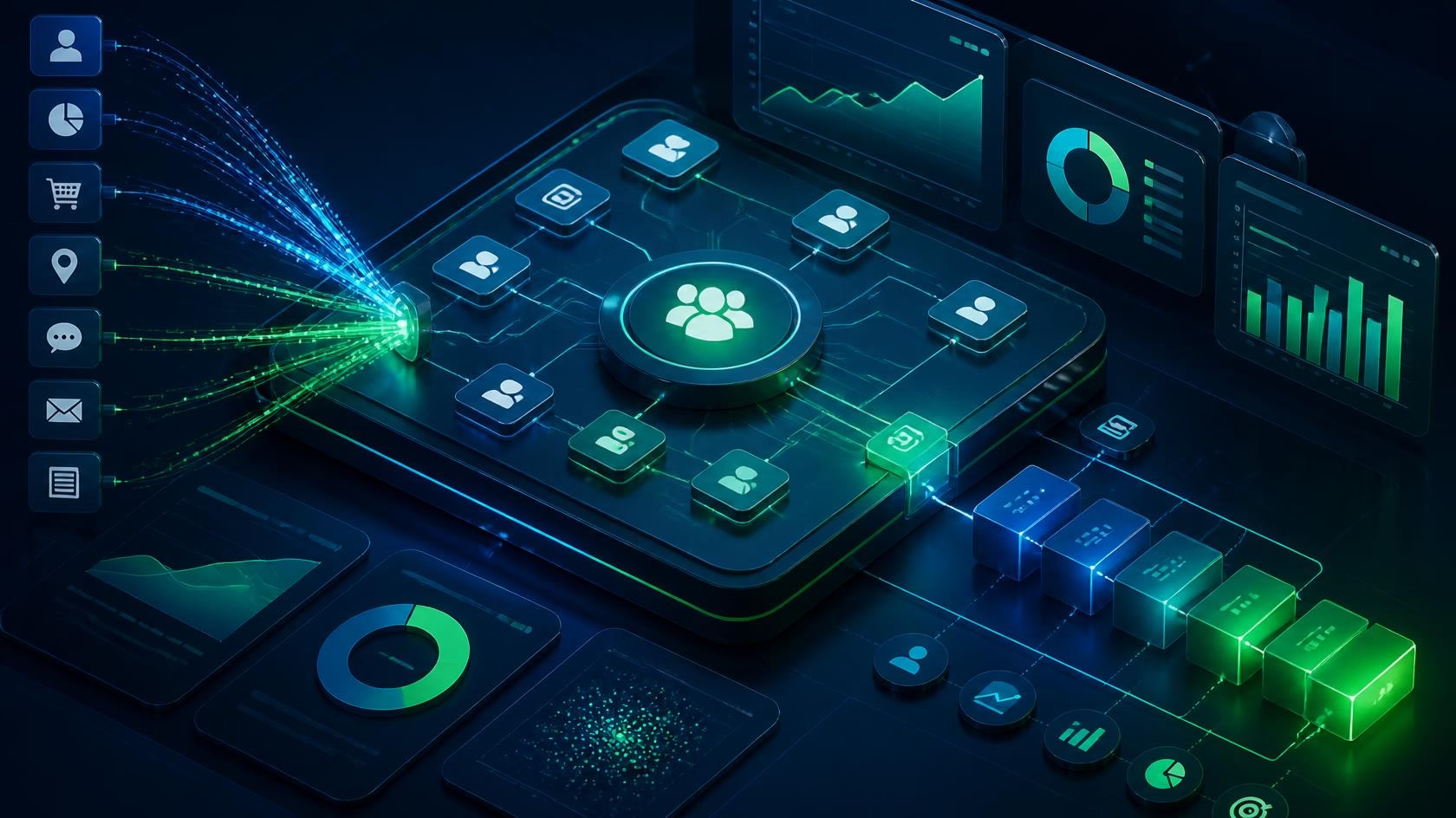

Customer relationship management has become more challenging as businesses collect massive amounts of customer data from multiple channels. Companies today interact with customers through websites, social media, emails, mobile applications, online purchases, and customer support platforms.
However, having customer data is not enough. Businesses need to understand what customers want, when they are ready to buy, and what actions can improve their overall experience. This is where Predictive CRM is transforming modern customer relationship management.
Traditional CRM systems mainly focus on storing customer information, tracking interactions, and managing sales activities. Predictive CRM goes beyond basic data management by using artificial intelligence, machine learning, and predictive analytics to identify patterns and forecast future customer behavior.
With predictive CRM, businesses can understand customer buying intent, identify high-quality leads, predict customer needs, improve sales forecasting, and create personalized experiences.
What Is Predictive CRM?
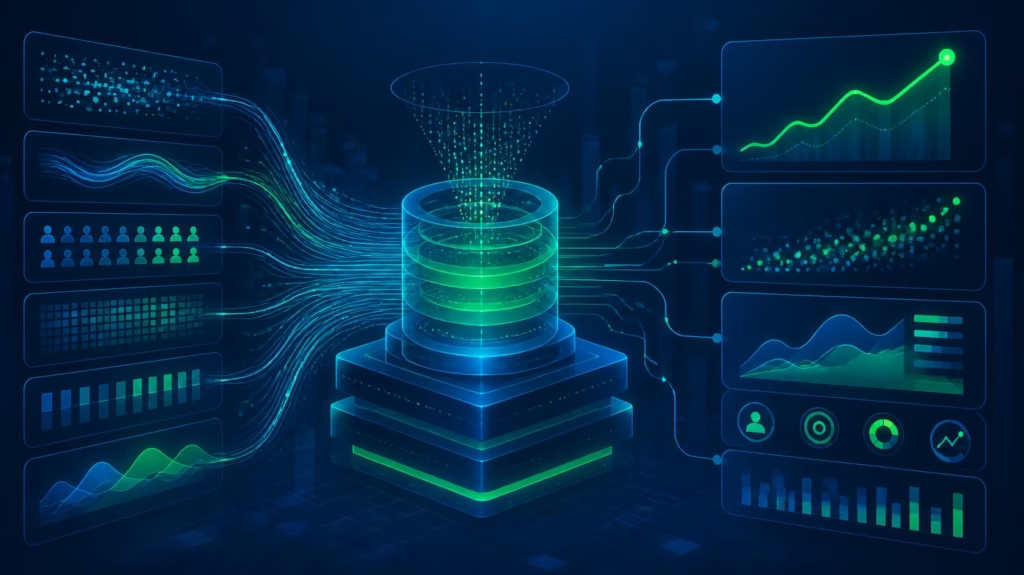
Predictive CRM is an advanced customer relationship management approach that uses artificial intelligence, machine learning, and predictive analytics to analyze customer data and forecast future customer actions.
Unlike traditional CRM systems that mainly record previous customer interactions, predictive CRM studies historical and real-time data to identify patterns and predict future outcomes.
A predictive CRM system can help businesses answer important questions such as:
- Which leads are most likely to convert?
- Which customers may stop using a product or service?
- What products are customers likely to purchase next?
- When is the best time to contact a prospect?
- Which customers have the highest long-term value?
By providing these insights, predictive CRM enables businesses to improve sales performance, increase customer retention, and deliver personalized experiences.
How Predictive CRM Works
Predictive CRM combines customer data, artificial intelligence algorithms, and automation technologies to understand customer behavior and generate predictions.
The process usually involves four major stages:
| Stage | Process | Description |
|---|---|---|
| 1 | Data Collection | CRM gathers customer information from multiple sources |
| 2 | Data Analysis | AI analyzes customer patterns and interactions |
| 3 | Prediction Generation | Machine learning models forecast future customer actions |
| 4 | Action Recommendation | CRM suggests the best sales or marketing strategies |
For example, if a customer repeatedly visits pricing pages, downloads product guides, and interacts with sales emails, predictive CRM identifies these activities as strong buying signals.
The system can then recommend that sales teams prioritize this customer for immediate follow-up.
Why Predictive CRM Is Becoming Important
Modern customers expect personalized experiences. They do not want irrelevant advertisements, generic emails, or unnecessary sales messages.
Businesses need technology that helps them understand customers at a deeper level and engage with them at the right moment.
Predictive CRM helps companies move from traditional customer management toward intelligent customer engagement.
| Traditional CRM Approach | Predictive CRM Approach |
|---|---|
| Stores customer information | Predicts future customer actions |
| Focuses on past interactions | Analyzes past and real-time behavior |
| Manual customer analysis | AI-powered insights |
| Generic communication | Personalized recommendations |
| Basic reporting | Predictive forecasting |
Traditional CRM helps businesses understand what happened in the past, while predictive CRM helps them prepare for what may happen in the future.
The Role of Artificial Intelligence in Predictive CRM
Artificial intelligence is the foundation of predictive CRM. AI allows CRM platforms to process large amounts of customer data and discover patterns that are difficult to identify manually.
AI-powered CRM systems analyze:
- Customer purchase history
- Website activity
- Email engagement
- Social media interactions
- Customer support conversations
- Sales communication records
- Product preferences
- Customer feedback
Machine learning algorithms continuously improve by learning from new customer interactions.
For example, if AI identifies that customers who attend a product webinar, download a pricing document, and interact with sales emails usually become buyers within 15 days, the system can recognize similar prospects and recommend sales actions.

Key Components of Predictive CRM
Customer Data Management
Accurate customer data is the foundation of predictive CRM. Businesses collect information from multiple touchpoints and create complete customer profiles.
Important data includes:
- Contact details
- Purchase history
- Customer preferences
- Communication records
- Website behavior
- Engagement activity
Better data quality helps AI models generate more accurate predictions.
Machine Learning Models
Machine learning enables predictive CRM systems to identify patterns and make future predictions.
These models help businesses with:
- Lead scoring
- Customer segmentation
- Sales forecasting
- Churn prediction
- Product recommendations
Predictive Analytics
Predictive analytics uses historical customer data to forecast future outcomes.
Businesses can predict:
- Purchase probability
- Customer lifetime value
- Sales opportunities
- Customer retention risks
Automation Engine
Automation allows predictive CRM systems to take action based on AI insights.
Examples include:
- Sending personalized emails
- Creating follow-up reminders
- Updating customer records
- Prioritizing sales opportunities
How Predictive CRM Helps Businesses Understand Customers
Predictive CRM provides deeper insights into customer behavior by analyzing different types of customer signals.
Businesses can understand:
- What products customers are interested in
- Which marketing channels perform better
- When customers are ready to purchase
- Which customers need additional engagement
- What factors influence buying decisions
This allows companies to create more relevant experiences and improve customer relationships.
Importance of Predictive CRM in Modern Business Growth
Businesses that use predictive CRM can make faster and more accurate decisions.
Key advantages include:
- Improved sales efficiency
- Better customer targeting
- Higher conversion rates
- Increased customer loyalty
- Reduced customer acquisition costs
- More accurate business forecasting
As AI technology continues to advance, predictive CRM is becoming a critical solution for businesses that want to build stronger customer relationships and increase revenue.
How Predictive CRM Works in Detail
Predictive CRM works by combining customer data, artificial intelligence, machine learning, and predictive analytics to identify patterns and forecast future customer actions. Instead of only recording previous interactions, predictive CRM continuously analyzes customer behavior to help businesses make proactive decisions.
The main goal of predictive CRM is to transform raw customer data into meaningful insights that sales, marketing, and customer service teams can use to improve engagement and increase revenue.
The complete working process of predictive CRM includes the following stages:
1. Collecting Customer Data From Multiple Sources
The first step of predictive CRM is gathering customer information from different touchpoints. Modern customers interact with businesses through multiple channels, and every interaction provides valuable insights.
Predictive CRM collects data from:
- Website browsing activities
- Previous purchases
- Email engagement
- Social media interactions
- Customer support conversations
- Mobile applications
- Sales meetings
- Online forms
- Product usage behavior
For example, a customer who visits product pages multiple times, downloads a pricing guide, and attends a product webinar shows stronger buying intent compared to someone who only visits a website once.
Predictive CRM captures these signals and uses them for future predictions.
2. Data Cleaning and Organization
Collected customer data is often stored in different systems and formats. Before AI can analyze the information, businesses need to organize and clean the data.
Data preparation includes:
- Removing duplicate records
- Updating outdated information
- Combining customer profiles
- Correcting inaccurate details
- Standardizing data formats
High-quality data improves the accuracy of AI predictions.
For example, if a customer has multiple duplicate profiles in a CRM system, AI may provide incorrect recommendations. Proper data management ensures reliable customer insights.
3. AI-Based Data Analysis
After organizing customer data, artificial intelligence analyzes the information to discover patterns and relationships.
AI evaluates factors such as:
- Customer interests
- Purchase frequency
- Engagement level
- Previous interactions
- Product preferences
- Buying patterns
Machine learning models compare current customer behavior with historical customer journeys to identify similarities.
For example, if AI discovers that customers who read specific blog articles, request demos, and interact with sales representatives usually become buyers, it can identify similar prospects with high purchase potential.
4. Customer Scoring and Prediction
One of the most powerful features of predictive CRM is customer scoring.
AI assigns scores based on the probability of a customer taking a specific action.
Common predictive scores include:
Lead Conversion Score
Measures the likelihood that a prospect will become a customer.
Purchase Intent Score
Predicts how likely a customer is to buy a product or service.
Churn Risk Score
Identifies customers who may stop using a product.
Customer Lifetime Value Score
Predicts the future value a customer can generate.
These scores help businesses prioritize their efforts and focus on customers with the highest potential.
5. Providing AI Recommendations
Predictive CRM does not just analyze information; it also recommends the next best action.
AI recommendations may include:
- Contact a high-intent prospect
- Send a personalized offer
- Schedule a follow-up call
- Recommend a product upgrade
- Start a customer retention campaign
For example, if predictive CRM identifies that a customer is researching premium features, it may recommend an upgrade campaign.
6. Continuous Learning and Improvement
Predictive CRM systems become more accurate over time because machine learning models continuously learn from new data.
Every customer interaction improves future predictions.
The system learns from:
- Successful sales conversions
- Customer responses
- Marketing campaign performance
- Purchase decisions
- Support interactions
This continuous improvement allows businesses to adapt quickly to changing customer behavior.

AI Technologies Behind Predictive CRM
Predictive CRM depends on several advanced technologies that help businesses understand customers and predict future actions.
1. Machine Learning
Machine learning is the core technology behind predictive CRM.
It enables CRM systems to analyze large amounts of data and identify patterns automatically.
Machine learning helps businesses with:
- Lead scoring
- Customer segmentation
- Sales forecasting
- Churn prediction
- Recommendation systems
For example, a machine learning model can analyze thousands of previous sales opportunities and identify the characteristics of customers who are most likely to convert.
2. Natural Language Processing (NLP)
Natural Language Processing allows AI systems to understand human language.
NLP helps predictive CRM analyze:
- Customer emails
- Chat conversations
- Reviews
- Support tickets
- Sales call transcripts
It can identify:
- Customer sentiment
- Buying intent
- Customer concerns
- Satisfaction levels
For example, if a customer repeatedly expresses frustration in support conversations, NLP can identify a potential churn risk.
3. Predictive Analytics
Predictive analytics uses historical data, statistical models, and AI algorithms to forecast future outcomes.
Businesses use predictive analytics in CRM for:
| Business Area | Predictive CRM Application |
|---|---|
| Sales | Revenue forecasting and opportunity prediction |
| Marketing | Campaign performance prediction |
| Customer Service | Issue prediction and prioritization |
| Retention | Churn prediction |
| Ecommerce | Product recommendations |
Predictive analytics allows companies to make decisions based on data instead of assumptions.
4. Generative AI
Generative AI is becoming an important part of modern CRM platforms.
It helps automate communication and improve productivity.
Generative AI in CRM can:
- Write personalized emails
- Create customer summaries
- Generate sales reports
- Suggest responses
- Prepare meeting notes
For example, after a sales call, AI can analyze the conversation and create a follow-up email based on customer requirements.
5. Deep Learning
Deep learning uses advanced neural networks to analyze complex customer behavior patterns.
It helps predictive CRM understand:
- Long-term customer preferences
- Complex buying journeys
- Hidden behavioral patterns
Deep learning improves prediction accuracy when businesses handle large volumes of customer data.
How Predictive CRM Predicts Customer Behavior Before They Buy
Understanding customer behavior before purchase is one of the biggest advantages of predictive CRM.
AI analyzes different customer signals to identify buying opportunities and predict future actions.
1. Identifying High-Intent Customers
Not every website visitor or lead has the same buying potential.
Predictive CRM identifies high-intent customers by analyzing behaviors such as:
- Visiting pricing pages
- Downloading product guides
- Requesting demos
- Opening multiple emails
- Spending more time on product pages
- Comparing different solutions
AI evaluates these activities and assigns higher priority scores to customers who are more likely to purchase.
This helps sales teams focus on valuable opportunities.
2. Predicting Purchase Decisions
Predictive CRM analyzes customer journeys to understand what actions usually lead to purchases.
It studies:
- Previous buying patterns
- Product interactions
- Search behavior
- Customer preferences
- Engagement history
For example, if previous customers usually purchase after attending a webinar and requesting a consultation, AI can identify new customers following the same journey.
3. Understanding Customer Preferences
Customers expect personalized experiences.
Predictive CRM creates detailed customer profiles based on:
- Interests
- Purchase history
- Communication preferences
- Browsing activity
- Product usage
Businesses can use these insights to provide personalized recommendations.
4. Predicting Customer Churn
Predictive CRM helps businesses identify customers who may leave before it happens.
AI analyzes warning signs such as:
- Reduced engagement
- Lower product usage
- Fewer purchases
- Negative feedback
- Increased complaints
Businesses can take preventive actions through:
- Personalized support
- Special offers
- Loyalty programs
- Customer success campaigns
Benefits of Predictive CRM for Businesses
Predictive CRM provides significant advantages for organizations across industries.
1. Improves Lead Conversion
Predictive CRM helps sales teams identify the leads most likely to convert.
Instead of treating every prospect equally, businesses can prioritize high-value opportunities.
Benefits include:
- Better sales efficiency
- Faster conversions
- Reduced sales effort
- Improved revenue generation
2. Enhances Customer Personalization
AI-powered CRM helps businesses deliver personalized experiences based on customer behavior.
Companies can personalize:
- Marketing campaigns
- Product recommendations
- Sales communication
- Customer support
Personalized interactions improve customer satisfaction and loyalty.
3. Increases Sales Revenue
Predictive CRM identifies new revenue opportunities by analyzing customer behavior.
Businesses can discover:
- Upselling opportunities
- Cross-selling opportunities
- High-value customers
- New market segments
This helps organizations increase customer value.
4. Improves Sales Forecasting
Traditional sales forecasting often depends on manual estimates.
Predictive CRM uses AI to analyze real-time data and provide more accurate predictions.
Sales leaders can understand:
- Future revenue possibilities
- Deal closing probability
- Pipeline performance
- Sales risks
5. Reduces Customer Churn
Predictive CRM identifies customers who may leave and allows businesses to take early action.
This improves:
- Customer retention
- Long-term revenue
- Brand loyalty
6. Automates Repetitive Tasks
Predictive CRM reduces manual work by automating routine activities.
Automation includes:
- Lead scoring
- Customer segmentation
- Follow-up reminders
- Reports
- Customer recommendations
This allows teams to focus on strategic activities instead of repetitive tasks.
7. Enables Better Business Decisions
Predictive CRM provides data-driven insights that help leaders make smarter decisions.
Businesses can understand:
- Customer trends
- Market opportunities
- Sales performance
- Future growth areas
By using AI-driven insights, companies can create stronger customer relationships and improve overall business performance.
Predictive CRM vs Traditional CRM
Traditional CRM systems are primarily designed to collect, organize, and manage customer information. They help sales and marketing teams track contacts, record interactions, monitor opportunities, and manage customer relationships. Predictive CRM adds another layer of intelligence by analyzing that information to estimate what customers are likely to do next.
The shift is particularly important as CRM platforms increasingly incorporate AI into everyday sales, marketing, and service workflows. Current CRM trends show a move from CRM as a passive system of record toward a real-time system that can recommend and execute actions.
| Feature | Traditional CRM | Predictive CRM |
|---|---|---|
| Main purpose | Manage customer information | Predict customer behavior |
| Data approach | Primarily historical | Historical + real-time signals |
| Lead management | Manual or rule-based scoring | AI-powered predictive scoring |
| Sales forecasting | Based on pipeline updates | AI-assisted forecasting |
| Customer insights | Reports and dashboards | Predictive recommendations |
| Personalization | Basic segmentation | Behavior-based personalization |
| Churn management | Reactive | Predictive |
| Decision-making | Mostly human-led | AI-assisted and human-led |
| Automation | Workflow automation | Intelligent automation and recommendations |
Traditional CRM can answer questions such as, “What happened with this customer?” Predictive CRM goes further by asking, “What is likely to happen next, and what should the business do about it?”
This difference makes predictive CRM especially useful for businesses with large customer databases, complex buying journeys, and multiple customer touchpoints.
Real-World Use Cases of Predictive CRM
Predictive CRM can be applied across sales, marketing, customer service, ecommerce, SaaS, financial services, and other customer-focused industries.
1. Predictive Lead Scoring
Sales teams often receive more leads than they can realistically contact. Treating every lead equally can waste valuable time.
Predictive CRM analyzes customer attributes and behavioral signals to determine which prospects have a higher probability of conversion. It can consider website engagement, content downloads, email activity, previous interactions, company information, and similarities with previously converted customers.
Instead of asking sales representatives to manually evaluate every lead, the CRM can prioritize prospects according to predicted buying intent.
This helps sales teams concentrate their efforts on opportunities that deserve immediate attention.
2. Customer Churn Prediction
Customer churn can significantly affect recurring revenue businesses. The problem is that customers do not always announce that they are planning to leave.
Predictive CRM can identify warning signals before a customer actually churns. These signals may include declining product usage, reduced engagement, fewer purchases, negative support interactions, or changes in communication behavior.
Once a customer is identified as being at higher risk, the business can take preventive action.
For example, a SaaS company could offer additional onboarding assistance to an account whose product usage has declined. A retailer could provide a personalized offer to a previously active customer who has stopped purchasing.
Predictive CRM therefore changes retention from a reactive process into a proactive one.
3. Sales Forecasting
Sales leaders need reliable forecasts to make decisions about revenue, staffing, budgets, and growth.
Predictive CRM can analyze pipeline activity, historical conversion patterns, deal progression, customer engagement, and other signals to estimate which opportunities are more likely to close.
Modern AI-powered CRM capabilities increasingly include predictive forecasting and deal scoring, helping sales teams move beyond simple pipeline reporting.
Instead of looking only at the number of open opportunities, sales managers can gain a more informed view of potential revenue.
4. Personalized Product Recommendations
Predictive CRM can help businesses determine which products or services may be relevant to individual customers.
AI can analyze:
- Previous purchases
- Browsing behavior
- Product interactions
- Customer preferences
- Purchase frequency
- Similar customer behavior
An ecommerce company, for example, could identify customers who are likely to purchase a complementary product based on their previous buying behavior.
This can support cross-selling and upselling while making customer recommendations more relevant.
5. Customer Segmentation
Traditional segmentation often relies on static characteristics such as location, company size, industry, or demographic information.
Predictive CRM can create more dynamic segments based on behavior and predicted intent.
For example, a CRM could identify groups such as:
| Customer Segment | Possible Action |
|---|---|
| High-intent prospects | Immediate sales outreach |
| High-value customers | Loyalty and retention programs |
| Upgrade-ready customers | Personalized upgrade offers |
| At-risk customers | Customer success intervention |
| Low-engagement leads | Nurture campaigns |
This makes segmentation more actionable because customers can be grouped according to what they are likely to do next.
6. Customer Service Prioritization
Predictive CRM can also improve customer service operations.
AI can analyze customer conversations, support history, account information, and sentiment to identify cases that may require urgent attention.
A customer reporting repeated issues, for example, could receive a higher priority than a routine request.
Natural language processing can also help systems analyze conversations and identify customer intent, sentiment, and potential problems.
7. Next-Best-Action Recommendations
One of the most useful predictive CRM capabilities is recommending what a sales or service representative should do next.
The recommendation might be:
- Contact the prospect
- Send a product comparison
- Schedule a demonstration
- Offer an upgrade
- Follow up after a specific period
- Escalate a support issue
The goal is not simply to provide more data. It is to turn data into an actionable decision.
Challenges of Implementing Predictive CRM
Predictive CRM offers significant opportunities, but businesses should not assume that simply adding AI to an existing CRM will automatically produce better results.
1. Poor Data Quality
Predictive models depend heavily on the information available to them.
If CRM records contain duplicate contacts, outdated information, missing fields, inconsistent sales stages, or incomplete interaction histories, AI predictions can become less reliable.
Current CRM discussions increasingly emphasize the importance of a strong data foundation because AI recommendations are only as useful as the customer information behind them.
Businesses should therefore clean and standardize CRM data before relying heavily on predictive models.
2. Data Privacy and Security
Predictive CRM can process significant amounts of customer information.
Businesses need clear policies around:
- Data collection
- Data storage
- Customer consent
- Access controls
- Data retention
- Regulatory compliance
Organizations should also understand what information AI models are using and how automated recommendations are generated.
3. Integration With Existing Systems
Customer data is often spread across different platforms.
A company may use separate tools for:
- Marketing automation
- Ecommerce
- Customer support
- Sales
- Analytics
- Product usage
Connecting these systems can be technically challenging.
Without effective integration, predictive CRM may only see part of the customer journey, which can reduce the quality of its predictions.
4. Employee Adoption
Even an advanced CRM platform cannot deliver value if employees do not use it correctly.
Sales representatives need to understand how predictive scores and recommendations work. Managers also need to know how to interpret AI-generated insights rather than treating every prediction as an unquestionable fact.
Training and change management are therefore important parts of implementation.
5. Overdependence on AI
AI should support business decisions rather than eliminate human judgment.
A prediction can indicate that a customer is likely to purchase, but a sales representative may know something about that customer that the CRM does not.
Human experience remains important for understanding context, relationships, emotions, and unusual situations.
Best Practices for Using Predictive CRM
1. Define a Specific Business Objective
Businesses should start with a measurable problem instead of implementing AI simply because it is a current technology trend.
Good starting objectives include:
- Improving lead conversion
- Reducing customer churn
- Improving forecast accuracy
- Increasing upsell opportunities
- Improving customer engagement
A focused objective makes it easier to measure whether predictive CRM is delivering value.
2. Improve CRM Data Quality First
Before deploying predictive models, review the quality of customer records.
Businesses should remove duplicates, standardize fields, update outdated information, and establish clear data ownership.
The better the underlying data, the more useful predictive insights are likely to become.
3. Connect Customer Data Across Channels
Predictive CRM becomes more powerful when it can understand the complete customer journey.
Businesses should consider connecting relevant information from:
- Websites
- Email platforms
- Sales systems
- Customer support
- Ecommerce platforms
- Product usage systems
Connected data creates a more complete customer profile.
4. Use AI Recommendations With Human Oversight
AI-generated predictions should be treated as decision support.
Sales representatives and customer service professionals should be able to review recommendations and apply their own judgment.
This approach creates a balance between automation and human expertise.
5. Measure Business Outcomes
Businesses should track whether predictive CRM actually improves performance.
Useful metrics include:
| Metric | What It Measures |
|---|---|
| Lead conversion rate | Effectiveness of lead prioritization |
| Sales cycle length | Speed of customer conversion |
| Forecast accuracy | Quality of sales predictions |
| Churn rate | Customer retention performance |
| Customer lifetime value | Long-term customer value |
| Response time | Customer service efficiency |
| Revenue per customer | Commercial impact |
These metrics help organizations determine which predictive capabilities are generating real business value.
6. Start Small and Expand
Businesses do not need to implement every AI feature at once.
A practical approach is to begin with one high-value use case, such as predictive lead scoring or churn prediction.
After measuring the results, the organization can expand predictive CRM capabilities into forecasting, personalization, customer service, and automated workflows.
Future Trends in Predictive CRM
Predictive CRM is moving toward a more intelligent and action-oriented model. In 2026, AI is increasingly becoming part of CRM infrastructure rather than simply an optional feature.
1. Agentic AI in CRM
One of the biggest developments is the integration of agentic AI into CRM platforms.
Traditional AI might recommend that a sales representative follow up with a prospect. An AI agent may eventually be able to prepare the follow-up, update the CRM record, schedule the activity, and execute parts of the workflow based on predefined rules and human approval.
Current CRM trends show that AI agents for CRM are already being used for tasks such as routing cases, updating records, sending follow-ups, and supporting sales development workflows.
This means CRM systems are gradually moving from systems that store information toward systems that can take action.
2. Real-Time Customer Intelligence
Future predictive CRM platforms will increasingly analyze customer behavior in real time.
Instead of waiting for a daily or weekly report, businesses could receive immediate signals when:
- A prospect shows strong buying intent
- A customer becomes inactive
- A deal begins to show risk
- A customer interacts with a high-value product
- A support issue becomes urgent
Real-time intelligence can help businesses respond while customer intent is still high.
3. Hyper-Personalization
Predictive CRM will increasingly combine behavioral data with AI-generated recommendations to deliver more personalized customer experiences.
Rather than sending the same campaign to an entire customer segment, businesses can use predictive signals to determine which message, offer, product, or communication channel is most appropriate for each customer.
4. CRM and Customer Data Platforms Converging
Modern CRM ecosystems are increasingly connecting with customer data platforms, real-time event streams, and external data sources.
This creates a more connected view of customers and enables organizations to use information from multiple touchpoints for predictive decision-making.
5. AI-Powered Revenue Intelligence
Predictive CRM will increasingly support revenue teams rather than only sales representatives.
AI can connect information from marketing, sales, customer success, and service teams to identify opportunities and risks across the entire customer lifecycle.
This can help businesses understand not only which customers are likely to buy, but also which accounts may expand, renew, downgrade, or churn.
6. Explainable and Responsible AI
As businesses depend more heavily on AI-generated recommendations, transparency will become increasingly important.
Sales and marketing teams need to understand why an AI system assigned a particular lead score or identified a customer as a churn risk.
Responsible implementation will require organizations to balance predictive performance with privacy, governance, transparency, and human oversight.
Conclusion
Predictive CRM is changing the way businesses approach customer relationship management. Traditional CRM systems remain valuable for organizing customer information and managing interactions, but predictive CRM adds a forward-looking layer that helps organizations understand what customers may do next.
By combining artificial intelligence, machine learning, predictive analytics, and customer data, businesses can identify high-intent leads, predict churn, improve sales forecasts, personalize recommendations, and prioritize the actions most likely to create value. The biggest opportunity is not simply using AI to analyze more data. It is using AI to turn customer signals into timely and actionable decisions.
However, successful predictive CRM requires more than advanced technology. Businesses need accurate data, strong integration, clear objectives, employee adoption, appropriate governance, and human oversight.
FAQs About Predictive CRM
What is predictive CRM?
Predictive CRM is a customer relationship management approach that uses artificial intelligence, machine learning, and predictive analytics to analyze customer data and forecast future customer behavior.
How does predictive CRM help sales teams?
It helps sales teams identify high-intent prospects, prioritize leads, predict deal outcomes, recommend next actions, and improve sales forecasting.
Can predictive CRM predict customer churn?
Yes. Predictive CRM can analyze behavioral signals such as declining engagement, reduced product usage, negative interactions, and changes in purchasing patterns to identify customers who may be at risk of leaving.
What is the difference between AI CRM and predictive CRM?
AI CRM is a broad term covering CRM capabilities powered by artificial intelligence. Predictive CRM specifically focuses on using data and AI to forecast future customer behavior, opportunities, risks, and outcomes.
Is predictive CRM useful for B2B companies?
Yes. B2B companies can use predictive CRM for lead scoring, account prioritization, sales forecasting, customer expansion, churn prediction, and personalized account engagement.