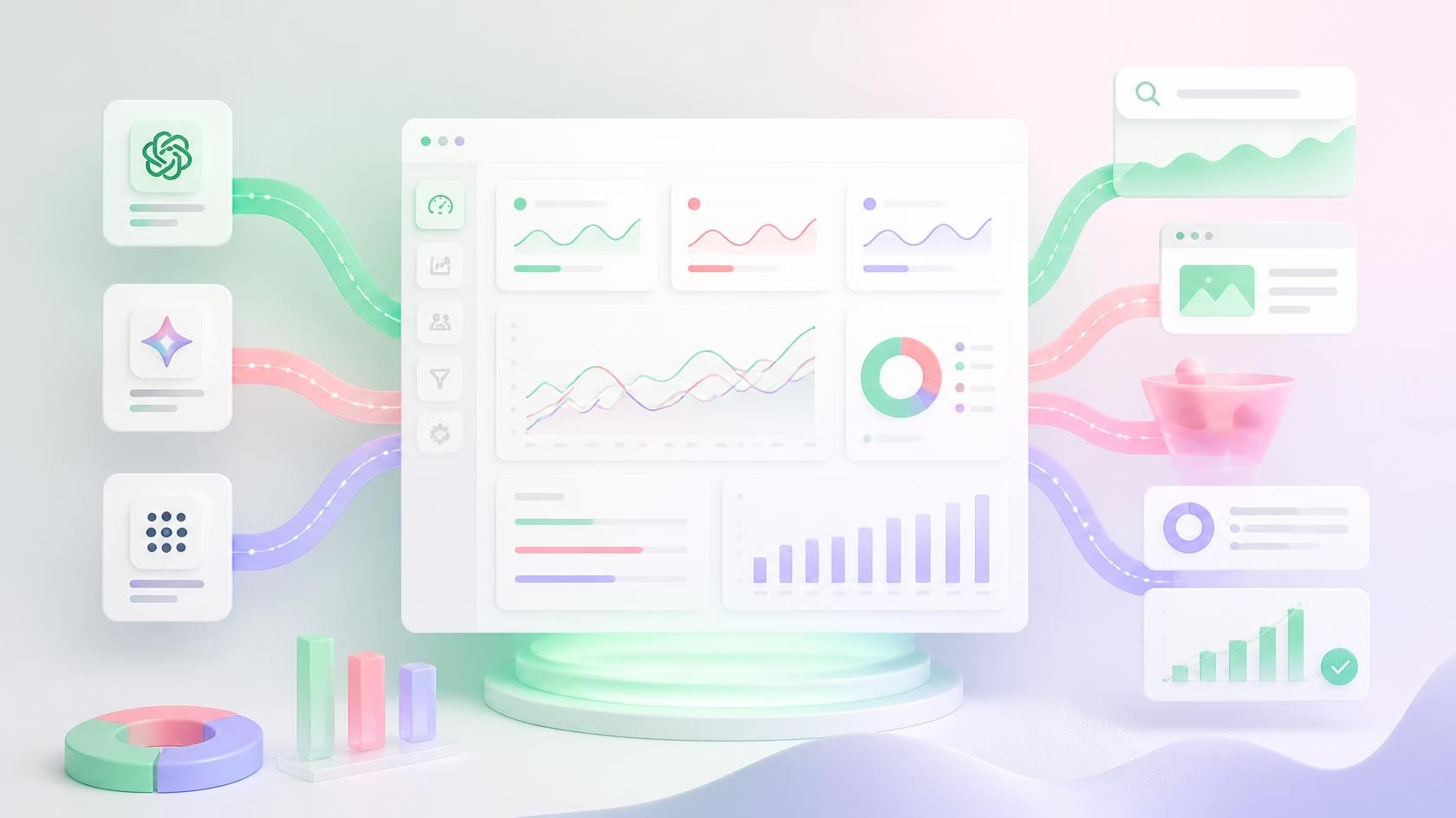

Artificial intelligence is transforming the way people discover information online. Instead of typing keywords into Google, users are increasingly asking AI-powered assistants like ChatGPT, Google Gemini, Perplexity, Claude, and Microsoft Copilot to answer their questions. These platforms don’t just generate responses they also recommend trusted websites by citing relevant sources.
This shift has introduced a new traffic channel known as AI search traffic. When someone clicks a website link recommended by an AI assistant, they become an AI referral visitor. For businesses, publishers, marketers, and content creators, understanding this traffic is becoming just as important as tracking traditional organic search.
While most website owners regularly monitor Google Search Console and Google Analytics 4 (GA4), many still overlook visitors arriving from AI platforms. Without proper tracking, it’s impossible to know which AI tools are driving traffic, which pages receive the most AI referrals, or whether those visitors convert into leads, subscribers, or customers.
As AI search adoption accelerates, businesses that measure and optimize AI traffic will have a significant advantage over competitors who continue focusing only on traditional SEO metrics. In this guide, you’ll learn how AI search traffic works, why it’s important, and how to prepare your analytics before setting up advanced tracking in Google Analytics 4.
What Is AI Search Traffic?
AI search traffic refers to website visitors who arrive after clicking a link or citation provided by an AI-powered search assistant. Unlike traditional search engines that display a list of ranked webpages, AI platforms generate conversational answers and often recommend trusted sources within those responses.
For example, if a user asks ChatGPT, “What are the best AI SEO strategies?” and ChatGPT recommends your article with a clickable citation, anyone visiting your website through that recommendation counts as AI search traffic.
The same applies to Perplexity, Gemini, Claude, and Microsoft Copilot whenever they direct users to your content.
Unlike standard organic traffic, AI visitors often arrive after receiving a summarized answer. They click because they want additional details, supporting evidence, or expert insights beyond what the AI has already explained.
Why AI Search Traffic Matters More Than Ever
Search behavior is changing rapidly. People increasingly prefer asking complete questions instead of searching with short keywords. AI assistants provide instant, conversational responses that save users time while surfacing only a limited number of trusted sources.
For website owners, this means visibility is no longer limited to Google’s search results. Your content can now appear directly inside AI-generated answers, creating an entirely new source of qualified visitors.
AI traffic is valuable because these users often have stronger intent. They have already received an overview of the topic and click through because they want more in-depth information. As a result, AI visitors are often more engaged and spend longer exploring high-quality content.
Businesses that track this traffic can better understand:
- Which AI platforms drive the most visitors
- Which articles receive AI citations
- How AI users interact with their website
- Which pages generate leads from AI referrals
- Whether AI search contributes to revenue and conversions
Ignoring AI traffic means missing an increasingly important part of your digital marketing performance.
How AI Search Works
Traditional search engines primarily rank webpages based on keywords, backlinks, relevance, and hundreds of other ranking signals. AI search takes a different approach.
Instead of returning a page of search results, AI assistants analyze large amounts of information, identify reliable sources, and generate a direct answer. Many platforms include links to the original sources they used, allowing users to explore those references.
When your content is selected as one of those sources, your website gains visibility even if the user never performs a traditional Google search.
This creates a new optimization goal. Rather than simply ranking on page one, businesses must also become a trusted source that AI systems choose to cite.
Which AI Platforms Can Send Website Traffic?
Several AI platforms already send referral traffic to websites, and their influence continues to grow.
ChatGPT
ChatGPT has become one of the most widely used AI assistants for research, learning, coding, writing, and business-related questions. When web search or citations are enabled, ChatGPT often includes links to relevant websites. Users who click these citations become referral visitors.
Technology publishers, SaaS companies, educational platforms, and B2B businesses are increasingly reporting measurable traffic from ChatGPT recommendations.
Google Gemini
Google Gemini combines AI capabilities with Google’s vast search ecosystem. As Gemini becomes more integrated into Google Search and Workspace products, websites optimized for quality content and strong SEO are expected to receive increasing AI-driven referrals.
Gemini emphasizes authoritative, well-structured, and trustworthy content when generating responses.
Perplexity AI
Perplexity AI is one of the most transparent AI search engines because it prominently displays citations for nearly every response.
This makes it particularly valuable for publishers. If your content answers user questions clearly and comprehensively, Perplexity is more likely to reference it and send qualified traffic to your website.
Many digital publishers have already seen noticeable growth in Perplexity referral traffic.
Claude
Claude focuses on detailed reasoning, long-form analysis, and document understanding. Although its referral traffic is currently smaller than ChatGPT or Perplexity, Claude adoption continues to grow among professionals, researchers, and enterprises.
As its user base expands, tracking Claude referrals will become increasingly important.
Microsoft Copilot
Integrated into Microsoft Edge, Windows, and Microsoft 365, Copilot introduces AI search capabilities to millions of users. Businesses producing authoritative educational content may benefit from increased referral opportunities as Copilot adoption grows.
AI Search Traffic vs Traditional Organic Traffic
Although both sources bring visitors to your website, their journeys are different.
| Traditional Organic Search | AI Search Traffic |
|---|---|
| User enters keywords into Google | User asks complete questions to an AI assistant |
| Search engine displays multiple links | AI provides summarized answers with selected citations |
| Users compare several websites | Users often visit only trusted cited sources |
| Rankings determine visibility | Authority and relevance influence citations |
| Success depends on SEO rankings | Success depends on becoming an AI-trusted source |
This difference explains why businesses should focus on both SEO and Generative Engine Optimization (GEO). Traditional rankings remain important, but AI visibility is becoming another major traffic opportunity.
Why Google Analytics 4 Is Essential
Google Analytics 4 is the most effective platform for measuring AI referral traffic. It allows businesses to understand not only how many visitors arrive from AI platforms but also how those visitors behave after reaching the website.
With GA4, you can monitor important metrics such as:
- AI referral sessions
- Total users
- Engaged sessions
- Average engagement time
- Landing pages receiving AI traffic
- Conversion events
- Lead generation
- Revenue attribution
- Returning users
- Device and geographic data
These insights help businesses evaluate whether AI search traffic contributes to meaningful business outcomes rather than simply increasing visitor numbers.
Challenges of Tracking AI Search Traffic
Although AI traffic is growing, measuring it accurately presents several challenges.
Some AI platforms pass referral information differently, while others may not always provide complete referral data. In some cases, AI visitors may even appear as direct traffic, making attribution more difficult.
Other common challenges include:
- Referral domains vary across AI platforms.
- Browser privacy settings may affect tracking.
- Some AI tools open links in ways that reduce referral visibility.
- AI search technology continues evolving, requiring businesses to adapt their analytics strategies.
Understanding these limitations ensures more accurate reporting and better decision-making.
How to Track AI Search Traffic in Google Analytics 4 (GA4)
Tracking AI search traffic isn’t as straightforward as measuring traditional organic search, but Google Analytics 4 (GA4) provides the tools needed to identify and analyze visitors coming from AI platforms. By understanding where these users originate, how they interact with your content, and whether they convert, you can measure the real impact of your AI Search Optimization (GEO) efforts.
Unlike Google Search traffic, AI referrals don’t have a dedicated reporting category. Instead, you’ll need to use acquisition reports, referral sources, custom segments, and explorations to isolate traffic from platforms like ChatGPT, Gemini, and Perplexity.
Can Google Analytics 4 Track AI Search Traffic?
Yes, Google Analytics 4 can track AI search traffic, provided the AI platform passes referral information when a user clicks a link to your website.
In most cases, AI traffic appears as Referral Traffic rather than Organic Search. Depending on the platform and browser, some visits may also be categorized as Direct Traffic if referral information isn’t passed.
Because of this, businesses should regularly review their referral sources instead of relying solely on default channel group reports.
AI Platforms That Can Send Referral Traffic
Several AI-powered platforms can drive visitors to your website. Knowing where these referrals originate helps you identify which platforms are contributing the most traffic.
ChatGPT
ChatGPT can generate referral traffic when it includes links to external websites in its responses. As more users rely on ChatGPT for research, tutorials, and buying decisions, referral traffic from this platform is expected to continue growing.
Google Gemini
Gemini is Google’s AI assistant and is integrated across multiple Google products. As AI features become more prominent in Google’s ecosystem, Gemini referrals may become increasingly valuable for websites publishing authoritative content.
Perplexity AI
Perplexity is one of the most citation-focused AI search engines available today. It regularly links to supporting sources, making it one of the easiest AI platforms to monitor in Google Analytics.
Claude AI
Claude is commonly used for document analysis, business research, and long-form reasoning. While referral volumes are currently smaller, it remains an important source to monitor.
Microsoft Copilot
Microsoft Copilot combines AI search with Bing and Microsoft 365 applications. Websites producing educational and professional content may begin seeing increased referral traffic from Copilot users.
Step 1: Access the Traffic Acquisition Report
Your first step is identifying where your website visitors are coming from.
In Google Analytics 4, navigate to:
Reports → Acquisition → Traffic Acquisition
This report displays valuable information including:
- Session Source
- Session Medium
- Default Channel Group
- Users
- Sessions
- Engagement Rate
- Average Engagement Time
- Conversions
The Traffic Acquisition report serves as the foundation for discovering AI-generated visits.
Step 2: Identify AI Referral Sources
After opening the Traffic Acquisition report, use the search bar above the table to look for AI platforms.
Search for terms such as:
- chatgpt
- openai
- perplexity
- gemini
- claude
- copilot
If your website has received AI traffic, you’ll typically see referral domains similar to:
| AI Platform | Possible Referral Source |
|---|---|
| ChatGPT | chatgpt.com |
| OpenAI | chat.openai.com |
| Perplexity | perplexity.ai |
| Gemini | gemini.google.com |
| Claude | claude.ai |
| Copilot | copilot.microsoft.com |
Review these sources regularly, as referral domains may change over time.
Step 3: Analyze AI Traffic Landing Pages
Once you’ve identified AI referrals, determine which pages visitors are landing on.
Navigate to:
Reports → Engagement → Landing Page
Apply a filter using your AI referral source to view only AI-generated visits.
Pay close attention to:
- Most visited landing pages
- Average engagement time
- Bounce rate
- Conversions
- Event count
This helps identify the content AI platforms are recommending most frequently.
Step 4: Create a Custom AI Traffic Exploration in GA4
Standard reports provide basic insights, but Explorations allow much deeper analysis.
Navigate to:
Explore → Free Form
Include dimensions such as:
- Session Source
- Landing Page
- Device Category
- Country
- Page Title
Then add metrics including:
- Users
- Sessions
- Engaged Sessions
- Engagement Rate
- Event Count
- Conversions
- Revenue
Apply filters to include only AI referral sources.
This creates a dedicated report focused entirely on AI traffic.
Step 5: Build an AI Traffic Segment
Creating an AI-specific segment allows you to analyze these visitors across all reports.
Create a Session Segment where the Session Source contains:
- chatgpt
- openai
- perplexity
- gemini
- claude
- copilot
Once saved, you can compare AI traffic against other acquisition channels without manually filtering reports each time.
Step 6: Compare AI Search Traffic with Organic Search
Comparing AI traffic to traditional search provides valuable insights into visitor quality.
Measure metrics such as:
| Metric | Organic Search | AI Search Traffic |
|---|---|---|
| Users | ✔ | ✔ |
| Sessions | ✔ | ✔ |
| Engagement Rate | ✔ | ✔ |
| Average Engagement Time | ✔ | ✔ |
| Conversion Rate | ✔ | ✔ |
| Revenue | ✔ | ✔ |
Many businesses discover that AI visitors spend longer on pages because they arrive with stronger informational intent.
Step 7: Measure AI Visitor Engagement
Traffic alone doesn’t tell the full story. Engagement metrics reveal whether AI visitors actually find your content valuable.
Engaged Sessions
Measure how many AI visitors actively interact with your website rather than leaving immediately.
Average Engagement Time
Longer engagement often indicates your content successfully answers user questions.
Event Tracking
Track interactions such as:
- Button clicks
- File downloads
- Video plays
- Form submissions
- CTA clicks
Scroll Depth
Understanding how far users scroll helps identify whether they consume your content completely.
Step 8: Track AI Traffic Conversions
The real value of AI traffic comes from conversions.
Configure GA4 to monitor:
Lead Generation
Track contact form submissions, consultation requests, and demo bookings.
Newsletter Sign-ups
Measure how many AI visitors subscribe to your mailing list.
Product Purchases
For ecommerce businesses, monitor completed purchases originating from AI referrals.
Form Submissions
Track quote requests, downloads, registrations, and inquiries.
High conversion rates often indicate that AI visitors have stronger purchase intent than general website visitors.
Step 9: Use UTM Parameters for AI Campaign Tracking
If you’re sharing content through AI-focused campaigns or communities, UTM parameters provide more accurate attribution.
Example:
Using UTM tags helps separate manually promoted AI traffic from organic AI referrals.
Step 10: Create a Custom AI Search Traffic Dashboard
Rather than checking multiple reports, build a centralized dashboard containing:
- AI Sessions
- Users
- Engagement Rate
- Average Engagement Time
- Conversion Rate
- Top Landing Pages
- Top Referral Sources
- Revenue
- Device Categories
- Geographic Locations
A dashboard allows you to monitor AI search performance at a glance.
Key Metrics to Monitor
While traffic volume is important, several additional metrics help measure AI search success.
Sessions
Shows the total number of visits originating from AI platforms.
Users
Measures unique visitors arriving through AI referrals.
Engagement Rate
Indicates how actively AI visitors interact with your website.
Average Engagement Time
Helps determine whether users are consuming your content.
Conversion Rate
Measures how effectively AI traffic generates business outcomes.
Revenue
For ecommerce websites, this shows the financial impact of AI-generated visitors.
Top Landing Pages
Identify which articles receive the highest number of AI referrals.
Top AI Referral Sources
Determine whether ChatGPT, Gemini, Perplexity, Claude, or Copilot sends the most traffic.
Common Mistakes to Avoid When Tracking AI Traffic
Many marketers fail to accurately measure AI traffic because they:
- Monitor only Organic Search reports.
- Ignore referral traffic.
- Forget to create AI-specific segments.
- Focus only on sessions instead of conversions.
- Never review landing page performance.
- Fail to update reports as AI platforms evolve.
Avoiding these mistakes ensures more reliable insights.
Best Practices for Measuring AI Search Traffic
To improve reporting accuracy and long-term analysis:
- Review AI referral sources every week.
- Create custom AI dashboards in GA4.
- Compare AI traffic against organic search.
- Track conversions instead of just visits.
- Keep referral source lists updated.
- Monitor engagement metrics alongside traffic growth.
- Continuously optimize pages that receive AI citations.
By following these best practices, you’ll gain a clearer understanding of how AI search contributes to your website’s visibility, engagement, and business growth.
Measuring the Performance and ROI of AI Search Traffic
Tracking AI search traffic is only the first step. To understand whether your AI Search Optimization (GEO) strategy is delivering real business value, you need to analyze how these visitors behave after they arrive on your website. This includes measuring engagement, conversions, lead quality, and overall return on investment (ROI).
Unlike traditional SEO, where rankings are often the primary focus, AI search success is measured by how effectively your content attracts qualified visitors and turns them into customers.
Why Measuring AI Traffic Performance Matters
As AI platforms become a larger source of website traffic, businesses need to understand whether these visitors are generating meaningful outcomes.
Tracking performance helps you answer important questions such as:
- Are AI visitors engaging with your content?
- Which AI platform sends the highest-quality traffic?
- Which pages receive the most AI citations?
- Are AI visitors converting into leads or customers?
- Is AI search contributing to business growth?
Answering these questions allows you to optimize both your content strategy and your marketing investments.
Key Metrics to Measure AI Search Traffic
Not all traffic is valuable. Instead of focusing only on visitor numbers, monitor metrics that indicate user quality and business impact.
Sessions
Sessions show how many visits your website receives from AI platforms during a selected period.
A steady increase in AI sessions usually indicates that more of your content is being discovered and cited by AI search engines.
Users
Users represent the number of unique visitors arriving from AI referrals.
Tracking users helps distinguish between new and returning audiences.
Engaged Sessions
An engaged session occurs when users actively interact with your website by spending time on a page, viewing multiple pages, or triggering key events.
High engagement suggests your content successfully satisfies user intent.
Average Engagement Time
This metric measures how long visitors remain actively engaged with your website.
If AI users consistently spend more time reading your content than visitors from other channels, it may indicate that AI recommendations are attracting highly relevant audiences.
Pages Per Session
Pages per session reveal how deeply AI visitors explore your website.
A higher value often reflects strong internal linking and content relevance.
Bounce Rate
Bounce rate measures the percentage of users who leave without meaningful interaction.
A lower bounce rate generally indicates better content quality and stronger visitor engagement.
Conversion Rate
Conversion rate is one of the most important metrics because it connects AI traffic with business outcomes.
Conversions may include:
- Contact form submissions
- Newsletter subscriptions
- Demo requests
- Product purchases
- Webinar registrations
- Whitepaper downloads
Revenue
For ecommerce websites, tracking revenue generated from AI traffic helps determine whether AI optimization efforts contribute directly to sales.
Compare AI Traffic Across Different Platforms
Each AI platform attracts different types of users.
Create comparison reports for:
| AI Platform | Metrics to Compare |
|---|---|
| ChatGPT | Sessions, Engagement, Conversions |
| Gemini | Users, Bounce Rate, Revenue |
| Perplexity | Engagement Time, Landing Pages |
| Claude | Session Duration, Events |
| Microsoft Copilot | Leads and Conversions |
This comparison helps identify which platforms deserve greater optimization efforts.
Identify Your Top AI Landing Pages
Not every page on your website receives equal attention from AI platforms.
Review landing page reports to identify:
- Pages receiving the highest AI referral traffic
- Articles with the longest engagement time
- Pages generating the most conversions
- Content with the lowest bounce rate
- High-performing topic clusters
Once identified, update these pages regularly to maintain AI visibility.
Analyze User Behavior
Behavior reports reveal how AI visitors interact with your website after arriving.
Important metrics include:
Scroll Depth
Determine whether visitors are reading your content from beginning to end.
Event Tracking
Track important actions such as:
- CTA clicks
- Button clicks
- File downloads
- Video plays
- External link clicks
Understand where AI visitors go after reading the landing page.
Strong internal linking often increases page views and engagement.
Measure Lead Quality
Traffic volume doesn’t always translate into qualified leads.
Evaluate lead quality by measuring:
- Sales-qualified leads (SQLs)
- Marketing-qualified leads (MQLs)
- Demo requests
- Consultation bookings
- Email sign-ups
- Customer acquisition rate
If AI visitors consistently generate higher-quality leads than other channels, AI search becomes a valuable acquisition strategy.
Create a Dedicated AI Search Dashboard
Instead of reviewing multiple reports separately, build a centralized dashboard that includes:
- AI Sessions
- Users
- Engaged Sessions
- Average Engagement Time
- Bounce Rate
- Conversion Rate
- Revenue
- Top Landing Pages
- Top AI Referral Sources
- Returning Users
- New Users
- Geographic Distribution
- Device Categories
A dedicated dashboard makes it easier to monitor trends and share insights with stakeholders.
How to Calculate ROI from AI Search Traffic
To measure return on investment, compare the value generated by AI visitors against the resources invested in creating and optimizing content.
A simple ROI formula is:
ROI = (Revenue Generated from AI Traffic − Cost of Content Creation and Optimization) ÷ Total Investment × 100
For example, if AI-generated traffic leads to new customers while your content continues attracting visitors over time, your return on investment increases significantly.
Benchmark AI Search Performance
Regular benchmarking helps you monitor long-term growth.
Track:
- Monthly AI sessions
- Quarterly AI conversions
- Growth in AI referral sources
- Engagement improvements
- Revenue trends
- New pages receiving AI citations
Documenting these metrics allows you to measure progress and identify successful optimization strategies.
Tools That Help Measure AI Search Performance
Several tools complement Google Analytics 4 when analyzing AI traffic.
Google Search Console
Use Google Search Console to monitor organic search performance alongside AI traffic.
Google Analytics 4
GA4 remains the primary platform for analyzing user behavior, engagement, and conversions.
Microsoft Clarity
Clarity provides session recordings and heatmaps that reveal how AI visitors interact with your website.
Looker Studio
Looker Studio allows you to build interactive dashboards by combining GA4 data with other analytics sources.
Common Mistakes When Measuring AI Traffic
Many businesses make avoidable mistakes when evaluating AI search performance.
These include:
- Measuring only traffic volume.
- Ignoring conversions.
- Not comparing AI traffic with organic search.
- Failing to monitor engagement metrics.
- Overlooking returning visitors.
- Never updating benchmark reports.
- Ignoring changes in referral sources.
Avoiding these mistakes leads to more accurate reporting and better strategic decisions.
Best Practices for Improving AI Search Performance
To maximize the value of AI traffic:
- Update high-performing content regularly.
- Strengthen internal linking between related articles.
- Publish original research and expert insights.
- Improve page speed and mobile usability.
- Add structured data where appropriate.
- Expand topic clusters around successful content.
- Monitor referral sources every month.
- Optimize pages that already receive AI citations.
Consistently applying these practices improves both AI visibility and user engagement.
How to Increase AI Search Traffic and Future-Proof Your Website
Tracking AI search traffic is only valuable if you continuously improve your website’s visibility across AI-powered platforms. As ChatGPT, Gemini, Perplexity, Claude, and Microsoft Copilot become more influential in how people discover information, businesses need to adapt their content strategies to remain competitive.
The goal is no longer just ranking on Google’s first page—it’s becoming one of the trusted sources AI platforms choose to cite.
Optimize Content for AI Search Engines
AI platforms prioritize content that is accurate, well-structured, and genuinely helpful. Creating articles that answer user questions comprehensively increases the likelihood of being referenced in AI-generated responses.
Some of the most effective optimization strategies include:
- Publishing original research and unique insights.
- Writing comprehensive topic guides.
- Answering common questions clearly.
- Using descriptive headings and subheadings.
- Including tables, checklists, and bullet points.
- Updating content regularly.
- Citing trustworthy sources.
- Demonstrating expertise through author information and real-world experience.
Rather than writing for algorithms, focus on creating content that genuinely solves user problems.
Build Topical Authority
Publishing a single article is rarely enough to establish authority. AI search engines tend to favor websites that consistently cover an entire subject rather than isolated topics.
For example, if your focus is AI Search Optimization, your content cluster might include:
- What Is AI Search?
- How AI Search Works
- Generative Engine Optimization (GEO)
- AI Search Ranking Factors
- How to Track AI Search Traffic
- ChatGPT SEO Guide
- Perplexity SEO Best Practices
- Google Gemini SEO
- AI Content Optimization
- Entity SEO for AI Search
Connecting these articles with strategic internal links helps both users and AI systems understand your expertise.
Keep Your Content Fresh
AI platforms often prioritize current and accurate information.
Review important articles every few months and update:
- Statistics
- Screenshots
- Examples
- Industry trends
- New AI platform features
- Best practices
Fresh content signals that your website remains a reliable source of information.
Strengthen EEAT Signals
Experience, Expertise, Authoritativeness, and Trustworthiness (EEAT) remain essential for building credibility.
Improve your EEAT by:
- Adding detailed author bios.
- Showcasing industry experience.
- Referencing credible sources.
- Including case studies.
- Publishing original research.
- Displaying customer testimonials where relevant.
Strong trust signals increase the likelihood that AI systems will reference your content.
Improve Technical SEO
Technical optimization ensures AI crawlers can efficiently access and understand your website.
Focus on:
- Fast page loading speeds.
- Mobile-friendly design.
- Secure HTTPS connections.
- Clean URL structures.
- Proper indexing.
- XML sitemaps.
- Structured data implementation.
A technically sound website supports both traditional search engines and AI-powered search experiences.
Earn High-Quality Backlinks
Backlinks remain an important indicator of authority.
Focus on earning links from:
- Industry publications
- Technology blogs
- Research organizations
- Universities
- Professional communities
- Reputable news websites
Quality matters more than quantity. A few authoritative backlinks often provide more value than many low-quality links.
Monitor AI Search Performance Regularly
AI search continues to evolve rapidly.
Review your analytics each month to monitor:
- AI referral sessions
- Top AI traffic sources
- Landing page performance
- Engagement metrics
- Conversion rates
- Revenue from AI traffic
- Newly cited content
Regular monitoring helps identify trends before they become obvious.
Common Mistakes to Avoid
Many businesses struggle to gain AI visibility because they make avoidable mistakes.
Some of the most common include:
- Publishing thin or repetitive content.
- Ignoring user intent.
- Focusing only on keywords.
- Not updating existing articles.
- Weak internal linking.
- Poor website performance.
- Missing author information.
- Neglecting analytics and reporting.
Avoiding these mistakes improves both user experience and AI discoverability.
The Future of AI Search
AI-powered search is expected to become an even larger part of the digital landscape.
Future developments may include:
- More conversational search experiences.
- Greater personalization.
- Increased use of multimodal search.
- Smarter citation systems.
- Improved attribution of original sources.
- Deeper integration between AI assistants and web browsers.
Businesses that invest in AI Search Optimization today will be better positioned as these technologies continue to evolve.
Conclusion
AI-powered search is changing how people discover websites, making it essential for businesses to look beyond traditional SEO metrics. By learning how to track AI search traffic from ChatGPT, Gemini, Perplexity, and other AI platforms, you gain valuable insights into visitor behavior, engagement, and conversions.
Google Analytics 4 provides the foundation for measuring AI referrals, but long-term success depends on combining analytics with high-quality content, topical authority, technical SEO, and continuous optimization.
As AI search continues to evolve, the businesses that monitor performance, adapt their strategies, and consistently publish trustworthy content will be best positioned to earn citations, attract qualified visitors, and build sustainable organic growth.
Frequently Asked Questions
Can Google Analytics 4 track ChatGPT traffic?
Yes. If ChatGPT passes referral information when users click your website, the traffic can be tracked in Google Analytics 4 under referral sources.
Does Google Gemini send referral traffic?
Yes. Depending on how users interact with Gemini and Google’s AI-powered experiences, websites may receive referral traffic that can be analyzed in GA4.
Why isn’t AI traffic showing in my analytics?
Some AI platforms or browsers may not pass referral data, causing visits to appear as Direct Traffic. Regularly reviewing referral reports and custom segments can help identify available AI traffic.
Which AI platform sends the most website traffic?
This varies by industry. Many publishers currently report noticeable referral traffic from ChatGPT and Perplexity, while Gemini and Microsoft Copilot continue to grow as AI adoption increases.
Is AI search replacing traditional SEO?
No. AI Search Optimization complements traditional SEO rather than replacing it. Businesses should optimize for both search engines and AI-powered platforms.
How often should I monitor AI traffic?
Review AI referral data at least once a month. If AI traffic represents a significant portion of your website visitors, consider monitoring it weekly.
Can AI traffic generate leads and sales?
Yes. Visitors arriving from AI platforms often have high informational intent, making them more likely to engage with content and convert when the website provides relevant solutions.