

In the extremely competitive world of today, simply drawing traffic to one’s website is not enough. Numerous research findings prove that most Internet users do not buy anything on-line, do not fill out forms, and do not take other actions when visiting websites. In fact, regardless of whether a person is looking through an on-line shop, comparing various pieces of software, or studying the possibilities offered by a company, he or she needs several visits to make up his or her mind.
It is at this point that remarketing and retargeting play an important role as they allow companies to return to those people who have already shown their interest towards their products or services.
In spite of the wide popularity of both methods, many marketers confuse the concepts of remarketing and retargeting. While having one thing in common the desire to bring customers back they differ greatly in their approach.

What Is Remarketing?
Remarketing is a type of digital marketing that aims at getting back in touch with people who previously engaged with your business in one way or another. By tradition, remarketing mainly means marketing through emails, though in modern marketing platforms, this term may be used more loosely.
Remarketing is aimed at users who have already provided their contact information or who have done any action like:
- Subscription to a newsletter
- Download of an e-book
- Account creation
- Buying a product
- Registration for a webinar
- Demo request
Remarketing does not try to reach out new users, it tries to cultivate the already existing relationship.
For instance, when someone buys some running shoes from a certain website, later on he or she will receive emails about socks, fitness equipment, and clothes that complement the bought shoes.
What Is Retargeting?
Retargeting is an Internet advertising technique where potential customers who visit a website or have engaged with the brand without performing any action are targeted with ads.
This is done through installing a tracking pixel or cookie on a user’s device. While browsing other sites and social media sites, the ads will remind them about the items they saw earlier.
For instance:
A consumer visits an electronics store and views a laptop, then does not buy it.
Later on, when visiting other sites like YouTube, Facebook, Instagram, or other news sites, ads of that particular laptop keep appearing before him/her.
The purpose is to build up recognition in the mind of the consumer and convince him to come back and make the purchase.
Retargeting uses display ads rather than emails.
Why Businesses Use Remarketing and Retargeting
Both strategies aim to increase conversions while reducing customer acquisition costs.
Businesses use them because they help:
- Recover abandoned shopping carts
- Increase repeat purchases
- Improve brand awareness
- Build customer trust
- Shorten buying cycles
- Increase customer lifetime value
- Generate qualified leads
- Improve marketing ROI
Since the audience has already expressed interest, conversion rates are generally much higher than campaigns targeting completely new users.
Remarketing vs Retargeting: The Core Difference
Although both strategies target existing audiences, their execution differs significantly.
| Feature | Remarketing | Retargeting |
|---|---|---|
| Primary Channel | Email marketing | Display ads and social ads |
| Audience | Existing customers or subscribers | Anonymous website visitors |
| Main Goal | Build long-term relationships | Bring visitors back to the website |
| Communication | Personalized emails | Personalized advertisements |
| Customer Stage | Existing leads or customers | Potential customers |
| Data Source | Customer email database | Website cookies and tracking pixels |
| Best For | Customer retention | Customer acquisition and conversion |
Understanding this distinction allows marketers to design campaigns that align with customer behavior.
How Remarketing Works

Remarketing follows a structured customer engagement process.
Step 1: Customer Interaction
A visitor subscribes to your newsletter, downloads a guide, or purchases a product.
Step 2: Audience Segmentation
Businesses organize customers into groups based on factors such as:
- Purchase history
- Interests
- Geographic location
- Website activity
- Customer lifecycle stage
Step 3: Personalized Communication
Businesses send targeted emails containing:
- Product recommendations
- Educational content
- Discount offers
- Renewal reminders
- Event invitations
Step 4: Conversion
The customer returns to the website and completes another purchase or desired action.
How Retargeting Works
Retargeting follows a different workflow.
Step 1: Website Visit
A visitor lands on your website.
Step 2: Pixel Tracking
Tracking technologies record anonymous visitor behavior.
Step 3: Audience Creation
Visitors are grouped according to their actions.
Examples include:
- Viewed product pages
- Added items to cart
- Read blog articles
- Visited pricing page
- Started checkout
Step 4: Personalized Ads
Users see relevant ads across:
- Google Display Network
- YouTube
- Mobile apps
Step 5: Return Visit
Interested users click the advertisement and return to complete their purchase.
Types of Remarketing and Retargeting
| Types of Remarketing | Types of Retargeting |
|---|---|
| Email Remarketing – Sends personalized emails based on customer actions, including welcome emails, cart recovery emails, loyalty offers, product recommendations, and re-engagement campaigns. | Standard Retargeting – Displays online ads to users who have previously visited your website but did not complete a desired action. |
| Customer Loyalty Remarketing – Provides exclusive offers, rewards, and discounts to existing customers to encourage repeat purchases and strengthen customer loyalty. | Dynamic Retargeting – Shows personalized ads featuring the exact products or services users previously viewed, making it highly effective for eCommerce businesses. |
| Upselling Remarketing – Recommends premium versions, upgrades, or higher-value products after a customer has made an initial purchase. | Search Retargeting – Targets users based on the keywords they searched online, even if they have never visited your website. |
| Cross-Selling Remarketing – Suggests complementary products or services that enhance a customer’s previous purchase and increase overall order value. | Social Media Retargeting – Delivers personalized advertisements across platforms such as Facebook, Instagram, LinkedIn, X, and Pinterest to re-engage potential customers. |
Benefits of Remarketing and Retargeting
| Aspect | Remarketing | Retargeting |
|---|---|---|
| Primary Goal | Re-engage existing customers and leads through personalized communication, mainly via email or CRM channels. | Reconnect with previous website visitors through targeted online ads to encourage conversions. |
| Customer Relationships | Builds stronger, long-term relationships through consistent and relevant communication. | Strengthens brand awareness by keeping your business visible to interested prospects. |
| Customer Lifetime Value | Increases lifetime value by encouraging repeat purchases and long-term engagement. | Focuses on converting interested visitors into first-time or returning customers. |
| Personalization | Delivers customized emails and messages based on purchase history, preferences, and customer behavior. | Displays personalized ads based on pages viewed, products browsed, or actions taken on the website. |
| Marketing Costs | More cost-effective for retaining existing customers than acquiring new ones. | Optimizes ad spend by targeting high-intent audiences who have already interacted with your brand. |
| Brand Loyalty | Encourages repeat business and strengthens customer loyalty over time. | Improves brand recall through repeated ad exposure during the buyer’s journey. |
| Conversion Impact | Boosts repeat purchases and customer retention. | Increases conversion rates by reminding users to complete desired actions, such as purchases. |
When Should You Use Remarketing?
Remarketing is ideal when businesses want to:
- Build long-term customer relationships
- Increase repeat purchases
- Promote loyalty programs
- Encourage subscription renewals
- Upsell premium products
- Cross-sell related products
- Re-engage inactive customers
Businesses with strong email lists benefit most from remarketing.
When Should You Use Retargeting?
Retargeting is effective when businesses need to:
- Recover abandoned carts
- Increase website conversions
- Bring visitors back quickly
- Promote limited-time offers
- Improve brand awareness
- Reach users across multiple platforms
It is particularly valuable for businesses with significant website traffic.
Can You Use Remarketing and Retargeting Together?
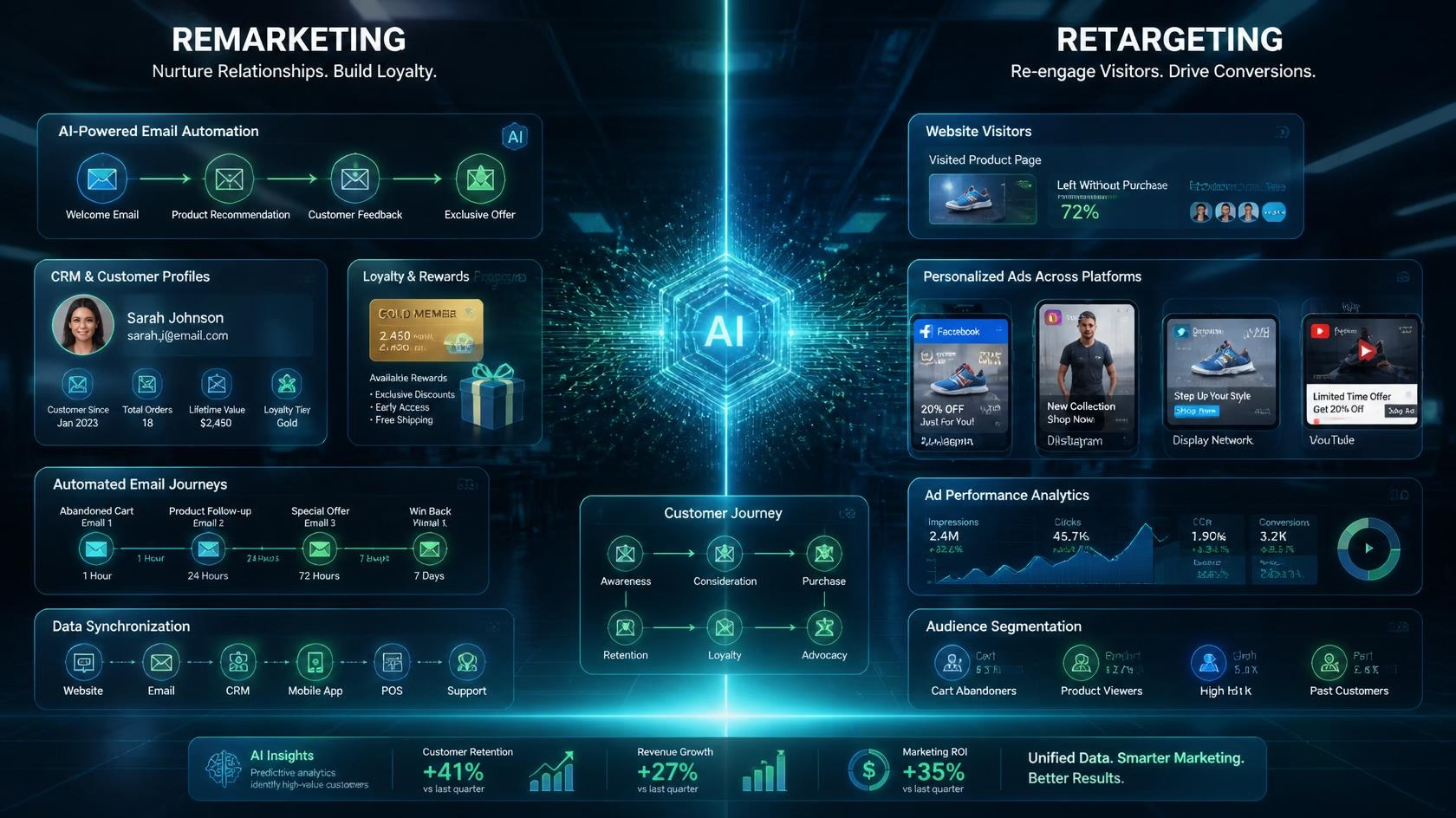
Absolutely. It’s even better to use both techniques because they complement each other at various stages of the consumer’s decision-making process.
Let’s consider that someone visits your website and considers purchasing a number of goods but ultimately does not make any purchases. In such a case, the retargeting marketing technique will be able to deliver the personalized ads to that person via search engines, social media, or display networks about the considered goods.
As soon as he or she subscribes to the newsletter or registers an account, you can use the remarketing technique that includes delivering helpful emails, promotional offers, or personalized recommendations of the goods.
Common Mistakes to Avoid
Even well-planned campaigns can underperform if they are not executed carefully. Avoid these common mistakes:
- Showing the same advertisement repeatedly, leading to ad fatigue.
- Sending generic emails instead of personalized content.
- Failing to segment audiences based on behavior or interests.
- Ignoring mobile optimization for ads and emails.
- Neglecting to exclude customers who have already converted.
- Using outdated customer data or inactive email lists.
- Running campaigns without tracking conversions or key performance metrics.
- Not testing different creatives, subject lines, and calls to action.
- Forgetting to respect privacy regulations and obtain appropriate user consent where required.
By continuously testing, refining, and personalizing campaigns, businesses can improve engagement while delivering a better customer experience.
Best Practices for Successful Campaigns
To maximize the performance of both remarketing and retargeting campaigns, businesses should follow these proven practices:
- Segment audiences based on browsing behavior, purchase history, demographics, and engagement levels.
- Personalize email content and advertisements to match user interests.
- Use compelling visuals and clear calls to action.
- Set frequency limits on retargeting ads to avoid overwhelming users.
- Optimize landing pages so visitors have a seamless experience after clicking an ad or email.
- Run A/B tests on subject lines, ad creatives, headlines, and offers.
- Monitor key performance indicators such as click-through rate, conversion rate, cost per acquisition, and return on ad spend.
- Refresh creatives regularly to maintain engagement.
- Combine first-party data with behavioral insights to create more relevant campaigns.
- Ensure compliance with data privacy regulations and provide users with transparent choices about data usage.
Following these practices helps businesses improve campaign efficiency while creating a more personalized experience for customers.
The Future of Remarketing and Retargeting
Artificial intelligence and automation, along with changing privacy policies, will influence the future of remarketing and retargeting strategies. With the decrease in effectiveness of third-party cookies, companies have started to use the first party data that comes from direct communication with customers, loyalty programs, and subscriptions.
There are marketing platforms that are based on artificial intelligence that are capable of predicting customers’ intentions, providing recommendations about products, deciding when to send emails, and automatically setting bids for advertisements.
Conclusion
The confusion between remarketing and retargeting arises due to the commonality of their target audience. Both involve reconnecting with people who have already shown an interest in your product. However, the role played by each of the strategies varies at each stage of the customer journey. The former focuses on the use of email marketing and customer data to foster loyalty, nurture relationship, and increase the likelihood of repeat sales.
By using both marketing strategies together, businesses get the best out of them. While retargeting creates awareness about your product and gets your user to come back, remarketing helps you maintain and nurture the relationship with your customer through personalized messaging.
With the advent of AI, automation, and privacy-first marketing tools, businesses are better placed for the future with respect to implementing effective remarketing and retargeting strategies.
Frequently Asked Questions (FAQs)
1. What is the main difference between remarketing and retargeting?
Remarketing generally uses email marketing to reconnect with existing customers or leads, while retargeting uses online advertisements to reach users who previously visited a website but did not convert.
2. Which is better: remarketing or retargeting?
Neither is universally better. Retargeting is effective for bringing visitors back to your website, while remarketing excels at nurturing existing customers and encouraging repeat purchases. Using both together often delivers the strongest results.
3. Is retargeting only for eCommerce businesses?
No. Retargeting is valuable for SaaS companies, B2B organizations, educational institutions, healthcare providers, financial services, and many other industries that want to re-engage interested visitors.
4. How does dynamic retargeting work?
Dynamic retargeting automatically displays ads featuring the exact products or services a user previously viewed, making advertisements more relevant and increasing the likelihood of conversion.
5. Can small businesses benefit from remarketing and retargeting?
Yes. Even with limited budgets, small businesses can use these strategies to reach high-intent audiences, improve customer retention, and increase return on marketing investment.
6. How can AI improve remarketing and retargeting campaigns?
AI helps marketers analyze customer behavior, predict buying intent, automate audience segmentation, personalize messages, optimize ad bidding, and recommend the best time to engage customers, leading to more effective campaigns.